Openingswoord expositie Mowaffk al-Sawad – موفق السواد
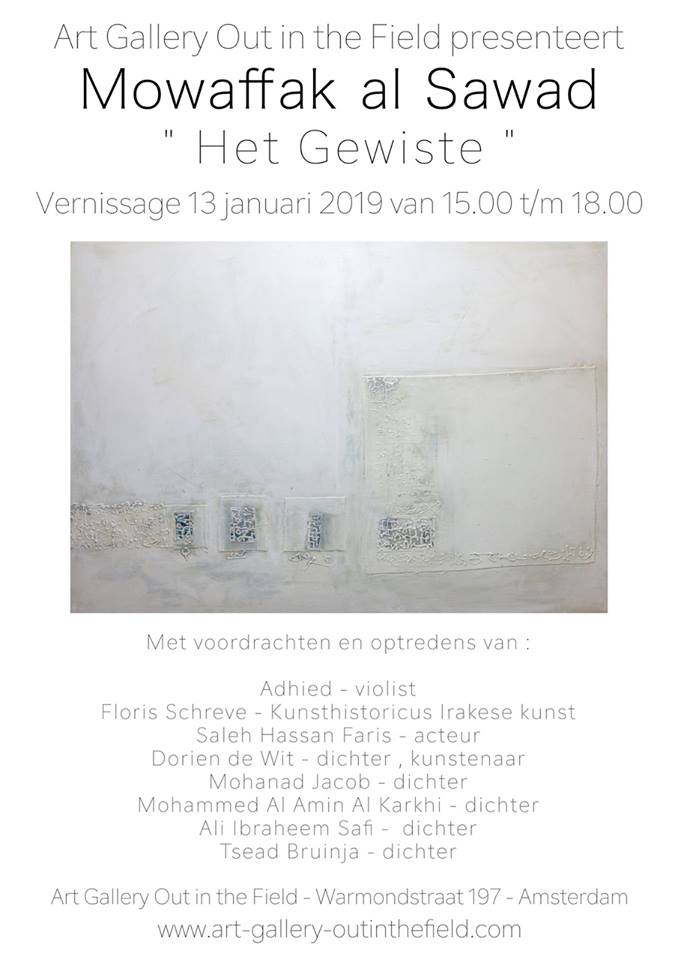
Openingswoord expositie Mowaffk al-Sawad “Het Gewiste”, Gallery Out in the Field, Amsterdam, 13 januari, 2019
موفق السواد
Mowaffk al-Sawad komt uit Irak, maar is al geruime tijd actief in Nederland, als dichter, schrijver en voor deze gelegenheid het meest relevant, ook als beeldend kunstenaar. Het meest bekend is hij geworden van zijn brievenroman ‘Stemmen onder de zon’ (Uitgeverij de Passage, Groningen, 2002). Verder heeft is zijn poëtische werk in verschillende dichtbundels verschenen. Zo lang hij actief is geweest als dichter heeft hij ook geschilderd, al is het pas sinds kort dat hij met dit werk naar buiten treedt.
Mowaffk werd in 1971 geboren in Basra, de grootste stad van zuid Irak, waar de Eufraat en de Tigris samenvloeien en uitmonden in de Perzische golf. Op zijn negentiende, toen hij net was begonnen aan zijn studie theaterwetenschappen aan de universiteit van Basra, annexeerde het Iraakse leger Koeweit, gevolgd door de Amerikaanse aanval in 1991, voor de Iraki’s de tweede Golfoorlog (de eerste Golfoorlog was de oorlog tussen Irak en Iran, van 1980 tot 1988).

Toen de Amerikaanse bommen het Iraakse leger uit Koeweit verdreven en de veelal dienstplichtige soldaten, die tegen hun zin Saddams oorlog uitvochten, halsoverkop in Basra arriveerden, brak daar de grote opstand tegen het Iraakse regime uit, niet in de laatste plaats vanwege de beruchte oproep van President George Bush sr. : “But there is another way to end the killing, to stop the bloodshed. And that is the Iraqi people have to take matters in their own hand and to force Saddam Husayn, the dictator, to step aside”. De terugkerende Iraakse troepen en de bevolking van de zuidelijke steden gaven, net als de Koerden in het noorden, gehoor aan die oproep, in der veronderstelling dat ze door de Amerikaanse tropenen op z’n minst beschermd zouden worden. Ook Mowaffk was, met andere studenten van de universiteit van Basra, zeer actief in de opstand tegen het Iraakse regime.
Binnen de kortste keren sloeg het regime terug. De opstandelingen waren geen partij voor de helikopters en tanks van de Republikeinse Garde. Vele opstandelingen, waaronder Mowaffk en zijn broer Ali, vluchtten de stad uit, de woestijn in en stuitten daar op de Amerikaanse troepen. De Amerikaanse soldaten hadden de strikte orders om de verzoeken om hulp niet in te willigen. Wel beloofden zij om grote aantallen opstandelingen in Saudi Arabië in veiligheid te brengen.

Aangekomen in Saudi Arabië droegen de Amerikanen de gevluchte Iraakse opstandelingen over aan het Saudische leger, dat hen opsloot in de beruchte kampen Rafha en Artawiyya. In het laatste kamp kwamen Mowaffk en zijn broer terecht, met zo’n 20.000 andere Iraakse vluchtelingen. Tot 1993 zaten zij daar, vergeten door de wereld, onder een onmenselijk regime van de Saudische kampbewakers, die hen als slaven behandelden en soms zelfs gevangenen voor flessen whisky verkocht aan de Iraakse geheime dienst. In 1993 wist een van de gevangenen te ontsnappen en Ryadh te bereiken. Vanuit het kantoor van BBC World lichtte hij de VN in en vanaf dat moment werd de wereld zich van hun bestaan bewust en werden de voormalige gevangenen door de VN verdeeld over verschillende landen. Mowaffk en zijn broer Ali werden aan Nederland toegewezen en zo kwam Mowaffk in Groningen terecht.

Sinds zijn vestiging in Nederland, eerst in Groningen, later Amsterdam, heeft Mowaffk al-Sawad aan een veelzijdig oeuvre gewerkt, als schrijver, dichter en beeldend kunstenaar. Het meest bekend is Stemmen onder de zon (de Passage, 2002), zijn ‘brievenroman’, over zijn tijd in Saudi Arabië. Daarnaast publiceerde hij enkele dichtbundels (zoals Een middag wit als melk, uitgeverij Bornmeer, 2002) en werden er gedichten van hem gepubliceerd in verschillende verzamelwerken (zoals Dwaallicht, tien Iraakse dichters in Nederland, de Passage, 2006).

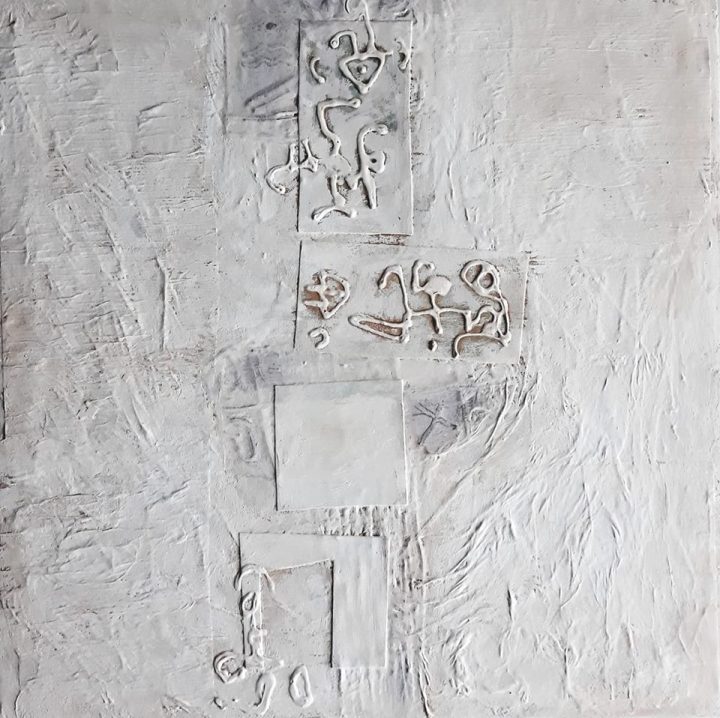
Mowaffk dicht zowel in het Nederlands als in het Arabisch. Dat dichten in twee talen betekent dat hij altijd een vertaalslag moet maken om een bepaald idee, een gevoel of wat dan ook uit te drukken. En onvermijdelijk dat in dat proces van vertalen ook iets van het origineel verloren gaat. Juist het dichten in ‘vertalingen’ heeft hem hier als geen ander van bewust gemaakt. Dit verlies in de vertaling- in Mowaffk al Sawads omschrijving “Het Gewiste” is dan ook het centrale thema in zijn beeldende kunst.
Voor de westerse kijker die niet bekend is met de Arabische taal of het alfabet, lijkt het alsof zijn schilderijen zijn bezaaid met Arabische teksten. Maar dat is schijn. Hoewel veel van de tekens doen denken aan Arabische letters, zijn het geen geschreven Arabische woorden, of geschreven woorden en zinnen in wat voor taal dan ook.
Mowaffk ziet zijn veelal in het wit opdoemende tekens als een voorstadium van de taal, of een voorstadium van het beeld. Misschien een vollediger of kernachtiger weergave/omschrijving dan mogelijk is het concrete geschreven woord of beeld. Want in de uiteindelijke materialisatie, de definitieve verschijningsvorm van taal en beeld, gaat er, zoals in elke vertaling, ook iets verloren. “Het gewiste”, aldus Mowaffk al-Sawad. Als een belangrijke inspiratiebron noemt hij de abstracte vormen van Juan Miro. Hij heeft hier eerder ook een gedicht aan gewijd. Uit zijn bundel ‘Een middag wit als melk’ (uitgeverij Bornmeer, Leeuwarden, 2002, p. 29):
De Kinderen van Juan Miro in hun Witte Tuin
Laat hem weggaan. Mijn fragiele lijf
ver, ver weg.
Laat hem gaan spelen met de kinderen van Juan Miro in hun witte tuin,
Waar handen zijn die niet kunnen zien,
voeten die vervagen,
het kleed dat weg is,
de dwalende schorpioenen,
en de slapende vlinder.
Waarheen, zuiderling, die vreemd is
In de steden van het noorden?
Welke ramp laat je nu smelten op je lippen,
Welke ruimte zal
Deze pijnlijke plaats van jou omvatten?
Glijd maar,
Alle kanten zijn omsingeld
En de blauwe punt is wazig.
Glijd maar,
De tuin is nog steeds wit en de vlinder vliegt bijna weg

Ogenschijnlijk staan de werken van Mowaffk al-Sawad in de traditie van de moderne kunst van de Arabische wereld waarin de Arabische letter of het teken centraal staat. Zoals bij de grote en zeer invloedrijke Iraakse kunstenaar Shakir Hassan al-Said (1925-2004). Of de Libische kunstenaar Ali Omar Ermes (1945). Of de Algerijnse kunstenaar Rachid Koraichi (1947)- met de laatste heeft het werk van Mowaffk al-Sawad nog de meeste formele overeenkomst. Maar er is een belangrijk verschil met deze ‘Arabische modernisten’ (door Brahim Alaoui, curator bij het Institut du Monde Arabe in Parijs, “l’Ecole de Signe” genoemd, de school van het teken). De werken van Mowaffk al-Sawad hebben een geheel ander conceptueel uitgangspunt, dan de grote Arabische modernisten die een verbinding zochten tussen de eigen kalligrafische traditie en de twintigste-eeuwse abstracte kunst.

De poging van Mowaffk al Sawad om het ‘gewiste’ te vangen zou je bijna Platoons kunnen noemen. Denk maar aan de metafoor van de Grot. Overigens is de Platoonse filosofie voor zowel de islamitische als de westerse traditie van groot belang geweest. En het is in beide tradities waarin Mowaffk al-Sawad, als kunstenaar en als dichter, opereert.
Floris Schreve
Amsterdam, 13 januari 2019
De tentoonstelling:
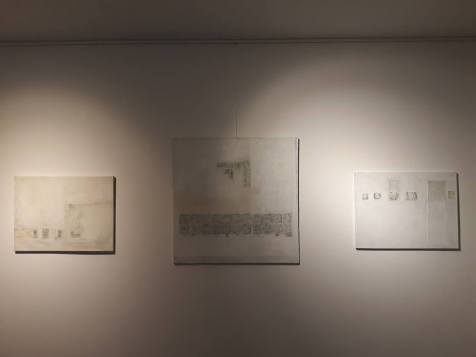
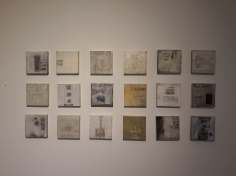
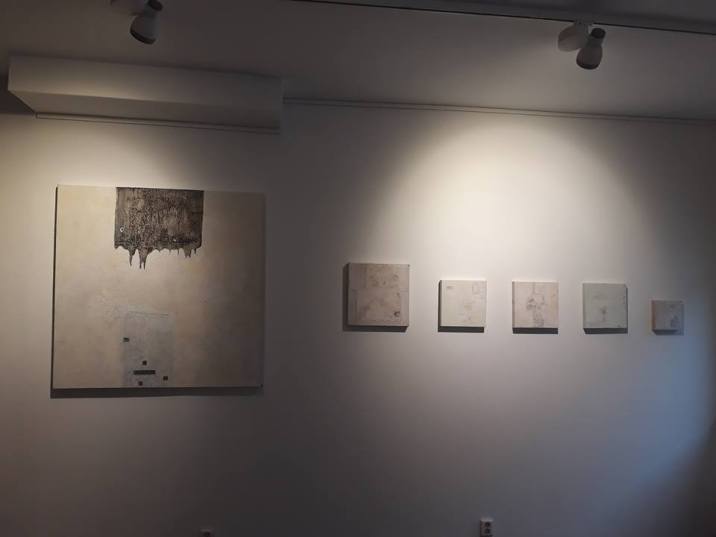
Exhibition I.M. Ziad Haider- زياد حيدر
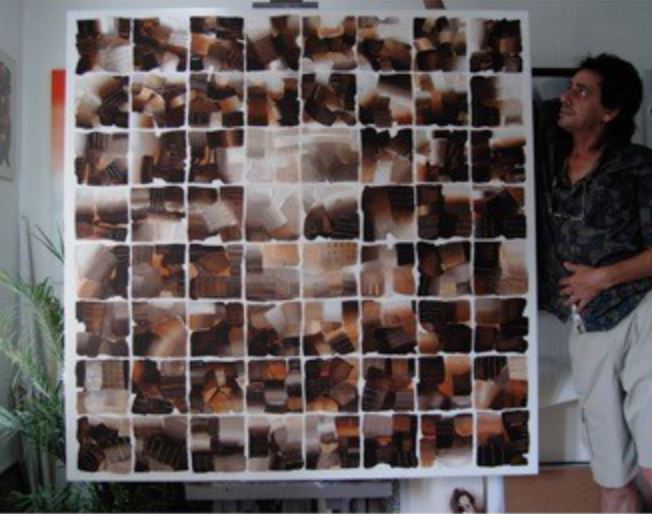
IM Ziad Haider
Gallery Out in the Field
Warmondstraat 197, Amsterdam
27/5- 27/6/2018
http://www.art-gallery-outinthefied.com
زياد حيدر
Here the Original Dutch version
The abstract works of Ziad Haider (1954, Al-Amara, Iraq-2006 Amsterdam, the Netherlands) can be interpreted as deep reflections on his own turbulent biography, but always indirect, on a highly sublimized level. Born in Iraq and lived through a period of war and imprisonment, and after he found his destiny in the Netherlands, he left an impressive oeuvre.
Ziad Haider studied in the first half of the seventies at the Baghdad Institute of Fine Arts. In the two decades before a flourishing local and original Iraqi art scene was created. From the fifties till the seventies Iraq was one of the leading countries in the Arab world in the field of modern art and culture. Artists like Jewad Selim, Shakir Hassan al-Said and Mahmud Sabri shaped their own version of international modernism. Although these artists were educated abroad (mainly in Europe), after returned to Iraq they founded an art movement which was both rooted in the local traditions of Iraq as fully connected with the international developments in modernist art. They created a strong and steady basis for an Iraqi modern art, unless how much the Iraqi modern art movement would suffer from during the following decades of oppression, war and occupation, so much that it mainly would find its destiny in exile.
The turning-point came during the time Ziad Haider was studying at the academy. Artists who were a member of the ruling Ba’th party- or willing to become one- were promised an even international career with many possibilities to exhibit, as long as they were willing to express their loyalty to the regime, or even sometimes participate in propaganda-projects, like monuments, or portraits and statues of Saddam Husayn. Ziad Haider, who never joined the Ba’th party, was sent into the army.
In 1980 the Iraqi regime launched the long and destructive war with Iran. Many young Iraqis were sent into the army to fight at the frontline. This also happened to Ziad Haider. The Iraq/Iran war was a destructive trench war in which finally one million Iraqis (and also one million Iranians) died. The years of war meant a long interruption in Ziad Haider’s career and live as an artist. It turned out much more dramatic for him, when he was back in Baghdad for a short period at home. He was arrested after he peed on a portrait of Saddam Husayn. Ziad Haider was sent to Abu Ghraib Prison, where he stayed for five years (1986-1990) probably the darkest period of his life. After his time in prison he was sent away to the front again, this time in a new war: the occupation of Kuwait and the following American attack on Iraq.

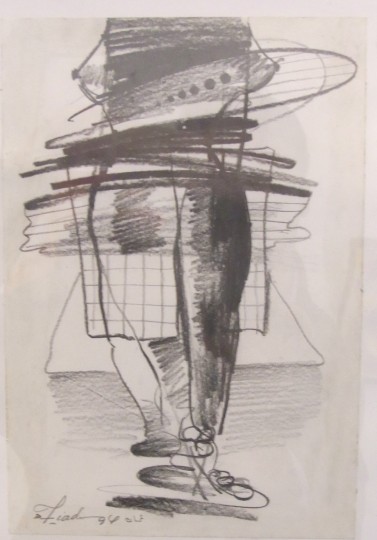
After the Intifada of 1991, the massive uprising against the Iraqi regime in the aftermath of the Gulf War, which was violently supressed, Ziad Haider fled Iraq, like many others. After a period of five years in Syria and Jordan he was recognized by the UN as a refugee and was invited to live in the Netherlands, which became his new homeland. With a few paintings and drawings, he arrived 1997 in Amersfoort. After Amersfoort he lived for short a while in Almere and finally in Amsterdam. In first instance it was not simple to start all over again as an artist in his new country. Beside he worked further in his personal style he started to draw portraits in the streets of Amsterdam (the Leidse Plein and the Rembrandtplein). Later he organised, together with the Dutch artist Paula Vermeulen he met during this time and became his partner, several courses in drawing and painting in their common studio. Ziad Haider was very productive in this period and created many different works in different styles. Giving courses in figurative drawing and painting and drawing portraits was for him very important. As he told in a Dutch television documentary on five Iraqi artists in the Netherlands (2004, see here) these activities and the positive interaction with people were for him the best tools to “drive away his nightmares”.

In his abstract works, always the main part of his artistic production, he sought the confrontation with the demons from the past. Although abstract there are often some recognisable elements, which are returning in several works during the years. A returning motive is the representation of his feet. This refers to several events from his own life. As a soldier Ziad had to march for days. When he was released from prison, together with some other prisoners, he was the only one who, although heavily tortured on his feet, who was able to stand up and walk. And his feet brought him further, on his long journey into exile, till he finally found a safe place to live and work.

The motive of his bare feet is not the only figurative element in his work. In many of his paintings and drawings there are some more or less anthropomorphic elements, often molten together with structures with the appearance of liquid metal. The theme of man and machine plays an important role in the expressive works of Ziad. Of course this is close connected to his own biography and history of war and imprisonment.
In some of his works one can vividly experience a sense of a claustrophobic space, referring to his time spending in the trenches during the war, the interior of the tank and- later- the prison-cell. But all these experiences went through a process of transformation, of abstraction and translated in the language of art. And this art is, unless the underlying struggle, very lyrical in its expression.

The also in the Netherlands living Iraqi journalist, poet and critic Karim al-Najar wrote about Ziad Haider: “For a very long time the artist, Ziad Haider, has been living in solitude, prison and rebellion. On this basis, the foregoing works constitute his open protest against the decline, triviality and prominence of half-witted personalities as well as their accession of the authority of art and culture in Iraq for more than two decades. Here we could touch the fruits of the artist’s liberty and its reflection on his works. For Ziad Haider has been able to achieve works showing his artistic talent and high professionalism within a relatively short time. We see him at the present time liberated from his dark, heavy nightmares rapidly into their embodiment through colour and musical symmetry with the different situations. It indeed counts as a visual and aesthetic view of the drama of life as well as man’s permanent question, away from directness, conventionality and false slogans”.
Although he opposed another American war against Iraq, with an uncertain outcome for its people, the end of the Ba’athist regime made it possible to visit his home country after many years of exile. In the autumn of 2003 he visited Iraq for the first time since his long absence in exile. His visit to iraq made a great impression and also influenced his work after. In the last series of paintings he made his use of colours changed dramatically. The explosive use of intense shades of red were replaced for a use of sober browns and greys. The dynamic compositions were changed in regular constructed forms. Also these works, from his last series, are represented on this exhibition.
Ziad meant a lot for many, as an artist, but also as a human being and a friend. Within the community of exiled Iraqi artists in the Netherlands he played a very important role. In 2004 he initiated the Iraqi cultural manifestation in Amsterdam, with the title “I cross the Arch of Darkness”, a quote from a poem by his friend, the also in the Netherlands living Iraqi poet Salah Hassan ( ﺃﻋﺒﺭﻗﻮﺲ ﻟﻟﻆﻻﻢ ﺃﻮﻤﻰﻋ ﻟﻟﻧﻬﺎﺭ ﺑﻌﻛﺎﺰﻱ , from his collected poems, published under the title “A rebel with a broken compass”, 1997). In this festival visual artists, poets, musicians and actors came together to show the variety and richness of the Iraqi cultual life in exile to a Dutch audience.
During the years Ziad and Paula lived at the Rozengracht in the old centre of Amsterdam, there home was a regular meetingpoint of many exiled Iraqi artists, poets, writers, musicians, actors, journalists and intellectuals. Many will cherish their sweet memories of the sometimes notorious gatherings till deep in the night. His sudden death in 2006 was a great loss for many of us.
The works of Ziad are still here and they deserve to be exhibited (now his second exhibition after he passed away). With this exhibition we celebrate Ziad Haider what he meant as an artist and as a human being.
Floris Schreve
Amsterdam, 2018
On this blog (mainly in Dutch):
Tentoonstelling Ziad Haider (Diversity and Art)
Iraakse kunstenaars in ballingschap
Modern and contemporary art of the Middle East and North Africa (English)
See also this In Memoriam of Ziad’s friend, the artcritic Amer Fatuhi
The opening:
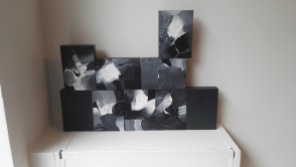
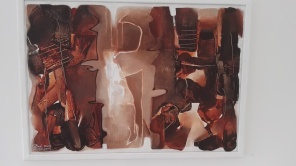
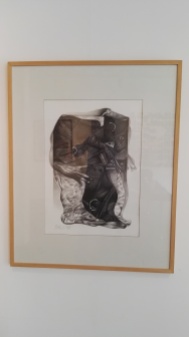

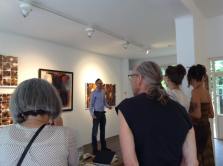
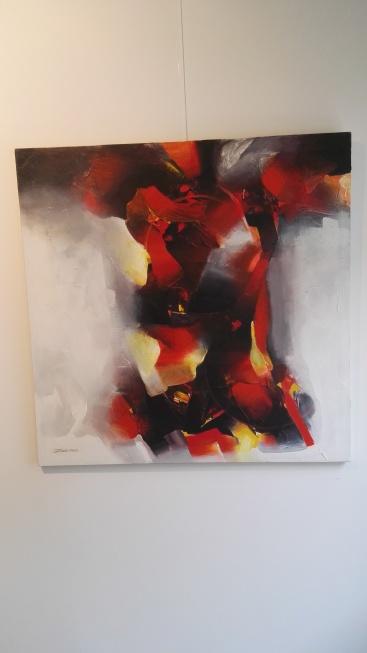

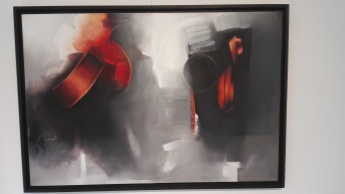
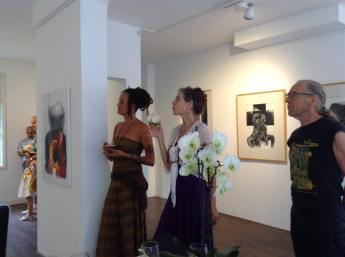
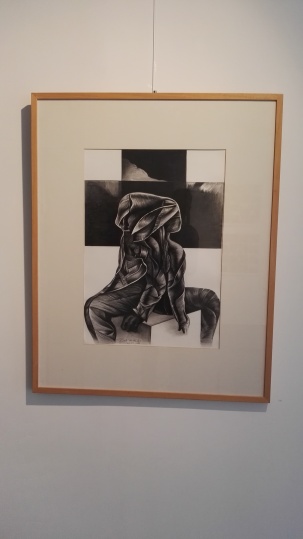
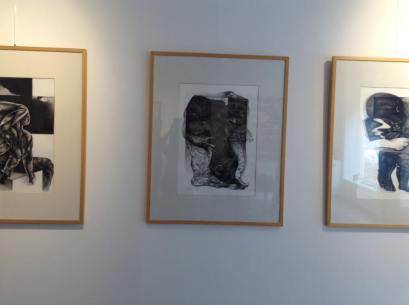

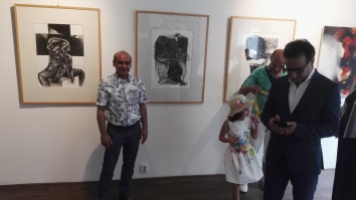
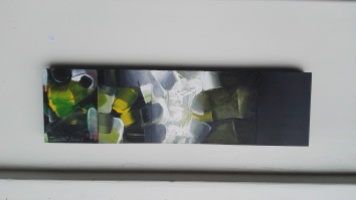
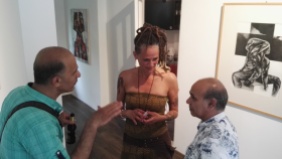
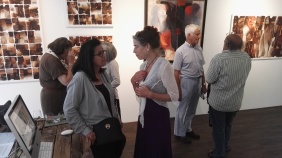
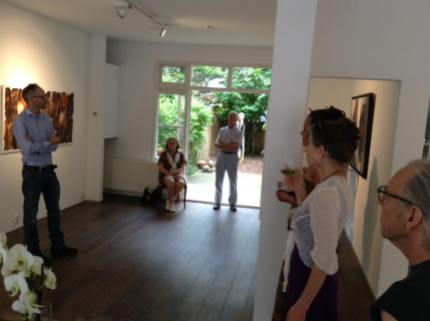
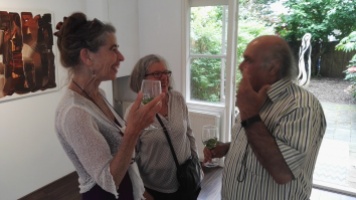
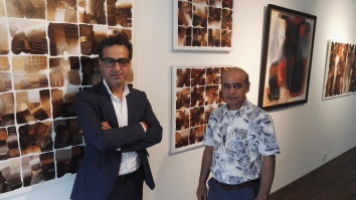
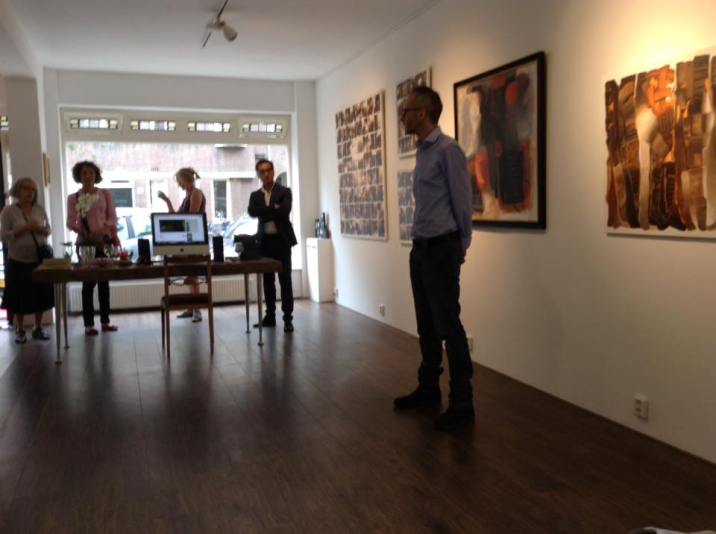

![36034246_10213517577988236_7883300927212355584_n[1]](https://fhs1973.files.wordpress.com/2018/05/36034246_10213517577988236_7883300927212355584_n1.jpg?w=309&resize=309%2C231&h=231#038;h=231 "36034246_10213517577988236_7883300927212355584_n[1]")
![36199930_10213517564347895_1129103892315897856_n[1]](https://fhs1973.files.wordpress.com/2018/05/36199930_10213517564347895_1129103892315897856_n1.jpg?w=309&resize=309%2C309&h=309#038;h=309&crop=1 "36199930_10213517564347895_1129103892315897856_n[1]")
![36258444_10213517572868108_1868273721077137408_n[1]](https://fhs1973.files.wordpress.com/2018/05/36258444_10213517572868108_1868273721077137408_n1.jpg?w=403&resize=403%2C544&h=544#038;h=544 "36258444_10213517572868108_1868273721077137408_n[1]")
![35296703_10213517575188166_2129127241244737536_n[1]](https://fhs1973.files.wordpress.com/2018/05/35296703_10213517575188166_2129127241244737536_n1.jpg?w=277&resize=277%2C207&h=207#038;h=207 "35296703_10213517575188166_2129127241244737536_n[1]")
![36176164_10213517574668153_5295042206011228160_n[1]](https://fhs1973.files.wordpress.com/2018/05/36176164_10213517574668153_5295042206011228160_n1.jpg?w=154&resize=154%2C207&h=207#038;h=207 "36176164_10213517574668153_5295042206011228160_n[1]")
![36002977_10213517573468123_8660155387439218688_n[1]](https://fhs1973.files.wordpress.com/2018/05/36002977_10213517573468123_8660155387439218688_n1.jpg?w=277&resize=277%2C207&h=207#038;h=207 "36002977_10213517573468123_8660155387439218688_n[1]")
![36003022_10213517567747980_8017425063580008448_n[1]](https://fhs1973.files.wordpress.com/2018/05/36003022_10213517567747980_8017425063580008448_n1.jpg?w=454&resize=454%2C454&h=454#038;h=454&crop=1 "36003022_10213517567747980_8017425063580008448_n[1]")
![34985037_10213517563587876_4889890446261616640_n[1]](https://fhs1973.files.wordpress.com/2018/05/34985037_10213517563587876_4889890446261616640_n1.jpg?w=258&resize=258%2C258&h=258#038;h=258&crop=1 "34985037_10213517563587876_4889890446261616640_n[1]")
![36045967_10213517568307994_5524205344345030656_n[1]](https://fhs1973.files.wordpress.com/2018/05/36045967_10213517568307994_5524205344345030656_n1.jpg?w=258&resize=258%2C192&h=192#038;h=192 "36045967_10213517568307994_5524205344345030656_n[1]")
![35296464_10213517560987811_7090941600687194112_n[1]](https://fhs1973.files.wordpress.com/2018/05/35296464_10213517560987811_7090941600687194112_n1.jpg?w=304&resize=304%2C304&h=304#038;h=304&crop=1 "35296464_10213517560987811_7090941600687194112_n[1]")
![36063456_10213517567267968_6463181574316752896_n[1]](https://fhs1973.files.wordpress.com/2018/05/36063456_10213517567267968_6463181574316752896_n1.jpg?w=408&resize=408%2C304&h=304#038;h=304 "36063456_10213517567267968_6463181574316752896_n[1]")
Tentoonstelling IM Ziad Haider- زياد حيدر
IM Ziad Haider
Gallery Out in the Field
Warmondstraat 197, Amsterdam
27/5- 27/6/2018
http://www.art-gallery-outinthefied.com
زياد حيدر
Here the English version
Het abstracte werk van Ziad Haider (al-Amara, Irak, 1954-Amsterdam 2006) kan worden gezien als een diep doorleefde reflectie op zijn roerige levensgeschiedenis, zij het altijd in gesublimeerde vorm. Afkomstig uit Irak en, na een periode van oorlog en gevangenschap, uitgeweken naar Nederland, heeft hij, in de jaren dat hij werkzaam in Nederlandse ballingschap was, een groot aantal indrukwekkende werken nagelaten.
Ziad Haider studeerde begin jaren zeventig aan de kunstacademie in Bagdad.
In de twee decennia daarvoor was er in Irak een bloeiende modernistische kunstscene ontstaan. Vanaf de jaren vijftig tot in de jaren zeventig was Irak een van de meest toonaangevende landen op het gebied van moderne kunst en cultuur in de Arabische wereld. Iraakse kunstenaars als Jewad Selim, Shakir Hassan al-Said en Mahmud Sabri creëerden hun eigen versie van het internationale modernisme. Hoewel deze kunstenaars elders (vooral in Europa) waren opgeleid, trachtten zij, teruggekeerd naar hun geboorteland, een moderne kunstscene op te zetten, die zowel geworteld was in de lokale traditie, als aansloot bij de internationale ontwikkelingen. Zij creëerden hiermee een stevige basis voor een heel eigen Iraakse moderne kunsttraditie, hoezeer deze ook onder druk kwam te staan in de daaropvolgende decennia, vol met onderdrukking, oorlog en bezetting, waardoor vele Iraakse kunstenaars noodgedwongen hun werk in ballingschap moesten voortzetten.
In de tijd dat Ziad Haider studeerde kwam net het kantelpunt. Kunstenaars die lid van de regerende Ba’thpartij waren, konden, wanneer zij ook bereid waren om bij gelegenheid mee te werken met de verheerlijking van het regime en de officiële propaganda, soms een glanzende carrière tegemoetzien, tot en met de mogelijkheid tot exposeren in het buitenland. Ziad Haider, die geen lid van de Ba’thpartij was, werd na zijn studietijd meteen het leger ingestuurd.
Kort daarna, begin 1980, stortte het Iraakse regime zich in de oorlog met Iran. Vele jonge Iraki’s werden de oorlog ingestuurd om aan het front als soldaat te dienen en ook Ziad Haider trof dit lot. De Irak/Iran oorlog was een vernietigende loopgravenoorlog, waarin uiteindelijk een miljoen Iraki’s (en een miljoen Iraniërs) de dood vonden. De jaren van oorlog betekenden een lange onderbreking van Ziads loopbaan als kunstenaar. Zijn leven zou nog een veel heviger wending nemen toen hij midden jaren tachtig, gedurende een kort verlof in Bagdad, werd gearresteerd, omdat iemand over hem had geklikt bij de geheime dienst. Hij had over een portret van Saddam geplast. Voor bijna vijf jaar verbleef Ziad Haider in de beruchte Abu Ghraib gevangenis, de donkerste periode van zijn leven (1986-1990). Nadat hij was vrijgelaten werd hij weer terug het leger ingestuurd dat net Koeweit was binnengevallen. Ook de Golfoorlog van 1991 maakte hij volledig mee.
Na de volksopstand tegen het regime van 1991 ontvluchtte hij Irak. Voor vijf jaar verbleef hij achtereenvolgens in Syrië en Jordanië, totdat hij in 1997 als vluchteling aan Nederland werd toegewezen. Met een paar schilderijen en een serie tekeningen, kwam hij aan in ons land, waar hij terecht kwam in Amersfoort. Na Amersfoort woonde hij voor korte tijd in Almere en vervolgens in Amsterdam. Net als voor veel van zijn lotgenoten, was het in eerste instantie niet makkelijk om zich hier als kunstenaar te vestigen. Naast dat hij doorwerkte aan zijn persoonlijke stijl, werkte hij ook veel als portrettist en tekende hij portretten van passanten op het Leidse Plein en het Rembrandtplein. Later gaf hij, samen met Paula Vermeulen, die hij in die tijd ontmoette, ook verschillende teken- en schildercursussen in hun gemeenschappelijke atelier. Ziad Haider was in deze periode zeer productief, werkte met verschillende technieken in verschillende stijlen. Juist het werken met zijn cursisten of het tekenen van portretten op straat waren voor hem een belangrijke bron levenslust, zoals hij dat een keer verklaarde voor de IKON televisie, in een documentaire uit 2003: “Een manier om de terugkerende nachtmerries te verdrijven” (Factor, Ikon, 17-6-2003, zie hier).
In zijn abstracte werk ging Ziad Haider juist de confrontatie aan met de heftige gebeurtenissen uit zijn leven van de jaren daarvoor. In deze werken duiken ook een paar herkenbare elementen op, die regelmatig terugkeren in verschillende werken. Een motief dat op verschillende manieren terugkeert, is de weergave van zijn voeten. Dit gegeven refereert aan verschillende gebeurtenissen in zijn leven. Als soldaat moest Ziad Haider vaak lange marsen afleggen. Toen hij uit de gevangenis werd vrijgelaten was hij de enige van zijn medegevangenen die nog amper in staat was om op zijn voeten te staan. En natuurlijk hebben zijn voeten hem verder gedragen, op zijn lange reis in ballingschap, totdat hij uiteindelijk een veilige plaats vond.
Het motief van de voeten is niet het enige herkenbare gegeven in Ziads werken. Vaak zijn er min of meer antropomorfe elementen te ontdekken. Deze lijken vaak versmolten met vormen die doen denken aan gloeiend metaal. Het thema mens en machine speelt in het werk van Ziad een belangrijke rol. Ook dit thema hangt vanzelfsprekend nauw samen met zijn eigen geschiedenis van oorlog en gevangenschap.
Voelbaar is in sommige werken ook de claustrofobische ruimte, die refereert aan zijn verblijf in de loopgraven, de tank en daarna de cel, al zijn deze ervaringen altijd door een transformatieproces gegaan, waardoor ze zijn te vervatten in kunst. En deze kunst heeft, ondanks de strijd, vaak een buitengewoon lyrisch karakter.
De in Nederland wonende Iraakse journalist, dichter en criticus Karim al-Najar over Ziad Haider: ‘For a very long time the artist, Ziad Haider, has been living in solitude, prison and rebellion. On this basis, the foregoing works constitute his open protest against the decline, triviality and prominence of half-witted personalities as well as their accession of the authority of art and culture in Iraq for more than two decades. Here we could touch the fruits of the artist’s liberty and its reflection on his works. For Ziad Haider has been able to achieve works showing his artistic talent and high professionalism within a relatively short time. We see him at the present time liberated from his dark, heavy nightmares rapidly into their embodiment through colour and musical symmetry with the different situations. It indeed counts as a visual and aesthetic view of the drama of life as well as man’s permanent question, away from directness, conventionality and false slogans’.
Hoe zeer hij ook zijn bedenkingen had bij de Amerikaanse invasie van Irak in 2003, het betekende voor Ziad wel een mogelijkheid om weer zijn geboorteland te bezoeken. In de herfst van 2003 zette hij deze stap. Zijn bezoek aan Irak maakte grote indruk en had ook zijn weerslag op de laatste serie werken die hij maakte. Allereerst veranderde zijn palet. Het intense rood, dat zijn werken voor die tijd sterk had gedomineerd, werd vervangen door sobere bruinen en grijzen. De heftige bewegingen in zijn composities maakten plaats voor een regelmatiger opbouw. Ook dat werk, uit zijn laatste reeks, is op deze tentoonstelling te zien.
Ziad heeft veel betekend als kunstenaar, maar verder was hij ook een belangrijk figuur binnen de Iraakse kunstscene in ballingschap. Zo was hij de initiatiefnemer van het de manifestatie “Ik stap over de Boog van Duisternis; Iraakse kunstenaars in Amsterdam”. Onder deze titel , die verwijst naar een zin uit een gedicht van de dichter en Ziads vriend Salah Hassan, ( “ﺃﻋﺒﺭﻗﻮﺲ ﻟﻟﻆﻻﻢ ﺃﻮﻤﻰﻋ ﻟﻟﻧﻬﺎﺭ ﺑﻌﻛﺎﺰﻱ ” , uit de bundel Een rebel met een kapot kompas, 1997), werd er in 2004 een Iraaks cultureel festival in Amsterdam georganiseerd, waarin verschillende uit Irak afkomstige beeldende kunstenaars, dichters, musici en acteurs centraal stonden.
Gedurende de jaren dat Ziad en Paula samen aan de Rozengracht woonden, was hun huis een trefpunt van vele Iraakse beeldende kunstenaars, maar ook dichters, schrijvers, musici, acteurs en journalisten. Velen zullen dierbare herinneringen koesteren aan deze roemruchte avonden. Het plotselinge overlijden van Ziad Haider in 2006 kwam dan ook als een grote klap.
Zijn werk is er gelukkig nog en verdient het om getoond te worden. Met deze tentoonstelling vieren wij wat hij als kunstenaar en als mens heeft betekend.
Floris Schreve
Amsterdam, mei 2018
Verder op dit blog:
Tentoonstelling Ziad Haider (Diversity and Art)
Iraakse kunstenaars in ballingschap
Zie ook deze In Memoriam van de Iraakse kunstcriticus Amer Fatuhi
De opening:
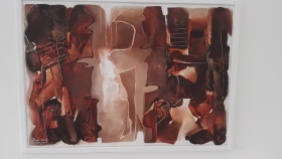
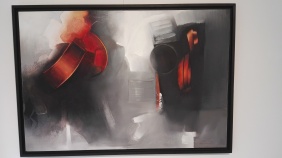
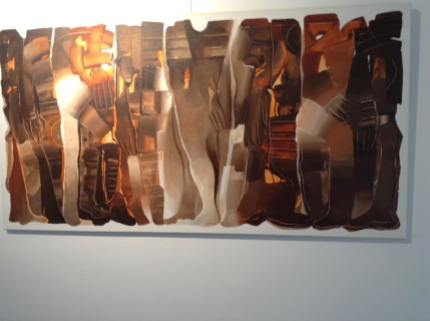
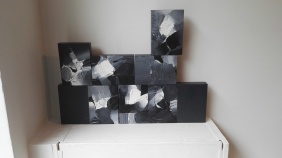
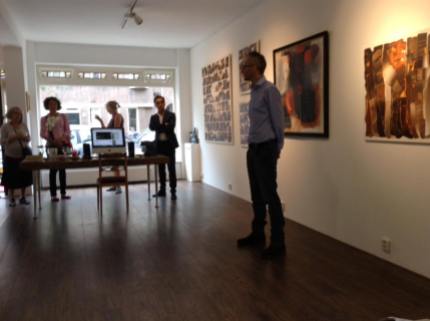
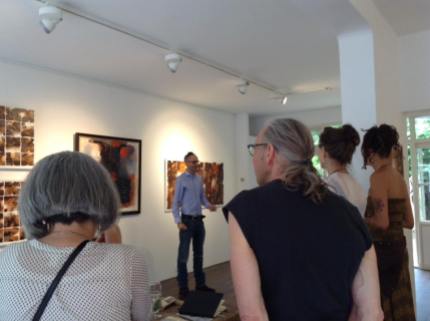
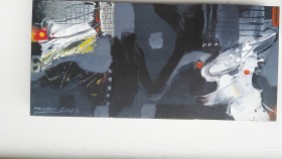
![36002977_10213517573468123_8660155387439218688_n[1]](https://fhs1973.files.wordpress.com/2018/05/36002977_10213517573468123_8660155387439218688_n1.jpg?w=248&resize=248%2C185&h=185#038;h=185 "36002977_10213517573468123_8660155387439218688_n[1]")
![36045967_10213517568307994_5524205344345030656_n[1]](https://fhs1973.files.wordpress.com/2018/05/36045967_10213517568307994_5524205344345030656_n1.jpg?w=248&resize=248%2C185&h=185#038;h=185 "36045967_10213517568307994_5524205344345030656_n[1]")
![36199930_10213517564347895_1129103892315897856_n[1]](https://fhs1973.files.wordpress.com/2018/05/36199930_10213517564347895_1129103892315897856_n1.jpg?w=248&resize=248%2C248&h=248#038;h=248&crop=1 "36199930_10213517564347895_1129103892315897856_n[1]")
![36176164_10213517574668153_5295042206011228160_n[1]](https://fhs1973.files.wordpress.com/2018/05/36176164_10213517574668153_5295042206011228160_n1.jpg?w=464&resize=464%2C626&h=626#038;h=626 "36176164_10213517574668153_5295042206011228160_n[1]")
![35296703_10213517575188166_2129127241244737536_n[1]](https://fhs1973.files.wordpress.com/2018/05/35296703_10213517575188166_2129127241244737536_n1.jpg?w=309&resize=309%2C231&h=231#038;h=231 "35296703_10213517575188166_2129127241244737536_n[1]")
![34985037_10213517563587876_4889890446261616640_n[1]](https://fhs1973.files.wordpress.com/2018/05/34985037_10213517563587876_4889890446261616640_n1.jpg?w=309&resize=309%2C309&h=309#038;h=309&crop=1 "34985037_10213517563587876_4889890446261616640_n[1]")
![36034246_10213517577988236_7883300927212355584_n[1]](https://fhs1973.files.wordpress.com/2018/05/36034246_10213517577988236_7883300927212355584_n1.jpg?w=500&resize=500%2C374&h=374#038;h=374 "36034246_10213517577988236_7883300927212355584_n[1]")
![36063456_10213517567267968_6463181574316752896_n[1]](https://fhs1973.files.wordpress.com/2018/05/36063456_10213517567267968_6463181574316752896_n1.jpg?w=212&resize=212%2C158&h=158#038;h=158 "36063456_10213517567267968_6463181574316752896_n[1]")
![36003022_10213517567747980_8017425063580008448_n[1]](https://fhs1973.files.wordpress.com/2018/05/36003022_10213517567747980_8017425063580008448_n1.jpg?w=212&resize=212%2C212&h=212#038;h=212&crop=1 "36003022_10213517567747980_8017425063580008448_n[1]")
![35296464_10213517560987811_7090941600687194112_n[1]](https://fhs1973.files.wordpress.com/2018/05/35296464_10213517560987811_7090941600687194112_n1.jpg?w=716&resize=716%2C716&h=716#038;h=716&crop=1 "35296464_10213517560987811_7090941600687194112_n[1]")
Facebook censureert eerlijke discussie over Hiv
Het is alweer een tijd geleden dat ik iets op mijn blog heb gepubliceerd. De voornaamste reden is dat ik mijn energie vooral in andere zaken heb gestoken. In de eerste plaats het afmaken van mijn studie, die nu in een BA/MA structuur is omgezet. Op dit moment ben ik bezig om alsnog mijn masters Arts & Culture in Leiden te halen. Een intensief, maar ook buitengewoon inspirerend programma. Dit vraagt wel mijn gehele intellectuele focus. Het bloggen daarnaast heb ik om vooral om die reden wat op de lange baan geschoven.
Verder is er nog iets in mijn persoonlijke leven gebeurd. Hoewel ik zeker van plan was om daarover schrijven, wilde ik het eerst laten bezinken en zelf alles goed op een rijtje krijgen. Dit speelt sinds augustus 2014. Als seksueel actieve (bi)homoman met, het is niet anders, wisselende contacten, is het een goed gebruik om je regelmatig te laten testen op Seksueel Overdraagbare Aandoeningen, oftewel SOA’s. Hoewel ik mij vrij goed aan de Safer Seks regels heb gehouden (redelijk consequent gebruik van condoom bij anale seks, of het nu actief of passief is—‘top of bottom’ in het jargon- laat ik het maar expliciet zeggen) heb ik in de loop der jaren best wel eens iets kleins opgelopen. Een paar keer een kleine SOA, die met een antibioticum injectie weer was verholpen (Gonoerroe, Chlamydia, niets ernstigs, zie verder dit nummer van Najib Amhali, zeker herkenbaar). Alleen kwam het slechte nieuws in de zomer van 2014 dat ik helaas toch HIV had opgelopen.
Tegenwoordig is, in de westerse wereld althans, Hiv geen dodelijke ziekte meer. Het is zelfs goed te behandelen met Hiv remmers, zonder al te ernstige bijwerkingen (al zijn die er wel). Maar er valt goed mee te leven. Al kom je er, althans, volgens de huidige stand van zaken, nooit meer van af. Er is nog geen genezing.
Wel is het mogelijk dat, mits je altijd je medicijnen inneemt, met virus zo wordt teruggedrongen dat je het niet meer kunt overdragen. Het is dan ook niet meer in je bloed aantoonbaar en bij een test is de uitslag dan ook negatief. Dit blijft alleen zo als je consequent je remmers slikt. Als je daarmee zou stoppen komt het virus onherroepelijk terug.
Toen het virus bij mij ontdekt werd ben ik door de GG&GD Amsterdam meteen doorverwezen naar de Hiv poli van het OLVG. Daar is door mijn Hiv consulent en internist een behandelprogramma opgesteld, dat buitengewoon goed aanslaat. Ik zit op de nieuwste combinatietherapie. Aanvankelijk twee pillen per dag (Kivexa en Tivicay), nu samengevoegd in een pil (Triumeq). Hoewel het wel twee maanden duurde voordat de pillen beschikbaar waren- onze minister was een beetje langzaam met het zetten van de noodzakelijke handtekening die deze therapie in Nederland van start kon laten gaan (bedankt Edith Schippers, dat je alsnog een krabbeltje hebt gezet, ik heb daar nu veel profijt van), lagen de medicijnen eind oktober 2014 in de Nederlandse apotheken.
Toen ik met de medicatie begon had ik een hoge viral load, wat normaal is in de eerste periode na de besmetting. Gelukkig was mijn afweer (mijn cd4 cellen) nog nauwelijks aangetast. Nadat ik aan de pillen was begonnen en ik twee weken later terug moest komen voor controle, bleek het virus al ondetecteerbaar te zijn. Dat betekent dat mijn viral load zo laag was geworden, dat ik voor een HIV test als negatief uit de bus zou komen. Het belangrijkste is om dat nu zo te houden. Het enige wat je daarvoor moet doen is om iedere dag je medicijnen te nemen (in mijn geval dagelijks een Triumeq pil).
Misschien is er nog iets belangrijks om te vermelden. Nu ik inmiddels al maanden ondetecteerbaar ben, is het eigenlijk vrijwel uitgesloten dat ik het virus kan overdragen- de kans is in ieder geval zeer klein (minder dan 1: 1000). Dat kan dus niet via bloedcontact of via sperma, de enige twee mogelijkheden voor een Hiv transmissie. Zo lang je je medicijnen neemt is het dus alsof je Hiv negatief bent en ben je de facto onbesmettelijk (niet onprettig voor je sekspartners- en je eigen gemoedsrust).
Wellicht is het zinvol om dit verband het zg Zwitserse Standpunt ter sprake te brengen (de artsen van de Zwitserse Aids Hilfe waren de eersten die dit standpunt hebben geformuleerd). Het Zwitserse Standpunt houdt in dat als je geruime tijd ondetecteerbaar bent, je medicijnen consequent inneemt (therapietrouw bent) en geen andere seksueel overdraagbare aandoeningen hebt, de situatie niet anders is dan als je Hiv negatief zou zijn, met als consequentie, dat je geen condoom meer hoeft te gebruiken om veilige seks te hebben. De Nederlandse gezondheidsautoriteiten willen overigens nog niet aan het Zwitserse standpunt, al is er tegenwoordig wel veel beweging en is er ook in Nederland onder artsen een toenemende welwillendheid naar deze grondhouding. Dit is me uit verschillende hoeken duidelijk geworden, al is de discussie in Nederland nog steeds in volle gang.
Ik ben zelf overigens zeker voor condoomgebruik (en pas het ook toe), alleen maak ik soms weleens een uitzondering als ik goede redenen heb om aan te nemen dat het met een Hiv positieve maar verder SOA vrije partner is. En ook de setting veilig is. Soms zijn er genoeg indicaties om daar inderdaad vanuit te gaan. Al staat veiligheid bij mij wel voorop.
Hoewel ik wel enige tijd nodig had om alles op een rijtje te zetten- je krijgt best wel een klap- valt leven met Hiv in de praktijk nogal mee. Althans in mijn geval- ik heb gelukkig geen extra complicaties en ik bevind me in de gelukkige positie dat de verzekering mijn dure medicatie vergoedt (waar ook premie voor is betaald, dus dat is niet meer dan terecht, voordat er daar weer discussies over komen).
Al jaren, ook toen ik nog Hiv negatief was, de ziekte nooit ver weg was uit mijn dagelijkse omgeving- ik heb, omdat ik mij toch vrij veel in het homoseksuele milieu begeef, al jaren relatief veel vrienden die Hiv positief zijn- is het nu een deel van mijn leven geworden. Ik heb me er zelf ook bij neergelegd en er valt goed mee te leven. De wetenschap dat ik het niet meer kan overdragen heeft mij zeker rust gebracht, je hebt dan echt een zorg minder. Kortom, het valt best mee. In delen van de wereld waar goede, toegankelijke en betaalbare medicatie voorhanden is het leven met Hiv niet heel anders dan zonder.
Tot zover mijn eigen situatie.
Zeer onlangs (23 juni 2015) besteedde het NOS Journaal aandacht aan een nieuw Hiv medicijn, waarmee binnenkort een proef van start gaat in Amsterdam. Helemaal nieuw is het medicijn trouwens niet, het gaat om de Hiv- remmer Truvada, die al een paar jaar in de roulatie is. Was wel nieuw is, althans in Nederland, is de toepassing. Naast een werking als Hiv remmer heeft Truvada nog een andere eigenschap. Het kan, bij regelmatige inname, bij een Hiv negatief persoon een Hiv besmetting voorkomen. Het werkt dus ook als een preventief medicijn, althans in meer dan 80% van de gevallen. Het kan dus een krachtig middel zijn ter voorkoming van nieuwe Hiv besmettingen. In die zin is het middel een mijlpaal.
In het NOS journaal komt Pieter Cleays aan het woord, alweer een paar jaar een bekend gezicht van de Amsterdamse gay-community, vooral van de leatherscene (hij was Mr. Leather Amsterdam, Mister Leather Europe , dat soort dingen). Hij is ook nauw betrokken bij diverse feesten, waar ik zelf als vrijwilliger bij ben betrokken (in en rond Club Church, hier in Amsterdam). Zodoende kennen we elkaar al een poosje. Zie hier trouwens zijn blog.
In het NOS journaal bepleit Pieter het gebruik van Truvada als PrEP (Pre Exposure Profilaxis), als preventief medicijn tegen Hiv dus. Zelf sta ik daar overigens gematigd positief tegenover. Wel ben ik een voorstander van condoomgebruik, nog altijd de simpelste en meest effectieve preventie, maar ik zie ook dat er in de gayscene een afnemende bereidheid is om het condoom consequent te gebruiken. Een belangrijke reden is natuurlijk het ondetecteerbaar worden van Hiv patiënten, waardoor de besmettingskans afneemt. Plus dat het geen dodelijke, maar een chronische ziekte is geworden.
Dit is een issue dat natuurlijk veel discussie uitlokt. Hoewel ik zeer voor het promoten van condooms ben, zie ik ook wel dat PrEP een belangrijke aanvulling kan zijn, al weet ik niet of ik de zorg kan onderschrijven dat daardoor een zorgvuldig en consequent condoomgebruik nog meer zal afnemen. Maar dat is iets waar je over zou moeten kunnen discussiëren. Móeten inderdaad, daarvoor is het onderwerp te belangrijk.
Om deze reden plaatste ik een topic op mijn facebookpagina, met een link naar de bijdrage van Pieter Claeys in het journaal. Ook verwees ik naar een buitengewoon relevante uitzending van de VPRO radio, een tijdje terug, over hetzelfde onderwerp. Het ging om de radio-documentaire Kan dat condoom nu wel af? van 26 oktober 2014. In de uitzending kwamen oa aan het woord Gert Hekma en Laurens Buijs, gespecialiseerd in homostudies en verbonden aan de UvA, Richard Keldoulis, oprichter van Club Church en Stichting Gala, de eerder genoemde Pieter Claeys, Leo Schenk, oprichter van Poz & Proud, de afdeling voor homomannen van de Hiv Vereniging Nederland en twee stellen waarvan een van de partners Hiv positief is en de ander Hiv negatief. Alle relevante aspecten van deze discussie kwamen wel aan bod. Dus alle reden om een link op Facebook te plaatsen, nav de actualiteit en wat er in het journaal aan de orde was geweest.
Binnen de kortste keren hadden er zo’n twintig mensen gereageerd en waren er meer dan 100 bijdragen aan de discussie geplaatst. De meningen over Truvada blijken zeer verdeeld. De een is bang dat PrEP een pretpil kan worden en vindt een zwaar medicijn als Truvada niet geschikt voor dit soort gebruik, terwijl de ander dit een noodzakelijk middel vindt om de Hiv epidemie in te dammen. Voor beide standpunten valt overigens iets te zeggen en beide visies zijn hoe dan ook legitiem.
Maar, wat doet Facebook? Nadat er een levendige discussie was ontstaan, waarin de meest uiteenlopende meningen alle ruimte had gekregen, verwijderde Facebook opeens het topic van mijn wall. De reden? Er zou sprake zijn van pornografisch materiaal. Wat was dan de steen des aanstoots?
De site van de VPRO toont als beeldmateriaal bij de radiodocumentaire van oktober 2014 op haar site een foto van Rene Zuiderweld geplaatst, binnen de Amsterdamse homoscene een zeer bekende fotograaf. Zijn werk is zeker niet vrij van erotiek, maar vooral bijzonder esthetisch. Bijna altijd staat het naakte mannelijk lichaam in zijn werk centraal. Zeker seksueel getint, maar niet aanstootgevend. Zie zijn website http://renezuiderveld.tumblr.com/ . De bewuste foto wordt hier trouwens getoond.
Wat bij de VPRO kan, kan bij Facebook echter niet. Zelfs zo verschrikkelijk niet, dat ook de toch best actuele en, al zeg ik het zelf, ook relevante en zeker kwalitatief goede discussie moest worden verwijderd. Goed, het is maar facebook, maar aan de andere kant pretendeert Facebook wel een sociaal medium te zijn, waar informatie vrij kan worden uitgewisseld. IS, allerlei extreemrechtse groepen en andere politiek zeer controversiële clubs hebben daar alle gelegenheid om een platform te creëren. Waarom mogen dan homomannen geen discussie voeren over een onderwerp dat hun eigen gezondheid, maar ook die van anderen aangaat? Je zou zelfs kunnen zeggen dat in dit verband het algemeen belang is gediend bij een vrije informatie-uitwisseling. Maar vanwege een ingetogen en esthetische foto van een fotograaf die regelmatig in serieuze galeries exposeert, wordt het hele item gecensureerd. Ik had de hoop dat Facebook graag een boegbeeld wilde zijn van de vrije gedachte, van de vrijheid van meningsuiting en een vrije ruimte wil zijn voor diverse geluiden. Maar op deze manier lijkt het helemaal nergens op.
Zeer geachte Mark Zuckerberg, of wie hem vertegenwoordigt, zoek de discussie terug en kijk er nog eens naar. En kom dan op je schreden terug, al dan niet met het spreekwoordelijke schaamrood op de kaken. Want om uit een misplaatst puritanisme een kunstwerk en een bijzonder relevante discussie over een issue dat ons allemaal aangaat te censureren, zoiets mag niet kunnen en is een vrij platform, wat Facebook graag wil zijn, absoluut onwaardig. Vandaar mijn oproep, kom hierop terug en herstel de stomme fout die jullie hebben begaan. Want, hoe afgezaagd het ook klinkt, dit is namelijk wel een principiële kwestie. Niets meer, maar zeker ook niets minder!
Floris Schreve
Hieronder nog wat materiaal dat in de gecensureerde discussie aan de orde kwam, te beginnen de webpagina van de uitzending van de VPRO met de wondermooie foto van Rene Zuiderveld!

Klik op afbeelding om naar de site te gaan en de uitzending te beluisteren
Zie hier de website van Poz & Proud, de sectie voor homomannen van de HVN
Zier hier het item in het NOS journaal over Truvada van maandag 22-6-2015
Een, zeker wat mij betreft, niet onbelangrijk tegengeluid in de Volkskrant van 24-6, van huisarts Adri Heijnen, die een praktijk op de Wallen houdt en veel homoseksuele mannen uit de desbetreffende doelgroep onder zijn patiënten heeft (hij is bovendien ook mijn eigen huisarts, maar dat terzijde). Het type homoman dat hij beschrijft herken ik zeker, al weet ik niet of ik (geheel) in die categorie thuishoor.
Hoewel niet helemaal actueel meer, is de tweedelige film HIV and Me (BBC, 2007), van de Britse acteur Stephen Fry wat mij betreft nog altijd bijzonder de moeite waard. Hier deel 1, daarna doorklikken naar deel 2
Update 30 december 2015:
In actie voor PrEP in Amsterdam met een aantal mensen van het COC, de HIV Vereniging, Poz&Proud en vrijwilligers van Club Church/Stichting Gala:

Gisteravond, in de kelder van de Schreierstoren in Amsterdam, kwamen deze mannen bij elkaar om te praten over wat de beste acties zijn om druk op de minister te zetten om PrEP zo snel als mogelijk beschikbaar te maken, en om plannen te maken over hoe de homogemeenschap klaar te stomen voor de PrEP-revolutie.
Het was een inspirerende avond met veel actiebereidheid. De komende weken, maanden zullen we de vruchten zien van dit initiatief! #PrEPNu
Foto: Remon van den Kommer
zie ook het Britse Prepster, http://prepster.info/
Floris Schreve
Ondertussen is het 2018. Stemadvies van Jennifer Hopelezz, voor de komende Gemeenteraadsverkiezingen:

Putins hetze tegen homoseksuelen

Miss Tina Tampax op de Amsterdam Gaypride (botenparade van 3-8-2013), De vertaling van de Russische tekst luidt: “Lieve vrienden en vriendinnen, jullie zijn niet alleen!”
(foto: Floris Schreve)
Afgelopen week (8-8-2013) verscheen er een hartenkreet van de Britse acteur en schrijver Stephen Fry, bekend van oa zijn indrukwekkende vertolking van Osacar Wilde in de film Wilde (1998), in diverse media (in Nederland oa in de Volkskrant). De open brief van Fry, gericht aan David Cameron en aan de leden van het IOC, stond niet op zichzelf. Hier in Amsterdam bijvoorbeeld stond de Gaypride van deze maand voor een belangrijk deel in het teken van protest tegen Putins krankzinnige ‘anti-homo-propagandawet’. Ook op dit blog wil ik stilstaan bij de protestacties, die ik van harte ondersteun. Hieronder de open brief van Stephen Fry en verder een kleine compilatie van foto’s en ander materiaal van de protestacties gedurende het Amsterdamse Gaypride weekend.
Open brief aan David Cameron en het IOC (de Volkskrant, 8-8-2013):
Geachte minister-president, geachte leden van het IOC,
Ik schrijf u in de oprechte hoop dat allen die de sport en de olympische gedachte een warm hart toedragen, willen nadenken over de smet die op de Vijf Ringen werd geworpen toen in 1936 de Olympische Spelen in Berlijn werden gehouden, met als beschermheer een jubelende tiran die twee jaar daarvoor een wet had ingevoerd waardoor een minderheid, wier enige misdaad het feit van haar geboorte was, het slachtoffer werd van bijzondere vervolging. Hitler weerde de Joden uit de academische wereld en uit openbare functies, liet de politie de andere kant opkijken als Joden mishandeld, bestolen of vernederd werden en hij verbande en verbrandde alle door Joden geschreven boeken. Hij beweerde dat zij de puurheid en traditie van alles wat Duits was ‘vervuilden’, dat ze een gevaar vormden voor de staat, voor de kinderen en voor de toekomst van het Rijk.
Tegelijk gaf hij hun, hoe tegenstrijdig ook, de schuld van de misdaden van het communisme en van het in handen hebben van het internationale kapitaal en de banken. Hij beschuldigde hen van het verwoesten van de cultuur, met hun liberalisme en anders-zijn.
Destijds schonk de olympische beweging totaal geen aandacht aan dit kwaad en ging de beruchte Berlijnse olympiade gewoon door. Die bood een opgewekte Führer een podium waardoor hij zijn status zowel in eigen land als in het buitenland kon verhogen. Het gaf hem zelfvertrouwen, daarover zijn alle historici het eens. En wat hij daarmee deed, weten we allemaal.
Poetin is deze krankzinnige misdaad op griezelige wijze aan het herhalen, dit keer tegen Russen die lesbisch, homo- of biseksueel of transgender zijn. De politie negeert dat ze mishandeld, vermoord en vernederd worden. Iedere verdediging van of zinnige discussie over homoseksualiteit is bij wet verboden. Iedere uitspraak, bijvoorbeeld dat Tsjaikovski homo was en dat dat in zijn kunst en leven tot uitdrukking kwam en andere homoseksuele kunstenaars inspireerde, kan iemand op gevangenisstraf komen te staan.
Het volstaat niet om te zeggen dat homoseksuele olympiërs al dan niet veilig zijn in het Olympisch Dorp. Het IOC moet absoluut namens de menselijkheid die zij verondersteld wordt te vertegenwoordigen een ferm standpunt innemen tegen de barbaarse, fascistische wet die Poetin er bij de Doema heeft doorgedrukt. Laten we niet vergeten dat de olympische nummers ooit niet alleen atletiek betroffen, maar dat het ook ging om culturele ontmoetingen. We moeten ons ervan bewust zijn dat sport in feite cultuur is. Sport bestaat niet onder een glazen koepel, geïsoleerd van samenleving en politiek. Het idee dat sport en politiek los van elkaar staan, is erger dan dom, het is kwaadaardig en moedwillig fout. Iedereen weet dat politiek met alles verbonden is, want het is afgeleid van het Griekse begrip ‘met de mensen te maken hebbend’.
Een totale boycot van de Russische Winterspelen van 2014 in Sochi is van het allergrootste belang. Hou ze maar ergens anders, in Utah, in Lillehammer, waar dan ook. Ten koste van alles moet de indruk worden vermeden dat Poetin de goedkeuring van de beschaafde wereld kan wegdragen.
Hij maakt homoseksuelen tot zondebok, net zoals Hitler met de Joden heeft gedaan. Daar mag hij niet mee wegkomen. Ik weet waarover ik het heb. Ik ben in Rusland geweest en ben de confrontatie aangegaan met de politicus die in Sint Petersburg de eerste van dergelijke wetten heeft ingevoerd. Ik heb de man recht aangekeken en voor het oog van de camera geprobeerd een redelijk gesprek met hem te voeren, hem weerwoord te geven en hem te doen inzien waar hij mee bezig was.
Het enige wat ik van hem terugkreeg, was wat Hannah Arendt zo treffend ‘de banaliteit van het kwaad’ heeft genoemd. Ik stond tegenover een domme man, maar wel een man die, als zoveel tirannen, een feilloos instinct heeft voor het manipuleren van verbitterde mensen door zondebokken aan te wijzen.
Poetin kan dan wel beweren dat de Rusische ‘waarden’ niet die van het Westen zijn, maar dat is wel in lijnrechte tegenspraak met het gedachtegoed van tsaar Peter de Grote en met datgene waarop miljoenen Russen hopen. Russen die niet in de greep zijn van dat giftige mengsel van skinheadgeweld en intolerante religie. Russen die gebukt gaan onder het terugschroeven van de democratie en de opkomst van een nieuwe autocratie in hun moederland, dat al zoveel geleden heeft (en waarvan ik de muziek, de literatuur en het toneel zo hartstochtelijk liefheb).
Ik ben homoseksueel. Ik ben een Jood. Mijn moeder heeft meer dan tien familieleden verloren door Hitlers antisemitisme. Iedere keer dat er in Rusland een homoseksuele tiener tot zelfmoord wordt gedreven, een lesbische vrouw ‘corrigerend’ wordt verkracht, homo’s worden doodgeslagen door neonazituig, terwijl de Russische politie erbij staat en niets doet, wordt de wereld een stukje slechter en ik ben een van die mensen die weer moeten wenen als ze zien hoe de geschiedenis zich herhaalt. ‘Het enige wat nodig is om het kwaad te laten zegevieren is dat goede mensen niets doen’, schreef Edmund Burke. Worden jullie, mannen en vrouwen van het IOC, die ‘goede mensen’ die het kwaad laten zegevieren?
De Olympische Zomerspelen van 2012 waren voor mij en voor mijn land absoluut een glorieus moment. Als er echter Russische Winterspelen komen, is de beweging voor altijd bezoedeld en zou veel van die glorie teniet worden gedaan. Dan zouden de Vijf Ringen voor altijd besmeurd en beklad zijn, en voor het oog van de beschaafde wereld in duigen liggen.
Ik vraag u met klem weerstand te bieden aan de druk van pragmatisme, geld en van de glibberige lafheid van diplomaten, en vastberaden en trots op te komen voor de hele mensheid, iets wat uw beweging gezworen heeft te doen. Zwaai met trots met uw olympische vlag, zoals wij homoseksuele mannen en vrouwen met trots met onze regenboogvlag zwaaien.
Wees zo dapper om u te houden aan de geloften en protocollen van uw beweging, waaraan ik u hieronder letterlijk herinner.
Artikel 4 – Werk samen met competente publieke of private organisaties en overheden bij het streven om de sport in dienst te stellen van de mensheid en zo de vrede te bevorderen.
Artikel 6 – Treed op tegen iedere vorm van discriminatie die de Olympische Beweging schade berokkent.
Artikel 15 – Moedig initiatieven die sport vermengen met cultuur en onderwijs aan en ondersteun deze.
Ik doe met name een beroep op u, de premier, voor wie ik het grootst mogelijke respect heb. Als leider van een partij waartegen ik mij zowat mijn hele leven heb verzet en waaraan ik intuïtief een hekel heb, hebt u een vastberaden, hartstochtelijke en duidelijk eerlijke betrokkenheid getoond door op te komen voor de rechten van lesbiennes, homoseksuelen, biseksuelen en transgenders. U hebt u ingezet om het homohuwelijk door zowel het Lagerhuis als het Hogerhuis geaccepteerd te krijgen, terwijl zovelen in uw eigen kamp zich daar fel tegen hebben verzet. Daarvoor zal ik u altijd bewonderen, ook al zijn we het over zoveel andere dingen niet eens. Maar ik denk dat u, als puntje bij paaltje komt, heel goed weet wat goed is en wat slecht. Vertrouw nu alstublieft op uw gevoel.
Hoogachtend, wanhopig hopend voor de mensheid,
Stephen Fry.
Stephen Fry is een Engelse komiek, schrijver, acteur en presentator.
Vertaling Leo Reijnen
Tot zover Stephen Fry. Hieronder nog een paar foto’s, die ik maakte gedurende het afgelopen gaypride-weekend. Ook wil ik wijzen op de facebook-actie From Amsterdam with Love, zie HIER

Van de Botenparade van 3/8:

The Diamond Divas


de boot van Amnesty stond in het teken van de LGBT rechten in Rusland


De Hermitage Amsterdam had zich voor deze dag ook met een grote regenboogvlag getooid. Een duidelijk statement.
Putins anti-homo beleid, wat houdt het in? Een gesprek met een Russische Nederlander over de achtergronden
Er is de afgelopen tijd in veel verschillende media ruime aandacht besteed aan de anti-homo propagandawet van Putin. Wat ik soms een beetje miste, ook om er zelf een goed beeld van te krijgen, was het verhaal van de mensen om wie het gaat, de Russische homoseksuelen zelf. Daarom leek het mij zinvol om in ieder geval een van hen hier aan het woord te laten.
Onderstaand verhaal is voornamelijk gebaseerd op een gesprek dat ik voerde met iemand van Russische afkomst, die inmiddels geruime tijd in Nederland woont maar nog altijd zeer geëngageerd is met de positie van homoseksuelen in zijn geboorteland. Het gaat hier om de persoon achter de Amsterdamse Drag Queen Letty Libresse, overigens ook degene die achter het initiatief van de boot van de Diamond Divas op de gaypride zat (zie foto aan het begin van dit artikel) en uiteraard ook de Russische tekstbordjes heeft verzorgd.
‘Letty’ ontmoet ik ergens in augustus in de Amsterdamse Balie, waar hij mij uitgebreid vertelt over de positie van de homoseksuelen in Rusland. Hieronder een kleine samenvatting van ons gesprek.
De recente door de Russische staat gestuurde campagne heeft alles te maken met de malaise en de algehele identiteitscrisis, waarin de Russische Federatie in terecht is gekomen sinds de val van het communistische systeem. Nadat de Sovjet Unie ontmanteld was, is Rusland er niet in geslaagd om met een nieuw eigen verhaal te komen. Ook gaat het immense gebied gebukt onder een economische crisis en spelen er ook verschillende regionale/etnische conflicten. Het teruggrijpen op de mythe van het imperium en het ophemelen van traditionele ‘Russische’ waarden (wat die ook zijn mogen) moeten de nieuwe leegte voor een deel compenseren. Het regime van President Putin probeert hierop in te spelen op allerlei manieren. Het zoeken naar zondebokken is hierbij een effectieve methode gebleken. Tot een van deze zondebokken behoren nu ook de Russische homoseksuelen, of, in de gedachtegang van de Russische staatscampagne: de (buitenlandse) propaganda die de Russen blootstelt aan decadentie, met, als grootste kwaad, homoseksualiteit.
De terreur tegen homo’s in Rusland geschiedt op twee verschillende manieren. In de eerste plaats is er de formele wettelijke component, die direct onder de verantwoordelijkheid van de Russische overheid valt. Het ‘verbod op homo-propaganda’ betekent dat er geen informatie mag worden gegeven over seksuele diversiteit. Het is niet eens zo dat homoseksualiteit is ‘verboden’, maar door een verbod op voorlichting, of het zelfs ter sprake brengen van homoseksualiteit, wordt ieder zichtbaar initiatief effectief de kop in gedrukt.
Onder het communisme was iedere vorm van homoseksualiteit bij wet verboden. In 1993 zijn deze bepalingen echter uit het wetboek van strafrecht gehaald. Met Putins anti-homo propagandawet beschikt de regering weer over een wettelijk middel, dat, juist vanwege de onduidelijke omschrijving, willekeurig kan worden ingezet, wat als terreurmiddel misschien nog effectiever is, omdat daardoor niemand echt weet waar de grens ligt.
Daarnaast, wellicht nog belangrijker voor de repressie van homoseksualiteit, is er de informele component. Geweld tegen homoseksuelen wordt oogluikend toegestaan, of zelfs subtiel of heimelijk door de overheid gestimuleerd. Homo’s zijn op die manier vogelvrij geworden en kunnen ieder moment ten prooi vallen aan willekeur, zonder dat er enige wettelijke bescherming is.
Terreur tegen homoseksuelen geschiedt ogenschijnlijk informeel en de daders zijn officieel niet gelieerd aan de Russische overheid. Maar dat betekent niet dat er geen georganiseerd verband bestaat. Ogenschijnlijk los van elkaar staande bendes van Kozakken, bikers en skinheads worden wel degelijk aangestuurd. Een belangrijke sleutelfiguur is de beruchte crimineel en neonazi Maxim Tesak (zie hier wiki ). In 2007 belandde hij in de gevangenis, maar in 2011 kwam hij vrij. Sinds die tijd is hij ook gesignaleerd in de entourage van de Russische president, voor wie hij nu als een soort boeman fungeert en op informele basis de vuilste kanten van zijn politiek uitvoert. De knokploegen van Tesak vormen de ruggengraat van het Russische terreurbeleid naar homoseksuelen. Er circuleren verschillende (overigens goed bekeken) filmpjes op het internet hoe Tesaks bendes al dan niet vermeende homoseksuelen mishandelen, waaronder, of vooral ook tieners. Eea is op youtube te vinden, wie het wil zien moet het maar googlen. Ik wil wel waarschuwen dat ze te walgelijk zijn om aan te zien, wat mij betreft ook als er geen zichtbaar fysiek geweld gebruikt wordt (de verbale intimidatie van de vaak jonge slachtoffers is al weerzinwekkend genoeg). Deze ‘stoottroepen’ hebben al vele ernstige mishandelingen of erger op hun geweten, maar worden door de Russische justitie volledig vrij gelaten. Mishandelingen die gefilmd zijn vinden trouwens ook overdag in de openbare ruimte plaats en worden door omstanders gezien, zonder dat iemand actie durft of wil ondernemen. De terreur en zeker ook die filmpjes hebben een belangrijke functie en zijn essentieel om iedere vorm van protest of insubordinatie tegen Putins anti-homo wetten de kop in te drukken. Als de formele wetgeving niet doeltreffend is om iemand het zwijgen op te leggen, is er nog altijd de informele methode van Tesak, die volledig zijn gang kan gaan.
Een andere methode om homo’s dwars te zitten zijn bepaalde facebookpagina’s, die zijn opgezet als een soort dating-netwerk (zoals hier bijvoorbeeld gayromeo, of gay.nl, of zoals het Amerikaanse Grindr). De bedoeling is echter om homo’s in de val te lokken. Een aantal van die facebookpagina’s zijn al aangegeven als ongepast -de Russische LGBT beweging, ook vanuit het buitenland, voert hier permanent campagne tegen, maar het probleem steekt steeds weer de kop op. Tesak zou al zo’n 500 van dit soort groepen hebben opgezet.
Zie meer over deze Tesak hier en hier. Wie op internet zoekt kan overigens veel meer vinden. Er zijn ook veel (informele) netwerken die deze informatie en achtergronden over de sociale media verspreiden. Binnen het Nederlandse taalgebied heb ik er overigens nog (te) weinig over teruggevonden (eigenlijk alleen dit artikel uit Trouw), maar het is mijns inziens essentieel dat deze informatie bekend is en onder een breed publiek verspreid wordt. Ook de politiek zou zich dit moeten aantrekken. De aankondiging van burgemeester Eberhard van der Laan om een statenklacht in te dienen tegen Rusland, verdient mijns inziens alle ondersteuning. Zie meer hierover op de website van het COC, of teken hier een petitie om zijn initiatief te steunen.
Verder natuurlijk alle dank aan ‘Letty’ voor het delen van deze informatie. Hoe meer dit soort kennis verspreid wordt hoe beter. Dit is natuurlijk van wezenlijk belang om de gure homofobe storm die nu in Rusland woedt te begrijpen en, als het mogelijk is, in te dammen of het liefst te stoppen.
Floris Schreve
Amsterdam, augustus 2013

Letty Libresse op de Amsterdamse Gaypride van 2012 (foto Esther van de Molen)
Letty goes 20s
Nog wat extra documentatie (bron https://www.allout.org/ ) :
Brutal videos fuel Russian anti-gay campaign – BBC, 1 September 2013 www.bbc.co.uk/news/world-europe-23901290
Gay teenager kidnapped and tortured by Russian homophobes claimed to have died from injuries – Pink News, 6 August 2013 www.pinknews.co.uk/2013/08/06/gay-teenager-kidnapped-and-tortured-by-russian-homophobes-believed-to-have-died-from-injuries/
Russian anti-gay law prompts rise in homophobic violence – The Guardian, 1 September 2013 www.theguardian.com/world/2013/sep/01/russia-rise-homophobic-violence
Russian Law Isolates Gay Teenagers, Washington Post, 1 September 2013 www.washingtonpost.com/world/russias-gay-law-isolates-lgbt-teenagers/2013/09/01/9eec54fc-0c19-11e3-89fe-abb4a5067014_story_1.html
Russian LGBT Network: Anti-gay laws have increased homophobic violence in Russia – Pink News, 2 September 2013 www.pinknews.co.uk/2013/09/02/russian-lgbt-network-anti-gay-laws-have-increased-homophobic-violence-in-russia/
First Russian Gay Activist To Be Convicted Under Propaganda Law – Gay Star News, 2 September 2013 www.gaystarnews.com/article/first-russian-gay-activist-be-convicted-under-%E2%80%98propaganda%E2%80%99-law020913
Gay Russian Teens Avoid Propaganda Law – The Guardian, 10 August 2013 www.theguardian.com/world/2013/aug/10/gay-russian-teens-avoid-propaganda-law
Gay rights activists protest Russia law – Agence France-Presse, 3 September 2013 www.globalpost.com/dispatch/news/afp/130903/gay-rights-activists-protest-russia-law-0
Foreign Office confirms David Cameron will raise Russian anti-gay laws with Putin at G20 – PinkNews, 3 September 2013 www.pinknews.co.uk/2013/09/03/foreign-office-confirms-david-cameron-will-raise-russian-anti-gay-laws-with-putin-at-g20/
Obama invites Russian rights activists to meeting alongside G20 summit – Reuters, 3 September 2013 www.reuters.com/article/2013/09/03/us-g20-russia-obama-rights-idUSBRE9820PZ20130903
De Drag Queen Olympics van 2/8:

De Amsterdamse Queen Vicki Leaks voert actie

Vooraan (vlnr): de Amsterdamse Drag Queens Windy Mills, Vicki Leaks, Jennifer Hopelezz en Viola Volt van The House of Hopelezz. Achter: Miss Baksel (België)
Foto’s: Floris Schreve, tenzij anders aangegeven
Dolly Bellefleur tijdens het bezoek van Prsesident Putin aan Nederland, afgelopen voorjaar
Update (http://amsterdam.gaycities.com/events/259577-from-russia-with-love):

From Russia, with Love
On this free festival the public can experience the Russian culture ‘in all its beauty and diversity’.On july 1st a law was adopted that forbids visible homosexuality.
This law stands in stark contrast to the message that the festival wants to wear out.
Currently a normal life, as we are common with, is being made impossible for LGBT’s by intimidations, threats, violence, torture and murder.We therefore call on everyone to illuminate the darker side of the Russian culture with us. By confronting people, including visitors to this festival, with the harsh reality, we want to give an alarm signal.We want the repression and violence against LGBT’s to stop!Come in great numbers and show what could happen to you if you lived in Russia.
To do so, imitate injury, use dramatic amounts of fake blood or paste a band-aid.
Join us in making the suffering visible!
Of course, the rainbow in any form can support the statement.We do not have intentions on disturbing the festival with noise.
The performing artists are not responsible for the policies of Russia.Sander & Sandor*******From Russia, with Love***Het Rossotrudnichestvo, onderdeel van het Russische Ministerie van Buitenlandse Zaken, organiseert op zondag 25 augustus vanaf 20.00u het festival ‘Constellation of Russia’ op het Museumplein in Amsterdam.
Op dit gratis festival kan het publiek de Russische cultuur ‘in al zijn schoonheid en diversiteit’ beleven.De op 1 juli aangenomen wet die zichtbare homoseksualiteit verboden maakt, staat in schril contrast met de boodschap die het festival uit wil dragen.
Op dit moment wordt LGBT’s een normaal leven, zoals wij dat kennen, door intimidaties, bedreigingen, geweldplegingen, martelingen en moord onmogelijk gemaakt.Wij roepen daarom iedereen op om met ons de schaduwzijde van de cultuur van Rusland te belichten.
Door zoveel mogelijk mensen, dus ook de bezoekers van het festival, te confronteren met de harde realiteit, willen wij een noodsignaal geven.Wij willen dat de repressie en het geweld tegen LGBT’s stopt!Kom massaal en laat zien wat jou aangedaan kan worden als je in Rusland zou wonen. Dus boots verwondingen na, gebruik dramatische hoeveelheden nepbloed of plak een pleister.
Geef samen met ons een gezicht aan het leed!
Natuurlijk kan de regenboog in elke vorm het statement ondersteunen.Wij zijn niet uit op het luidruchtig verstoren van het festival.
De artiesten zijn namelijk niet verantwoordelijk voor het beleid van Rusland.Sander & Sandor
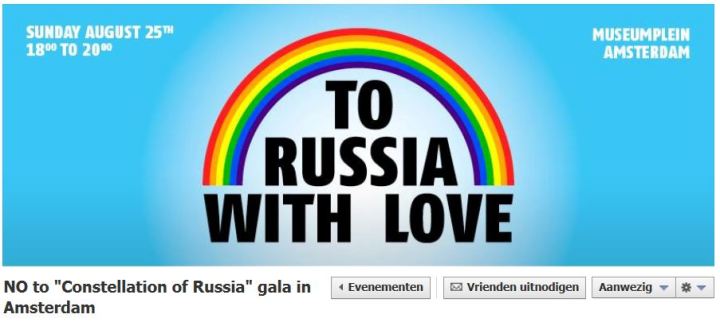
Van der Laan spreekt op anti-Ruslandconcert

Burgemeester Eberhard van der Laan van Amsterdam ondersteunt het initiatief voor het To Russia With Love-concert dat homobelangenorganisaties COC en Pride United op 25 augustus organiseren op het Museumplein. Hij zal zelf ook spreken op de bijeenkomst voorafgaand aan het omstreden Russische galaconcert Constellation of Russia, dat daarna plaatsvindt.
 © ANP.
Dat hebben het COC en Pride United maandag na een gesprek met Van der Laan laten weten. De twee organisaties hadden de burgemeester eerder gevraagd de vergunning voor het concert in te trekken, als protest tegen de omstreden nieuwe Russische wetten die de homoseksuele gemeenschap in Rusland zwaar treffen. Het Russische galaconcert is bedoeld om de schoonheid en diversiteit van het land tot uiting te brengen. Maar COC en Pride United vinden dat dat flink botst met de toegenomen agressie en intolerantie jegens homo’s in Rusland.
De homobelangenorganisaties spraken Van der Laan op zijn eerste dag na de vakantie. Op het To Russia with Love-concert willen COC en Pride United Rusland de schoonheid en diversiteit van Nederland en de homoseksuele gemeenschap tonen. De organisaties roepen het publiek op massaal regenboogvlaggen mee te nemen naar de bijeenkomst. Aan de verdere invulling van het concert wordt op dit moment gewerkt.
Het concert vindt zondag tussen zes en acht uur ’s avonds plaats op het Museumplein. Op Facebook hebben al 6000 mensen aangegeven te komen


Je eigen twibbon op facebook en twitter?

Persberichten
Update manifestatie Museumplein
‘Zee van regenboogvlaggen tijdens To Russia With Love’
Kleurrijk protest rondom Russisch Galaconcert in Amsterdam
Pride United en COC kondigen tegengeluid aan
Trek vergunning Russisch galaconcert in Amsterdam in
Programma
Opening om 18.00 uur met een spectaculair optreden van Simon Feenstra met 18-koppige bandPresentatoren: Peter van der Vorst en Zarayda GroenhartDJ GinaCoalitie van Human Right Fighter Coalition – Amnesty International, Netherlands Helsinki Committee, Free Press Unlimited, Aids Foundation East West, United Against Racism en Aids Fonds. Marc Beaugendre van Introdans voert special voor deze gelegenheid een moderne bewerking uit van De stervende zwaan Pride United voorzitter Frank van Dalen en COC voorzitter Tanja Ineke Message “To Russia with Love”Mathilde Santing met een speciaal nummer voor deze gelegenheidBariton Maarten Koningsberger treedt op met pianist Nico van der LindenBurgemeester van der Laan met wethouders Carolien Gehrels en Andrée van EsSimon Feenstra met 18-koppige band ondersteund door Zo! Gospel ChoirDJ Gina
Afsluiting Dolly Bellefleur
Mars naar Constellation-podium
Bijwonen galaconcert met spandoeken, posters en regenboogvlaggen, heel veel regenboogvlaggen
Organising partners


foto-verslag manifestatie ‘To Russia with Love’
(foto’s Floris Schreve, tenzij anders aangegeven)
Verzamelen bij de Trut


De rouwstoet vertrekt


bovenstaande foto door Mark Bennett
Aankomst Museumplein


Onze vrienden uit Uganda. Ook hun zaak verdient alle aandacht, zie http://www.amnesty.org/en/appeals-for-action/uganda-anti-homosexuality-bill

Het ritueel wordt uitgevoerd


Opblaas-Putin…Propaganda? 😉


Ook Russisch Protest

De regenboog ontvouwt zich


een paar vrienden van mij van de ‘donderdagkerk’

Roze in Blauw

Roze in Blauw anders (op z’n Russisch)
De manifestatie begint


Mark Bennett (van oa Club Church) en Gerrit Jan Wielinga (van het COC) voor de foto-actie (voor Facebook, zie HIER) ‘From Amsterdam with Love’

Mijn bijdrage (foto Mark Bennett)


Mathilde Santing treedt op


Burgemeester Eberhard van der Laan

de enige echte Dolly Bellefleur

ikzelf in actie-verpakking


Het gezelschap verplaatst zich naar het officiële gebeuren van Constellation of Russia, een manifestatie georganiseerd door de Russische staat


De afgesloten tribune voor ‘het echte publiek’ (hooguit 500 man) is omringd met een zee van regenboogvlaggen. Volgens de berichten bestaat het ‘regenboogpubliek’ uit zo’n 2500 man


het omsingelde publiek 😉
De Show begint.




Een verkitschte Russische Pastorale of een regenboogvlag: welke van de twee lijkt het meest op propaganda?


echte en vermeende propaganda in een beeld
Het ‘concert’ (eigenlijk meer een show) was geen presentatie van Russische topmusici (laten we niet vergeten, op dat gebied heeft Rusland veel te bieden- bovendien zou ik er dan enigszins moeite mee hebben gehad om te demonstreren tegenover musici die ik ook bewonder) en ook geen lofzang op de grote Russische kunst. Het was vooral een verzameling volksdansgroepen, waar overigens niets mis mee is, want ook op dat gebied kent het immense gebied dat onder Russische Federatie valt, een bloeiende en rijke traditie. Waar wel wat mis mee was, was de presentatie en de algehele setting. Het was een soort ode aan het Russische Imperium. Het meest schrijnend was dat er maar liefst drie Tjetjeense dansgroepen optraden (toch veel naar verhouding, als je weet hoeveel verschillende volkeren er binnen de Russische Federatie leven). Het doel was duidelijk politiek. Overduidelijke propaganda. Het was eigenlijk alsof we in een live-uitzending waren beland van een soort Stalinistische staatsomroep. Wie nu de beelden kent van Noord Koreaanse of Syrische staatstelevisie (en zeker tot een tijdje terug de Libische staatstelevisie) zou veel overeenkomsten zien. Wat mij betreft een symptoom dat er ook buiten de kwestie van de anti-homo propagandawet op dit moment veel mis is in Rusland.
Maar het mooiste was toch dat dit festijn was omringd door regenboogvlaggen, het ultieme symbool van ‘homo-propaganda’. Dat gaf het geheel een onbedoelde, maar fascinerende surrealistische lading.
En toen… Matroosjes! Homo’s zijn er dol op! Een pandemonium brak uit…


Propaganda 😉 Onbedoelde camp op meta-niveau!
De belangrijkste slogan van de dag was:

En tot slot:

De Nederlandse vertaling van de tekst het slotkoor op groot scherm. Toepasselijker kon deze afsluiting van dit door de Russische staat georganiseerde gebeuren niet zijn!
foto’s Floris Schreve (tenzij anders aangegeven)


de Volkskrant van 26 augustus 2013, zie ook deze foto-reportage van de Volkskrant
To Russia with Love from Eline Verdonk on Vimeo.

Ikzelf tijdens de Pride 2013 (Op de Drag Olympics, bij het homo-monument en Pink Point, naast de Westerkerk)
Floris Schreve, Amsterdam, augustus, 2013
No To Constellation of Russia, Floris Schreve, Letty Libresse, Tina Tampax, Jennifer Hopelezz, Vicky Leaks, Vladimir Putin, Putin Putout, COC, To Russia with Love, Amsterdam Gaypride, Poetin, Stephen Fry, Tesak, Homorechten in Rusland, Dolly Bellefleur, Eberhard van der Laan, Statenklacht, Rusland, Gaypride 2013, Constellation of Russia, Simon Feenstra, Mathilde Santing, Drag Olympics, de Trut, Club Church, Amnesty International, Winterspelen 2013 Sochy
Discussiëren op Hoeiboei 2, oftewel het bewijs van de geldigheid van Edward Saids ‘Orientalism’ tot op de dag van vandaag
Afgelopen winter publiceerde ik op dit blog Discussiëren op Hoeiboei, de anonieme afwerkplek van islamofoob extreemrechts. Daar heb ik wat mij betreft ook deze site al voldoende geïntroduceerd. Het is het platform waar Hans Jansen, Annelies van der Veer en soms ghostwriter Barry Oostheim hun anti-islam/ pro rechts-Israël/pro Wilders pamfletjes lanceren, toegebruld door een horde in regel anonieme ‘reaguurders’ (deze van de website GeenStijl afkomstige kwalificatie, lijkt mij een effectieve omschrijving), die er vaak nog een schepje bovenop doen. Expliciet racisme is in het forum van Hoeiboei volkomen geaccepteerd (voor vrijheid van expressie zijn wij immers allemaal), alleen wanneer er tegengeluiden komen, die niet zo makkelijk zijn af te doen, of waar het lastig om een goed antwoord op te formuleren, worden die soms weg gemodereerd, of wordt de discussie gesloten. Om die reden leek het mij aardig om de discussie hier in ieder geval te publiceren (en daarmee vast te leggen). Er valt, net als de vorige keer, weer veel te lachen, maar ook deze discussie is weer buitengewoon onthullend over hoe islamofoob rechts (of domrechts, beide begrippen vallen overigens niet noodzakelijkerwijs samen, maar overlappen elkaar soms wel, zie verschillende bijdragen aan de discussie hieronder) naar de wereld kijkt. Al met al bijzonder leerzaam materiaal, ook al is het wederom een nogal burlesque geheel geworden. Door verschillende participanten wordt regelmatig de onderbuik geleegd, maar dat is nu eenmaal eigen aan de tribale groepering der Hoeiboei reaguurders.
Dan nog iets. Een van de merkwaardigste aspecten van de weblog Hoeiboei is dat daar het idee leeft dat men mede namens Harry Potter en Gerard Reve spreekt. Ik vind het ook een beetje vreemd, maar als je de site opent, zie je linksboven de tekst ‘Hoei Boei, de enige site met zowel Gerard Reve als Harry Potter aan haar zijde’. Juist…. Dat van Harry Potter kan ik niet beoordelen. Zijn domein is immers het bovennatuurlijke. Net als het dragen van een hoofddoek, lijkt mij de Harry Potter cultus een hoogst particuliere geloofszaak en wie ben ik om mij daarin te mengen, dus dat laat ik maar verder voor wat het is. Maar waarom in Godsnaam (zeg dat wel) Gerard Reve? Zijn Annelies van de Veer en Hans Jansen Zijn Boodschappers, die, aangevuld met Ghostwriter Barry Oostheim als Heilige Geest, een soort Reviaanse drieëenheid vormen? (dus niet met de Maagd Maria, want dan zou Annelies van der Veer een hoofddoek moeten dragen en, voor de goede orde, dat doet ze dus niet). Maar ik dacht altijd dat dit met met Teigetje en Woelrat was. Misschien heb ik iets gemist, maar dat roept bij mij wel hele vreemde beelden op. Het kost mij iets minder moeite om bij bepaalde reaguurders het beeld op te roepen van Matroos Vos (zeker zoals hij er nu uitziet). Sterker nog, als je daar met bepaalde types in discussie gaat, moet je gewoon het beeld van Joop Schafthuizen voor de geest halen. Meestal klopt dat wel met de algemene sfeer van de conversatie. Zie bijvoorbeeld ene Van het Goor (what’s in the name), alhoewel die naar eigen zeggen de grootste heteroseksuele schuinsmarcheerder van Harderwijk is, zie hier, – wisten jullie trouwens dat de Donkerstraat aldaar de ultieme cruiseplek is? Alhoewel ik toch mijn twijfels heb bij van het Goors claims en ik mij afvraag of hij niet eerder een licht ontvlambare, hoe zou ik het zeggen, viezeman is (naar de creatie van Kees van Kooten), gezien een andere reactie op Hoeiboei (zie hier). Dat ‘trillen van kwaadheid, praten met speeksel in de Harderwijkse Donkerstraat’ vind ik wel weer een mooi beeld, Matroos Vos zeker passend. Maar verder vind ik dat Reve-gedweep op die site maar een rare toestand. Annelies van der Veer die zich een Reviaan noemt (zie hier). Of Hans Jansen, die zich volgens Michiel Leezenberg bezondigt aan Reviaanse stijlbloempjes (zie hier). Ik wil niets afdoen aan de daar kennelijk gepraktiseerde reviaanse voorkeur (wat die ook moge inhouden, of hoe je daar invulling aan geeft- zeker in combinatie met Harry Potter?!), maar ik vind het een beetje een wonderlijk gebeuren. Vandaar dat ik in de discussie, al was het enigszins off topic, daar toch een opmerking over heb gemaakt. En misschien was het nog nodig ook, want, al claimt de site de zegen van Reve te hebben, een aantal reaguurders snapt er spreekwoordelijk geen hol van. Waaronder ene Hpax, zie hier, al schrijft die naar eigen zeggen nog zulke geleerde boeken, zie de onderstaande discussie. Uitgegeven in eigen beheer, dat dan weer wel.
Hieronder de discussie. Ongeredigeerd, met helaas dus onvermijdelijke type-fouten, inclusief die van mijzelf (dat is nu eenmaal moeilijk te voorkomen als je snel in een klein vakje moet typen), maar het ruwe materiaal (waarin vooral goed tegenwicht werd geboden door de tot voor kort mij onbekende blogger Max Goedblick, met een veel bescheidener rol voor mijzelf) is wederom fascinerend en daarom de moeite waard om te tonen en te bewaren. Daarna volgt nog een kleine nabeschouwing, plus wat bonusmateriaal. Ter leeringh ende vermaeck:
Van: http://hoeiboei.blogspot.nl/2013/07/egypte-begeert-het-juk-van-de-sharia-af.html
Egypte begeert het juk van de sharia af te schudden

Al sinds de Farao’s zijn de Egyptenaren als weinig anderen erin getraind om politieke narigheid gelaten te ondergaan. Maar nadat één jaar lang de politieke islam aan de macht is geweest, is het toch ook deze geharde ervaringsdeskundigen te veel geworden. (Niet dat zoiets een waarschuwing zal zijn voor Nederlandse politici die er een hobby van hebben gemaakt de islam ruim baan te geven in het lands-, stads- en schoolbestuur. Immers, alleen de bevolking heeft er last van, dus voor de meeste politici is het dan niet echt een punt.
Strategisch is en blijft het voor de groei van de politieke macht van de islam op de lange termijn het beste zo veel mogelijk sharia-enclaves te stichten. Maar waar? In het Westen kost dat weinig moeite, daar hebben de autoriteiten immers niet door wat er onder hun neus gedaan wordt. Hetzelfde te doen in de islamitische wereld, waar haast iedereen, en zeker de politie, doorheeft wat er gaande is en waartoe dat leiden zal, zoiets is een veel riskantere onderneming. Van heel Egypte een sharia-enclave maken is zelfs met de steun van Obama niet geluk.
De Nederlandse staatsmedia en de Nederlandse beleidsmakers, blijkt nu, zijn niet op de hoogte van de elementaire basics van de politieke orde in de islamitische wereld. Met droge ogen vertellen ze dat ze het als een ernstig probleem zien dat een wettig gekozen president door het leger is uitgeschakeld. Dat de verkiezing van die president met fraude tot stand is gekomen, is al weer vergeten. Dat die wettige president de mensenrechten van zijn onderdanen schendt, speelt geen rol. Er zijn in het Midden-Oosten nu eenmaal maar twee smaken beschikbaar: een dictatuur van de islam, of een halve dictatuur die zijn macht ontleent aan het leger.


131 opmerkingen:
-

-
Werken die veiligheidsdiensten, cia, aivd, dan toch echt van acht tot halfvijf en tijdens Zon- en feestdagen gesloten, of bent u zo bijzonder goed geïnformeerd ?
Bij de politieke elite twijfel ik voortdurend tussen dom en crimineel. -

Het is geen optie. Er bestaat geen mogelijkheid dat de islam de gehele mensheid zal verzieken. Net als een teek, een luis, het hiv-virus of een kankergezwel heeft de islam een gastheer nodig. Het slechte van de wereld kan niet overleven zonder het goede. De islam kàn niet op zichzelf staan, omdat het alleen kan bestaan ten koste van een ander. Dat is het unieke van een parasiet.
Er bestaat ook geen kans dat de islam tot het einde der tijden blijft voortbestaan, net als heb bewind van Stalin, Pol Pot en Hitler heeft de islam ook tegenwoordig in Nederland meelopers. Stalin werd gesteund door de communisten, Hitler door de NSB en Pol Pot door Paul Rosenmöler. De islam word gesteund door een combinatie van àl die groepen samen met hun trawanten en collaborateurs. Onderandere Anja Meulenbelt en Dries van Agt.
De islam loopt op haar laatste benen, de islam is op sterven na dood. Omdat de islam verzonnen is kan ik er een eind aan verzinnen, en niets of niemand houdt mij tegen. Het einde van de islam staat hoe dan ook gepland op 31 December 2013 ‘s-middags om vier uur. Zeg maar dat Vanhetgoor het gezegd heeft. Vervolgens moeten overal ter wereld alle moskeeën worden afgebroken, evenals de islamitische scholen. Dan moeten alle ex-moslims worden gedéprogrammeerd. En tot slot moeten de schuldigen worden bestraft.
Het is geen optie, er is maar één manier om de wereld te behouden voor de beschaafde mensen; de islam zal ten einde komen. Dit jaar nog!
-

-
Heb ik ook vaak aan gedacht, alleen waar moet de wereld nog doorheen. De islam heeft het kiem van zijn eigen ondergang in zich. Er zit zo weinig integriteit in het systeem. Naar elkaar en zeker naar hun “tegenstanders”. Hoe groter het wordt, hoe meer het onhoudbaar wordt. Dit geldt eigenlijk voor alle door de mens gevormde systemen. Of het systeem nou door een geloof wordt geïnspireerd of door een ideologie of door een kapitalistisch systeem of een product (bedrijf) of een politiek idee (EU) of het gras van de buren. Er is een punt waar het niet meer werkt. En het ene systeem zal sneller onderuit gaan dan het andere en de islam heeft dan ook alles in zich om onderuit te gaan. De islam past zich niet aan de omstandigheden (gelukkig anders hadden we pas echt een probleem) maar of ik het nog ga meemaken…
-
-
Nu ik hier toch bezig ben (een eind verderop in de discussie), ook hier maar een opmerking. Van het Goor, als ik het goed begrijp vind jij het opkomen voor de rechten van de Palestijnen (die niet eens allemaal Moslim zijn)’collaboreren’ met ‘de islam’? Los van of er überhaupt zoiets bestaat als ‘collaboreren’ met ‘de islam’, ben je in staat afzonderlijke problemen helder te analyseren, of is het voor jou allemaal een grote brei? Snap je zelf wat er allemaal aan de hand is, of maak je er bewust zo’n hutspot van? Toon maar eens aan waarin bijvoorbeeld de door en door Katholieke van Agt een steentje bijdraagt aan een evt islamitische wereldheerschappij. Ben benieuwd of je dat kan en vooral of je dat ook op een serieus forum kunt slijten. Hier maak ik me geen illusies, hoewel ook ik verbaasd zou zijn als je hierin bijvoorbeeld Hans Jansen meekrijgt. Nu hij toch op dit forum bezig is, ben ik best wel benieuwd wat hij hiervan vindt. Zou daar graag wat meer van willen vernemen 😉
-
Het is niet de islam die momenteel een flinke greep in onze portemonnee doet, onze vrijheid afpakt, maar de ‘Bovenonsgestelden’.
-

Een hoopvol geluid.
http://www.youtube.com/watch?feature=QeDm2PrNV1I -
Bedankt voor het linkje..
Verbluffend, en alle respect voor het bewustzijn van deze knaap…
Welkom in de 21ste eeuwPersoonlijk (of weet het eigelijk wel zeker) denk ik dat internet hier een bewonderende en bemoedigende rol in speelt.
Op vragen hoe deze `jongen` dat allemaal wist, noemt hij diverse malen “Internet” !!Bewoners van de islamitische staten zien nu met eigen ogen hoe mensen leven in het vrije westen, en hoe het anders kan.
Zonder voorgelogen te worden door achterlijke islamisten en schriftgeleerden.
Dankzij sociale media..Deng Xiaoping, de “vader des vaderland” van China wederopstanding, was jaren lang dom gehouden door de buitenlandpoliticologen van zijn “socialistische partij”
En dacht dat ze in het buitenland nog in de middeleeuwen leefden.
Toen hij in het ´buitenland´ kwam (pre-internet tijdperk) keek tie zijn ogen uit.Sociale media helpt de evolutie een handje..
En Geert Wilders heeft weer gelijk…`moslims !! werp het juk van die achtelijke islam van U af, en er is zoveel mogelijk`
Een sprankelend zonnestraaltje van bemoediging in die inktzwarte duisternis van de islam.
Hup.. de mastodonten van de islam naar het museum. -
Het kan dus wel in die krant. Je hoeft het er niet mee eens te zijn maar het zet wel tot nadenken: http://www.volkskrant.nl/vk/nl/3184/opinie/article/detail/3471059/2013/07/06/Er-is-geen-moraal-zonder-God.dhtml
-
-
Toch vraag ik me af in hoeverre de oppositie tegen Morsi iets te maken had met het dictatoriale islamisme van de moslimbroeders. Op TV zag ik ook Egyptenaren die boos waren omdat het brood 5 x zo duur was geworden vanwege afschaffing van subsidies op brood. De meeste opstanden draaien om armoede, werkloosheid en voedselprijzen; zo begon de Arabische “lente”.
Ook onder Mubarak waren niet-moslims een zondebok om het falen van de overheid te verdoezelen. Bij aanslagen en pogroms tegen die minderheden grepen politie en leger vaak niet in, of deden zelfs mee. Er is geen reden om aan te nemen dat het leger nu ineens die minderheden gaat beschermen. Ook de volgende regering zal zondebokken nodig hebben; Egypte ligt economisch op haar gat en ik zie niet hoe dat heel snel kan veranderen.
De volgende Egyptische regering zal de subsidies op brood evenmin kunnen handhaven. -
-
en paardenbonen uit Frankrijk. Schijnt voedsel voor armelui te zijn.
-
Als je dit als gegeven neemt (en ja ik denk ook dan Dandruff gelijk heeft) dan heeft het geen zin om naar democratie te streven als het land daar niet aan toe is. De middenklasse moet groot genoeg zijn en dat betekend dat de economie redelijk goed moet draaien en ondernemerschap lonend is. En natuurlijk vergeet ik nu heel veel belangrijke zaken. Ook de cultuur en aanwezige ideologiën bepalen veel. In china kan een democratie wel eens f.. verkeerd uitpakken omdat ze nogal een beetje alleen aan zichzelf denken en dat werkt niet zo goed in een democratie. Egypte en de rest van de arabische landen is er (ook) niet aan toe en wat je in turkije ziet gebeuren is dat een ideologie een prille (wat heet) democratie om zeep wil helpen. (of mag ik dat niet zeggen). Raak de mensen in de portemonnee en de democratie is snel overboord. (of als er veel te verdienen is, is de democratie ook snel overboord).
-
Recente omwentelingen in Egypte worden in termen van Democratie, Arabische Lente en gekuip van de locale Moslim Broederschap verslagen, maar terecht wijst Dandruff [7.07.13/13.29u] op de explosieve stijging van de broodprijs. En die van de spijsolie zal er denk ik ook wel zijn en tellen, en dan heb je zo een opstand in Egypte (Caïro).
Over het alledaagse leven van de ‘gewone Egyptische man’ worden we slecht geïnformeerd. Hoe die moet leven, kan beslissender / voorspellender zijn voor het ontstaan van een politieke agitatie dan Verheven slogans’’
Bestaat over die ‘Mohammed Hasan de Egyptenaar’ recente, toegankelijke literatuur? Vele jaren geleden las ik enige pagina’s uit een publicatie van een Noorse anthropologe over haar participerend onderzoek bij een gewoon Caïrees gezin. Een boeiend verhaal over een afschuwelijk, gewoon Egyptisch leven. Met dat participeren hield ze naar ik mij herinner maar op.
Ik had graag haar artikel of boek helemaal uitgelezen, maar kreeg die niet te pakken. En ook niet iets dergelijks. De naam van de anthropologe ken(de) ik niet. Wie weet! -
“Dat de Egyptenaren het juk van de sharia hebben afgeschud, en dat mogelijk ook nog op eigen kracht voor elkaar hebben weten te krijgen, is het bemoedigendste bericht over de islam sinds de staatsgreep van Khomeini in Iran in 1978-1979.”
Hier zal men het mogelijk interpreteren als een overwinning van de goede islam over de slechte ?
islam, zo slecht nog niet. -
“In Turkije bestond, voordat Europa daar ingreep, een subtiel evenwicht tussen islam en leger. Europa heeft het evenwicht dat daar bestond verbroken, ten gunste van de islam, omdat militaire regimes nu eenmaal niet voldoen aan de hoge Europese normen”
Ik hier toch met een paar ernstige vragen…..
-
Belangrijke kandidaat usa president Ron Paul:
http://www.zerohedge.com/news/2013-07-08/ron-paul-new-egyptian-war-americans-lose-again -
Niet te vroeg juichen. Obama heeft namelijk een plan B om de Moslimbroederschap weer aan de macht te helpen. Journalist Daniel Greenfield(aka Sultan Knish) daarover:
http://frontpagemag.com/2013/dgreenfield/baracks-plan-b-for-the-brotherhood/
-

-
“De nieuwe machthebbers in Egypte hebben niet de steun van Obama, want die gaf publiekelijk de voorkeur aan een Egypte onder de sharia en onder Mursi.”
Ik begrijp heel goed dat de Amerikaanse Republikeinen elke gelegenheid aangrijpen om een Democratische president in een kwaad daglicht te plaatsen. Dat is politiek.
Ik begrijp ook heel goed dat Europeanen met een rechtse kijk op de wereldpolitiek graag meedoen aan een partijtje Obama bashen. Dat is vriendjespolitiek.
Wat ik echter niet begrijp dat is waarom Obama er belang bij zou hebben dat Egypte een Moslimstaat wordt! Waarom zou Obama er belang bij hebben dat de Joodse staat Israël langzaam maar zeker wordt ingesloten door vijandige Islamitische regimes, met legers en atoombommen en Arabieren die een broertje dood hebben aan Amerikanen en Joden?
In Amerika wonen heel veel Joden. Een deel van hen is Republikein, een ander deel stemt Democraten. Maar als het om de Joodse zaak gaat en het belang van de staat Israël dan vormen zij één front. Als Obama zou willen dat de Moslimbroederschap de macht in Egypte krijgt, zijn de Democraten alle steun van alle Joodse kiezers kwijt. Welk belang heeft Obama daarbij?
Dat de Republikeinen daar belang bij hebben is evident; als zij de wereld ervan kunnen overtuigen dat Obama een Crypto-Islamiet is met een verborgen agenda om de wereld te Islamiseren dan hebben de Republikeinen op voorhand alle verkiezingen voor de eerstkomende 30 jaar gewonnen. Maar ja, wie trapt daar nu in?Zou iemand mij daarom hier eens kunnen uitleggen waar voor Obama en Amerika het voordeel te halen valt als de Amerika-hatende Moslims in steeds meer landen aan de macht komen?
-
-
@sirik
A- Uw vraag is off-topic.
B- Ik kan mij niet herinneren dat ik u ooit iets heb beloofd.
C- Indien Egypte een Islamitische staat wordt onder de dictatuur van de Sharia, en alszodanig zich natuurlijkerwijs zal gaan ontpoppen als een aartsvijand van het buurland Israël (en van Europa & Amerika), wat heeft Obama daar dan voor zichzelf en zijn partij mee gewonnen? In de politiek gaat het namelijk altijd om belangen, en ik zie hier niet het belang van Obama. U misschien wel? -
A JA.
B Kan kloppen, maar ik help je met: “Tijd om dit gekkenhuis te verlaten.”
C Tussen Obama en Bush is er nauwelijks verschil. Evenzo betreffende de Democraten en Republikeinen. Bij ons thuis hebben we hetzelfde probleem: PVDA=VVD=CDA met een af en toe klein pikkie Peggold. Gelukkig valt er nu wel iets te kiezen. En dat is niet SP.
-
Anoniem10 juli 2013 00:54
“Zou iemand mij daarom hier eens kunnen uitleggen waar voor Obama en Amerika het voordeel te halen valt als de Amerika-hatende Moslims in steeds meer landen aan de macht komen?”
Voor een antwoord op je vraag lees het het volgende blog van Barry Rubin.
http://rubinreports.blogspot.nl/2013/07/at-last-secret-of-president-barack.html
-
Beste Anoniem,
Barry Rubin blaast aan het eind van zijn blog zijn eigen beweringen over het beleid van Obama op met de opmerking:
“It should be emphasized that aside from everything else, this is a ridiculous U.S. strategy….
Precies, echter niet de strategie van Obama is ridicuul, maar de onzinnige theorie die Barry Rubin hierover heeft verzonnen is volstrekt belachelijk. Als Rubin gelijk had gehad dan was Obama al jaren geleden gestopt met de drone-aanvallen op Islamitische doelen en had hij Bin Laden nooit geliquideerd. Overigens zegt Rubin nergens dat Obama een “voorkeur” voor de Islam zou hebben, zoals de heer Jansen hierboven beweert, maar alleen maar dat Obama de strijd tegen de Islam zou hebben opgegeven. Dus Rubin beantwoord ook niet mijn vraag waarom Obama graag zou willen dat Egypte een Islamitische dictatuur zou worden.
Als Hans Jansen en zijn vaste lezers hier beweren dat Obama een fan van de Moslimbroeders zou zijn dan weten zij vast ook wel waarom, en dan zou ik dat graag uit hun pen willen vernemen.
-
Anoniem10 juli 2013 05:54
“Als Hans Jansen en zijn vaste lezers hier beweren dat Obama een fan van de Moslimbroeders zou zijn dan weten zij vast ook wel waarom, en dan zou ik dat graag uit hun pen willen vernemen.”
Omdat Obama denkt dat hij met de steun aan de Moslimbroeders, de z.g.n. gematigden steunt, die de Salafisten onder de duim zullen houden en Al Qaida
op die manier ook minder succesvol kan zijn. -
Hoe het in de NL media staat, weet ik niet precies maar ik vrees het ergste, denk weer aan Petra en Monique, maar internationaal wordt toch wel gedacht dat Obama de MB steunt.
Zeker in Egypte wordt dat door velen gedacht, zie de teksten op de spandoeken die op de tv zichtbaar geweest zijn. Waarom Obama de MB steunt, weet ik niet, mensen doen nu eenmaal dingen waarvan ze zelf niet weten waarom ze die doen – zouden anderen het dan wel moeten weten?
Overigens zitten er ook sharia-fundamentalisten in de anti-MB coalitie.
-
Egypte is een kruitvat en een potentiële vijand van Israël. Het horrorscenario voor Israël, en daarom ook het horrorscenario voor elke Amerikaanse president, is dat de MB via een staatsgreep aan de macht komen, en van Egypte een Islamitische dictatuur maken.
Obama is een diplomaat die daarvoor een oplossing zoekt langs diplomatieke weg. Een diplomaat die als conflictbemiddelaar wil optreden moet daarbij altijd een paar zaken in acht nemen:
A- Hij moet zelf boven de partijen blijven staan, en mag dus niet een van de partijen meer sympathie tonen en meer steun geven dan een andere partijen. Als hij die fout begaat wordt hij niet meer als onpartijdig ervaren en wordt hij zelf onderdeel van het conflict. Dit is vaak erg lastig, vooral als er partijen zijn die de onpartijdigheid van de diplomaat interpreteren als sympathie voor de vijand.
B- Een oplossing kan alleen worden bereikt als alle partijen de oplossing ook als een oplossing ervaren. Dat betekent dat alle partijen het idee moeten hebben dat zij met de geboden oplossing ook voor zichzelf een voordeel hebben behaald. Als een partij er met een onevenredig deel van de buit vandoor gaat terwijl de andere met lege handen blijft staan, dan is het conflict niet opgelost want dan zal de benadeelde partij zich daar niet bij neerleggen en zijn strijd voortzetten.
Zou het niet zo kunnen zijn dat de beschuldigingen aan het adres van Obama dat hij een vriendje van de Moslimbroeders zou zijn berusten op een misverstand? Als Amerika zelf geen partij wil worden in het binnenlandse conflict, zodat zij als een onpartijdige bemiddelaar de zaak in goede banen kan leiden, dan kan Obama zich niet op voorhand uitspreken tegen de Moslimbroeders. Uiteraard zullen tegenstanders van de MB dit ten onrechte kunnen uitleggen als sympathie voor de Moslims, iets waar de Republikeinen natuurlijk graag misbruik van maken om Obama in een kwaad daglicht te plaatsen als Crypto-Islamiet.
-
Er is nagenoeg geen enkele zin waar in het bovenstaande stuk van ‘Max Goedblick’. Bij ‘waar’ denk ik aan de ouderwetse betekenis die dat woord had in de dagen van weleer, voordat het postmodernisme als fatsoenlijk ging gelden.
Egypte is geen ‘potentiële vijand’ van Israël, maar gewoon een vijand.
‘Horrorscenario’? Egypte is militair niet tot veel in staat. Denk aan 1948, 1956, 1967, 1973.
Obama is geen ‘diplomaat’, maar een politicus.
Een diplomaat staat niet ‘boven’ de partijen. Hij vertegenwoordigt één van de partijen.
Wat Obama is of denkt, weet niemand. Feit is dat zijn acties steeds uitpakken in het voordeel van de politieke islam. Dat leidt tot allerlei wilde fantasieën waarvan het onzeker is of een daarvan juist zal blijken. Maar wie weet.
-
-
Obama praat de stasi-praktijken van de NSA goed.
Dat zegt mij genoeg, als democraat.
Overigens is Guantánamo Bay, volledig legaal, nog steeds open. Een loze belofte.
Obama vecht o.a. in Libie, Irak, Afghanistan, Jemen, en honderden andere plaatsen.
Nixon + Bush = Obama. -
Je overschat de macht van een president schromelijk sirik, en je onderschat de tegenwerking die Obama krijgt nog meer. Verder hebben je argumenten niets met Egypte te maken.
-
-
Ten tijde van Bush kwamen uit de linxe kerk andere geluiden.
Hmmm, wat voor de ene geldt, geldt niet voor de ander, Bakens verzetten ? Zoiets ?Blijft staan:
“president said he will meet soon with a privacy and civil liberties oversight board to discuss ways to balance the need for U.S. surveillance while respecting people’s right to privacy.”Het Newspeak-woord van de dag is “Balance”.
Iemand afluisteren zonder de privacy te schenden….? Dat is afluisteren met bloemkooltjes in je oren.
Yes, we can ! -
De president zit hooguit acht jaar in het Witte Huis. In het Pentagon en de CIA zitten ambtenaren hun hele carriere en voeren een beleid op basis van lange termijn planning. Wat die daar allemaal uitspoken weet vaak de president niet eens. Die afluisterpraktijken zouden daarom best nog wel eens op verzoek van Bush kunnen zijn opgestart. In elk geval zou het onder een Republikeinse president niet anders zijn gegaan.
En terwijl jij je daar druk over zit te maken heb jij niet in de gaten dat jij al meer dan 10 jaar wordt afgeluisterd door de Mossad:
http://tweakers.net/nieuws/24562/e-spionage-via-achterdeur-aftapsoftware-aivd-en-politie.html
-
“Die afluisterpraktijken zouden daarom best nog wel eens op verzoek van Bush kunnen zijn opgestart. In elk geval zou het onder een Republikeinse president niet anders zijn gegaan.”
Daar zou ik het best mee eens kunnen zijn.
Echter.
Obama is en blijft verantwoordelijk.En wat nog erger is, is dat hij het goed praat.Kortom hij ontkent niet maar vind het geen bezwaar dat de grondrechten van de Amerikanen geschonden wordt.
Hij heeft als president, niet Bush, de verkoop van ‘1984’ bij Amazon. met 700% doen stijgen.
Je bent toch wel bekend met Orwell, Max ?”
In het Pentagon en de CIA zitten ambtenaren hun hele carriere en voeren een beleid op basis van lange termijn planning. Wat die daar allemaal uitspoken weet vaak de president niet eens.”Gezien je, kennelijk, uitstekende contacten in het witte huis, stel ik voor dat je Obama daarover inlicht.
-
Het is niet zo moeilijk om Obama te begrijpen meneer Jansen. U hoeft daarvoor alleen maar even uw rechtse vooroordelen over deze linkse president te laten varen, en gewoon even nuchter naar de Egyptische situatie te kijken. Dan gaat u vanzelf zien hoe Obama rollt.
Natuurlijk meneer Jansen is Obama een politicus, daar heeft u 100% gelijk in. Maar behalve politicus is hij óók een diplomaat, in die betekenis van het woord dat hij probeert om de situatie in Egypte middels diplomatie in goede banen te leiden.
En ja, als president van Amerika vertegenwoordigt Obama ook belanghebbende partijen, namelijk Amerika, Israël, en iedereen die er geen belang bij heeft dat het in Egypte niet uitdraait op een burgeroorlog alla Syrië. Daarom probeert Obama m.b.t. het conflict in Egypte om als “conflictbemiddelaar” en adviseur boven de betrokken Egyptische partijen te staan, en de democratie haar heilzame werk te laten doen. Dat doet Obama ook, en wie dit begrijpt en ziet die begrijpt ook heel goed welk plan Obama heeft, hoe hij te werk gaat en waarom hij “not amused’ was toen het Egyptische volk veel te vroeg om het aftreden van Morsi begon te roepen.
De bedoeling van Obama en de Egyptische machthebbers in en achter de legertop was namelijk dat de MB niet in 2011 maar wél bij de eerstvolgende verkiezingen een democratische nederlaag zouden gaan lijden. Een overgrote meerderheid van het Egyptische volk wil namelijk absoluut geen Islamitische dictatuur in dat land, maar een democratie met vrijheid van meningsuiting en vrijheid van religie.
De harde kern van de Moslimbroeders zijn echter anti-democratisch omdat democratie in strijd is met hun geloofsovertuiging. Daarom was het voorspelbaar dat als de MB aan de macht zijn zij stapje voor stapje de democratie weer zouden gaan ontmantelen met de bedoeling om van Egypte een Sharia-dictatuur te maken. Daardoor zullen zij echter wel heel veel sympathie en en steun van de bevolking verliezen, want de meerderheid wil dat beslist niet. Dit alles had zich ook al in gang gezet zoals u weet.
Als Morsi nu niet was afgezet dan hadden de MB tegen de tijd van de volgende verkiezingen voor een onmogelijke keus gestaan: ofwel eerlijke verkiezingen maar dan zelf een verpletterende nederlaag leiden en de macht verliezen, ofwel geen verkiezingen meer.
Kiezen zij voor het eerste, dan hebben de MB zichzelf langs democratische weg buiten spel gezet. Hoera.
Kiezen ze voor de tweede optie, dan heet dat een staatsgreep, en kan het leger ze met steun van de bevolking, Amerika en de hele internationale gemeenschap afzetten en de MB als een staatsgevaarlijke anti-democratische partij opnieuw verbieden. Hoera! Hoera!
Daarom wilde Obama graag dat de MB de eerste verkiezingen zouden gaan winnen, want daarmee zijn ze namelijk op een dood spoor gezet! Ze zijn namelijk anti-democratisch, maar moesten eerst nog hun ware gezicht nog tonen alvorens ze konden worden weggestemd. Een andere of betere optie was er niet in 2011.
Daarom delen Obama en ik ook niet uw blijdschap over het feit dat Morsi nu reeds op ondemocratische wijze is afgezet. De MB hebben nu nog teveel aanhang en bij de volgende verkiezingen een stok om de hond te slaan en en dus zijn ze in Egypte voorlopig nog niet van hen af.
Als u bovenstaande niet gelooft meneer Jansen, kan u dan vertellen wat voor Egypte het beste scenario zou zijn geweest om van de MB af te komen en welke rol de Amerikaanse president daar dan in had moeten spelen? Gewoon niet praten maar doodschieten zoals cowboy Bush dat in Irak en Afghanistan heeft gedaan, waar het nu nog steeds een politieke teringbende is?
-
Leuk al die desinformatie-bullebakkerij van de nog steeds anonieme ‘Max Goedblick’. ‘Cowboy Bush’; Jansen moet zijn ‘rechtse vooroordelen’ laten varen; er bestaan kennelijk mensen ‘die er belang bij hebben’ dat het een burgeroorlog wordt in Egypte en Syrië. U heeft goed opgelet, beste ‘Max Goedblick’, maar tijdens de lessen van wie?
Maar pas echt leuk wordt zijn laatste bijdrage bij de zinsnede ‘Obama en ik’. Het wachten is op Obama die het heeft over ‘Goedblick en ik’.
En ja, Egypte is zoals u schrijft voorlopig nog niet van de MB af, je kunt goed merken dat u er verstand van heeft. Dit heeft u wis en waarachtig goed gezien.
-
HansJansen Mijn bijdrage van 10-07 heb ik enigszins gehaast geschreven, daarom zijn daar wat tikfouten in achtergebleven. Maar een welwillende lezer kan uit de strekking van mijn verhaal wel opmaken dat in de zinsnede “en iedereen die er geen belang bij heeft dat het in Egypte niet uitdraait op een burgeroorlog alla Syrië.” een dubbele ontkenning staat die daar niet thuis hoort.
Wat de hoogleraren betreft die mij in hun colleges aanwezig hebben gezien kan ik u verzekeren dat die allen voor hun lesmateriaal gebruik maakten van literatuur dat te boek stond als “wetenschappelijk verantwoord” en zij zich beriepen op feiten die waren gecheckt en konden worden gedubbelcheckt, of anders op zijn minst als redelijk aannemelijk konden worden beschouwd.U doet in uw artikeltje hierboven een aantal nogal boute uitspraken zoals o.a.:
“Van heel Egypte een sharia-enclave maken is zelfs met de steun van Obama niet gelukt.”
of
“want die [Obama] gaf publiekelijk de voorkeur aan een Egypte onder de sharia en onder Mursi”
Met deze uitspraken beweert u feitelijk dat president Obama de staat Israël graag een kalifaat van Moslimbroeders als buurman cadeau wil doen, waarvan het huidige opperhoofd in 2012 nog over de Joden zei: “The Jews have dominated the land, spread corruption on earth, spilled the blood of believers and in their actions profaned holy places, including their own”, waarna hij, Mohammed Badie, de Arabische wereld opriep tot een heilige jihad tegen de staat Israël.
Misschien heeft u gelijk maar mij komt dit tamelijk ongeloofwaardig en onlogisch over. Waarom dat heb ik in mijn eerste reactie duidelijk gemaakt. Er zijn ook personen de beweren dat Obama een aliën is die met een vliegende schotel in Amerika is afgezet met de bedoeling de aarde te koloniseren. Dit soort aluhoedjes komen bij mij echter even ongeloofwaardig over.
Maar, als je het gedrag van iemand wil duiden, dan moet je zijn motief kennen, dus heb ik u gevraagd welk belang Obama er bij zou hebben dat Israël wordt omringd door anti-zionistische, anti-semitische en anti-Amerikaanse kalifaten. (Want zoals u weet willen de MB niet alleen Egypte maar het liefst van de hele Arabische wereld een groot kalifaat maken.)
Op deze niet alleen redelijke maar zelfs noodzakelijke vraag hebt u tot nu toe nog geen zinnig antwoord kunnen formuleren. Daardoor zou zo’n uitspraak in de ogen van mijn voormalige professoren en hun studenten niet het niveau overstijgen van ongefundeerde kretologie zonder enig wetenschappelijk gehalte.
Verder beroept u zich daarbij op leuzen die u hebt gelezen op spandoeken in een anti-Amerikaanse demonstratie. Indien ik in mijn studententijd een analyse van de Amerikaanse buitenlandpolitiek zou hebben gebaseerd op louter dergelijke in demonstraties meegedragen lectuur, dan zou ik van mijn professoren geen lof doch louter hoon hebben ontvangen.
Maar desalniettemin meneer Jansen, als u mijn kijk op de Egyptische zaak en de rol van Obama daarbij verwerpt, dan zie ik halsreikend uit naar een betere analyse die meer recht doet aan de feiten dan slechts de volstrekt ongegronde suggestie dat Obama en crypto-islamiet zou zijn die de wereld onder het juk van de Sharia wil brengen. Zo’n stelling zou ik dan toch graag wat beter wetenschappelijk verantwoord onderbouwd willen zien, gebaseerd op wetenschappelijk verantwoord bronnenmateriaal, want anders heeft uw theorie voor mij niet meer overtuigingskracht dan de theorie dat Obama van een andere planeet komt.
Wat mijn anonimiteit betreft, ik bevind mij hier op een blog waar vrijwel iedereen zich achter een niet te controleren identiteit verschuilt. Het stoort u blijkbaar ook niet dat diegenen die u louter lof en hulde toewuiven dat doen met gefingeerde namen, dus zou het u ook niet moeten storen dat iemand die uw teksten wat kritischer leest niet eerst een kopie van zijn paspoort overhandigt alvorens te reageren.
-
Goed gedaan Maxi, de professor haakt af…wederom grandioos deze polemiek gewonnen…
Fenomenaal repliek..
Daarom een 10plus (hoera)
Je bovenmeester JaapJan
-
@Max Goedblick,
een staatsgreep verdient niet de schoonheidsprijs, maar ik denk dat soms met een coup er heel veen mensen het leven bespaard kan worden. Daarnaast moet men ook aan de kwaliteit van het leven denken, voor héél het land. Niet alleen die kleine groep. Als steeds maar weer opnieuw de beschaving er onder moet lijden, dan is het een keer genoeg geweest. Dan maakt tijdelijk het plegen van kleine beetje extra geweld eventjes niet meer uit, als daardoor er netto meer mensen mee in leven blijven. Dus even de principes opzij om hogere principes voor te laten gaan.Democratie is een luxe. Als een gedeelte van het land geen verstandige keuze kan maken dan heeft het ook geen zin. Door eerst die mensen te dwingen om zich te bevrijden kun je later gaan discussiëren dat de manier waarop dat is bereik niet goed is geweest.
-
Aan van het Goor 1:26
U schrijft dat een staatsgreep geen prijs van schoonheid verdient.
Marx dacht daarover anders .
Men leze De 18e Brumaire van Napoleon.
Andere interessante lectuur omtrent staatsgrepen en hun schoonheid:
Technique du coup d’état van de duits-italiaanse schrijver Curzio Malaparte alias Kurt-Erich Suckert. -
Helemaal waar vanhetgoor, misschien was het afzetten van Morsi op dat moment wel noodzakelijk, maar het is helaas ook een gemiste kans voor Egypte om voor eens en voor altijd af te rekenen met de politieke ambities van de Moslimbroeders.
De Moslimbroeders zijn namelijk een permanente bedreiging voor de democratie in Egypte en het is een sterke anti-Zionistische en anti-Semitische beweging, waar ook Israël en Obama niet blij van worden.
Volgens het handvest van het Moslimbroederschap streven zij ernaar om een in hun ogen rechtvaardig islamitisch Rijk en soennitisch Kalifaat te stichten dat de hele islamitische wereld omspant, met het plan om stapsgewijs de islamisering van in meerderheid islamitische naties na te streven met alle wettelijke middelen die daartoe ter beschikking staan.
Hun motto is: “Allah is ons doel, de Koran is onze grondwet, de Profeet onze leider, strijd onze weg, en dood voor Allah onze hoogste aspiratie.”
Dit soort religieuze en politieke ideologieen gaan niet samen met democratie maar kan alleen in een theocratie.
Officieel hebben ze geweld afgezworen zodat ze niet als een terroristische organisatie kunnen worden aangemerkt en bestreden.
Om de moslimbroeders geen kans te geven om als een politieke beweging via democratie aan de macht te komen zijn in Egypte politieke partijen op godsdienstige basis verboden. Daarom kunnen de MB zich niet voordoen als een politieke partij met de ambitie om van Egypte een theocratie te maken, of een partij oprichten die deze religieuze aspiraties van de MB in haar programma heeft staan.
Wat individuele leden van de MB wel kunnen is politieke partijen oprichten die zich voordoen als seculiere partijen die zeggen de democratie te respecteren. Dergelijke partijen kunnen niet worden verboden en van de verkiezingen worden uitgesloten, en via deze sluiproute kunnen dus wel Moslimbroeders aan de macht komen. Komen op deze manier genoeg Moslimbroeders in de regering dan weet je dat ze hun “geheime politieke agenda” zullen gaan uitvoeren en dat is de deuren openzetten voor het broederschap om uiteindelijk van Egypte een kalifaat te maken.
De Partij voor Vrijheid en Gerechtigheid van Morsi is in 2011 opgericht voor dit doel. Zolang deze partij in de oppositie zit zullen ze hun ware aard niet tonen en zich voor blijven doen als een seculiere partij met louter democratische ambities. Geef je ze de macht dan ontneem je ze de mogelijkheid om verstoppertje te spelen want dan zullen ze om de politieke ambities van het MB te realiseren uit de kast moeten komen.
Daarom is het jammer dat Morsi al zo snel en feitelijk in strijd met de democratische spelregels is afgezet. Nu kunnen de MB zich er op gaan beroepen dat in Egypte de democratie niet werkt en dit in hun eigen voordeel gaan gebruiken. Veel beter zou het zijn geweest dat ze bij de volgende verkiezingen massaal zouden zijn weggestemd nadat duidelijk zou zijn geworden dat het Moslimbroederschap, inclusief de door hen opgerichte politieke partijen nog steeds uit zijn op het stichten van een Kalifaat.
-
Robin11 juli 2013 21:19
“Verder beroept u zich daarbij op leuzen die u hebt gelezen op spandoeken in een anti-Amerikaanse demonstratie. Indien ik in mijn studententijd een analyse van de Amerikaanse buitenlandpolitiek zou hebben gebaseerd op louter dergelijke in demonstraties meegedragen lectuur, dan zou ik van mijn professoren geen lof doch louter hoon hebben ontvangen.”
Dit is wat Caroline Glick er twee weken geleden over schreef en dat maakt het duidelijker, waarom er tegen Obama zijn politiek van het steunen van de MB werd gedemonstreerd.
Obama’s default position in the Muslim world is to support the Muslim Brotherhood. Egypt’s Muslim Brotherhood is the wellspring of the Sunni jihadist movement. And Obama is the Brotherhood’s greatest ally. He facilitated the Brotherhood’s rise to power in Egypt, at the expense of the US’s most important Arab ally, Hosni Mubarak.
He even supported them at the expense of American citizens employed in Egypt by US government- supported NGOs. Forty-three Americans were arrested for promoting democracy, and all the administration would do was facilitate their escape from Egypt. Robert Becker, the one US aid worker who refused to flee, was abandoned by the State Department. He just escaped from Egypt after being sentenced to two years in prison.
The Obama administration supports the Morsi government even as it persecutes Christians. It supports the Muslim Brotherhood even though the government has demonstrated economic and administrative incompetence, driving Egypt into failed state status. Egypt is down to its last few cans of fuel. It is facing the specter of mass starvation. And law and order have already broken down entirely. It has lost the support of large swathes of the public. But still Obama maintains faith.
———–
You might think that this pile-on of fiascos would lead Obama and his advisers to reconsider their behavior.
But you’d be wrong. If Obama were asked his opinion of his foreign policy he would respond with absolute conviction that his foreign policy is a total success – everywhere. And by his own metrics, he’d be right.
Obama is a man of ideas. And he has surrounded himself with men and women who share his ideas. For Obama and his advisers, what matters are not the facts, but the theoretical assumptions – the ideas – that determine their policies. If they like an idea, if they find it ideologically attractive, then they base their policies on it. Consequences and observable reality are no match for their ideas. To serve their ideas, reality can be deliberately distorted. Facts can be ignored, or denied.
Obama has two ideas that inform his Middle East policy. First, the Muslim Brotherhood is good. And so his policy is to support the Muslim Brotherhood, everywhere. That’s his idea, and as long as the US continues to support the Brotherhood, its foreign policy is successful. For Obama it doesn’t matter whether the policy is harmful to US national security. It doesn’t matter if the Brotherhood slaughters Christians and Shi’ites and persecutes women and girls. It doesn’t matter if the Brotherhood’s governing incompetence transforms Egypt – and Tunisia, and Libya and etc., into hell on earth. As far as Obama is concerned, as long as he is true to his idea, his foreign policy is a success.
http://www.jpost.com/Opinion/Columnists/Column-One-Obamas-war-of-ideas-318036
-
“For Obama it doesn’t matter whether the policy is harmful to US national security. It doesn’t matter if the Brotherhood slaughters Christians and Shi’ites and persecutes women and girls. It doesn’t matter if the Brotherhood’s governing incompetence transforms Egypt – and Tunisia, and Libya and etc., into hell on earth.”
En jij gelooft dit Robin? Waarom Robin, waarom in vredesnaam zou het Obama geen reet interesseren dat de MB straks iedereen gaan lopen uitmoorden en van hun wereld een hel op aarde zullen gaan maken? Omdat Obama de vleesgeworden duivel in eigen persoon is? Omdat Obama nog kwaadaardiger en wreedaardiger is dan Hitler, Stalin en Pol Pot bij elkaar opgeteld? Dat is in elk geval wel wat sommige extreemrechtse tegenstanders van Obama graag willen dat jij gaat geloven, daar hebben zij belang bij dat je dit gelooft. Maar is het ook geloofwaardig?
Denk eens even na Robin. Als de MB met hulp van een Amerikaanse president in de landen rond Israël aan de macht zouden komen, dan is dat einde verhaal voor de staat Israël! Dan laten de Moslimbroeders van Israël geen spaan heel, en dat weten ze in Israël ook. Dus als deze onzin over Obama waar zou zijn geweest, dan stonden Israël en de V.S. nu op voet van oorlog met elkaar. Dan zouden Peres en Netanyahu op hoge poten het onmiddellijk aftreden van Obama eisen. Dan zouden alle Joden in Amerika, ook de Democraten van Joodse huize, het onmiddellijk aftreden van Obama eisen. Dan zou Obama als president volstrekt onhoudbaar zijn. President Nixon is gevallen en moest aftreden vanwege een afluister schandaaltje. Wat denk je dat er met Obama zou gebeuren als dit soort onzin over hem waar zou zijn. Dan had hij minder dan 24 uur de tijd gekregen om het Witte Huis te verlaten. Maar allen al uit het feit dat Obama mag blijven en zijn werk mag blijven doen in Egypte en Syrië kan je de conclusie trekken dat:
Shimon Peres dit niet gelooft.
Bibi Netanyahu dit niet gelooft.
De Knesset dit niet gelooft.
De Mossad dit niet gelooft.
De CIA dit niet gelooft.
Het Pentagon dit niet gelooft.
De Democraten dit niet geloven.
De Amerikaanse Joden dit niet geloven.
En zelfs de Republikeinen dit niet geloven m.u.v. een kleine extreemrechtse minderheid uit de Tea-party ofzo.En waarom geloven die dit niet? Omdat het slechts extreem-rechtse anti-Obama propaganda is met nulkommanul werkelijkheidswaarde.
Alleen Hans Jansen gelooft het. Maar die is dan ook Arabist. Maar gelukkig geloven Benjamin “Bibi” Netanyahu, de Knesset, de Mossad, de CIA, het Pentagon, de Democraten en de Amerikaanse Joden onze Hans Jansen weer niet. Want als ook maar een van hen Hans Jansen of Caroline Glick wel zou geloven dan was Obama al lang geen president meer geweest.
Dus laat je niet van alles op de mouw spelden Robin, gewoon effe je koppie erbij houden en nuchter blijven.
-
Putin leest tijdens de G8 enkele collega’s de levieten
Putin, de Russische president gaf, volgens een artikel uit een Libanese krant, van katoen tijdens de laatste G8 vergadering op een zeer nuchtere en realistische manier, toen hij de Amerikaanse en Europese staatsleiders verweet een onsamenhangende Midden-Oosten en Islam gerelateerde politiek te voeren.
De politiek correcten hapten naar adem toen achteraf ook Merkel de visie van Putin ondersteunde.
http://www.paulcraigroberts.org/2013/07/10/putin-dresses-down-the-group-of-eight/
-
Nou max, de glazen bol-kijkert,
Licht toe dat het volgende waar is :
“Als de MB met hulp van een Amerikaanse president in de landen rond Israël aan de macht zouden komen, dan is dat einde verhaal voor de staat Israël! Dan laten de Moslimbroeders van Israël geen spaan heel, en dat weten ze in Israël ook.”
-
“Dus als deze onzin over Obama waar zou zijn geweest, dan stonden Israël en de V.S. nu op voet van oorlog met elkaar.”
Dus geef je Jansen gelijk.
Als Obama MB steunt én een bedreiging zou zijn voor Israël. (Je erkent twee voorwaarden)
-
Heeft niets te maken met glazen bollen sirik alleen maar met een beetje snappen hoe de vork in de steel zit en jezelf niet laten verblinden door al te rechtse politieke praatjes. Als Israël en de V.S. de “harde lijn” blijven volgen zoals die is ingezet onder cowboy Bush en zijn “War on Terror” dan haalt de staat Israël het einde van deze eeuw niet.
En nee, Jansen heeft niet gelijk, want als hij gelijk zou hebben gehad dan was Obama al lang geen president van Amerika meer geweest.
-
Robin12 juli 2013 01:59
“Dus laat je niet van alles op de mouw spelden Robin, gewoon effe je koppie erbij houden en nuchter blijven.”
Ik heb een paar biertjes op, maar ik hou mijn koppie erbij hoor. 😉
Hier nog wat leesvoer voor je, van een week geleden:
Obama’s incompetence:
http://www.israelhayom.com/site/newsletter_opinion.php?id=4895
-
-
Het is een oude techniek: een lijst van personen en instellingen opsommen die iets zouden denken, dan een individu apart zetten die vermoedt dat het ander zou kunnen zijn, en dan roepen dat die aparteling geen gelijk kan hebben.
De techniek heeft altijd goed gewerkt in de Linkse Kerk, bij de Alinsky-aanhang en in de voormalige Sovjet-Unie. Ook in Nederland kom je hem vaak tegen. Maar, hooggeschatte technici, één van mijn mooiste eigenschappen is dat ik niet intimideerbaar ben.
En dan die lijst van instellingen.. De CIA en de Mossad bestaan uit vele individuen, en reken maar dat die het niet eens zijn. Plus dat u mijn opvatting niet correct weergeeft. Die hele lijst is dus overbodig en misleidend. Waarom zou u lezers van uw stukken willen misleiden? Of doet u dat per ongeluk?
Een andere oude truuk is dat als je iets uit wilt leggen, je soms op je hurken gaat zitten om je gesprekspartner te bereiken. Om te overtuigen verwijs je, in die positie, dan liever niet naar obscure pamfletten en boeken in rare talen, of naar wat Al-Jazeera aan het berichten is, maar naar voor iedereen controleerbare tv-beelden of Google-resultaten. Rustige waarneming daarvan zou immers een goed begin kunnen zijn van twijfel aan een onjuist standpunt. Maar dan begint de stoutste kleuter te roepen dat de juf geen beter argument heeft dan Google en de tv, en dus haar kleuterkweekacte kennelijk onterecht gekregen heeft.
Maar hoe het ook zij en waardoor het ook komt, wat Obama zegt en doet, versterkt de positie van de politieke islam. In Egypte, in Syrië, in Libië, in Iran, in Turkije, en mogelijk ook in Jordanië, Libanon en andere landen. De vijanden van de politieke islam maakt hij daarmee boos, en de leiders van de politieke islam kan hij daarmee niet voor Amerika winnen.
Nu ga ik weer mijn tuin verzorgen, want iemand moet het doen.
-
Enkel snoeien dus, het onkruid heeft al een wortelbehandeling gehad.
-
Om te beginnen moeten jullie gaan beseffen dat Obama geen dictator of alleenheerser is die in z’n eentje kan bepalen welk beleid hij voert. De buitenland politiek van de V.S. is geen privézaak van de president zelf, waar Obama mag doen en laten wat hij zelf wil. De buitenland politiek van de V.S is geen privé hobby van de president. Wat Obama doet daar zit “beleid” achter dat het resultaat is van studie, analyse en overleg van héél véél mensen en instellingen van zowel binnen als buiten Amerika en overleg met héél véél belanghebbende zowel binnen als buiten Amerika. Obama kan helemaal niets doen inzake Egypte als dat wat hij doet geen onderdeel zou zijn van “beleid” dat wordt gedragen en gesteund door miljoenen Amerikanen en als Amerika daarvoor geen groen licht krijgt van een meerderheid van haar bondgenoten.
Dat er altijd ook kritiek is op elk beleid, dat is omdat er m.b.t. dit soort complexe politieke problemen geen beleid denkbaar is waar iedereen het mee eens zal zijn. Voor elk beleid geldt dat het voor- en nadelen heeft, dus elk beleid kent voor- en tegenstanders.
Daarom is heeft het denkbeeld dat Obama een vriendje van de Moslimbroeders zou zijn en hij daarom de Moslimbroeders helpt om eerst van Egypte en daarna van de rest van de Arabische wereld een kalifaat te maken feitelijk te dom voor woorden.
Dat deze theorie kant nog wal raakt blijkt uit het feit dat de aanhangers van deze theorie niet in staat zijn om een zinnig antwoord te geven op de twee meest essentiële vraag die deze domme theorie oproept:
1. Waarom zou Obama als Christen en president van Amerika de Moslimbroeders “goed” vinden en sympathie hebben voor hun politieke idealen?
2. Wat is het belang van de V.S. dat de Moslimbroeders in Egypte en daarbuiten aan de macht komen.
Zolang op deze twee vragen geen zinnig antwoord kan worden gegeven is elke theorie die er van uitgaat dat Obama zou willen dat Egypte een kalifaat wordt een onzinnige theorie, nog onzinniger dan de theorie dat Obama van een andere planeet komt.
Daarom heb ik hierboven laten zien dat je de buitenland politiek van de V.S. inzake Egypte ook anders kan interpreteren, een interpretatie dat veel meer recht doet aan de feiten en waarvoor je geen krankzinnige theorie over Obama nodig hebt om alle vragen die dit beleid oproept te kunnen beantwoorden.
Helaas voor sommige mensen laat deze theorie zien dat Obama een verstandig politicus is en een slimme diplomaat, iets wat zijn politieke tegenstanders niet graag willen weten waardoor deze politieke tegenstanders van de Democraten liever kiezen voor een volstrekt belachelijke theorie om Obama, en daarmee de Democraten in een kwaad daglicht te plaatsen.
En als meneer Jansen het daar niet mee eens is dan moet meneer Jansen maar eens een zinnig antwoord gaan geven op de vraag waarom de Amerikaanse Democraten graag willen dat het buurland van Israël een kalifaat wordt van Moslims die hebben opgeroepen tot een heilige jihad tegen de staat Israël.
Want wat ook een oude techniek is die het goed doet in de “rechtse kerk” is boute, domme en demoniserende uitspraken doen over je politieke tegenstander, om daarna niet thuis te geven als wordt gevraagd om die uitspraken nader te onderbouwen en geloofwaardig te maken.
-
“De buitenland politiek van de V.S is geen privé hobby van de president.”
Mag ik van jou zijn telefoonnummer ? Lijk me enig om eens bij te praten.
-
Niet alleen Egypte (slechts twee smaken), maar ook Nederland is heel simpel. Aan de ene kant heb je hier de links politiek-correcte elite, die dweept met Obama en lachend toekijkt hoe de moslims de echte Nederlanders verdringen en het leven zuur maken. Aan de andere kant zijn er de fatsoenlijke Henk en Ingrids, die wel zicht hebben op de realiteit. Zij vinden bijval van moedige denkers als Bat Ye’or, Robert Spencer, Pamela Geller en Andrew Bostom, al zijn Henk en Ingrid zich daar in regel niet bewust van, want ze hebben nog nooit iets van deze mensen gelezen. De in regel anonieme Hoeiboei reaguurder, die heel soms misschien wat van deze denkers heeft gelezen, vervult een belangrijke functie als intermediair. Zij is als geen ander in staat om dit gedachtegoed, in bondige, zij het wat soms wat emotionele taal, bij Henk en Ingrid te doen landen. Maar verder is het allemaal ontzettend simpel, zowel Egypte als Nederland. Het is daarom heel juist om de gebeurtenissen vanuit dit soort schema’s te duiden. Het geeft goed de kern van de zaak weer. ‘Essentialisme’ noemen we dat met een duur woord. Maar misschien is het politieke discours (van zowel Egypte als Nederland) iets complexer. Mijn excuses voor het gebruik van het woord ‘discours’. Dat ruikt teveel naar postmodernisme, de moeder aller relativismen. Dat moeten we niet willen in dit land.
-
“Aan de ene kant heb je hier de links politiek-correcte elite, die dweept met Obama en lachend ….”
En aan de andere kant heb je hetzelfde. CDA=PvdA=VVD met af en toe kereltje Peggold die zich druk maakt dat hij niet serieus genomen wordt door de ,voormalige, grote drie.
Links= rechts en rechts is links. zo moeilijk is dat toch niet, “Floris”.
De in de regel anonieme reaguurder te hoeiboei is geen intermediair voor Henk en Ingrid. Henk en Ingrid weten door dagelijkse ervaring hoe de elite rolt. Zíj ontmoeten hun allochtone buurman met al zijn ellende. De buurvrouw ziet men niet, want opgesloten, desnoods aan de ketting zodat ze de deur niet open kan doen.
De ellende, genegeerd door zowel links, linx, rechts als vroom Nederland, zoveel is zeker, neemt alleen maar toe. Dat wordt gezien. Ook door mensen die tweemaal nadenken voordat ze wat zeggen, zij zullen geen stem uitbrengen op diegenen die deze ellendige situatie veroorzaakt hebben. Dus Floris zet je schrap voor een aanstaande ‘Brain Drain’ bij de ‘grote drie’.
De aankondiging(en) van een op handen zijnde grote niet alleen Europese maar ook Noord-Amerikaanse omwenteling is op hoeiboei.nl gedaan en niet op SP.nl. Daar geloven ze nog altijd dat vrijheid en socialisme samen kunnen gaan. Ondanks Russische en Chinese lessen. -
Blijf nou gewoon eens even bij de les sirik en probeer niet stiekem van onderwerp te veranderen. Bewijs eens dat er in die PVV van jou nog ergens “brains” te vinden zijn door deze vragen te beantwoorden:
1. Waarom zou Obama als christen en president van de V.S. de Moslimbroeders “goed” vinden en sympathie hebben voor hun politieke idealen?
2. Welk belang heeft de V.S. erbij dat de Moslimbroeders in Egypte en daarbuiten aan de macht komen.
3. Waarom is er in Israël en de VS nog niet de pleuris uitgebroken omdat de V.S. als wij Hans Jansen moeten geloven, een een totaal gestoorde gek als president heeft die de Moslimbroeders helpt om van Arabië een groot anti-zionistisch kalifaat te maken.
-
@sirik Weet je waar wij linkse kerkmenschen zo ontzettend op zitten te hopen? Dat Wilders een keer bij de verkiezingen zo veel zetels wint dat hij niet anders meer kan dan minister president worden. Vindt hij niet leuk, Wilders, want als hij in het torentje komt te zitten, dan moet hij iets gaan doen wat hij heel erg naar vindt. Als Wilders m.p. is dan moet hij namelijk zelf ook “politiek correct” worden, en dan moet hij vanuit zijn verantwoordelijkheid als m.p. de in Nederland wonende moslims gaan beschermen tegen de dwaze streken van zijn eigen PVV! Je snapt natuurlijk wel dat wij van de linkse kerk dan dijenkletsend van plezier voor de t.v. zullen zitten om naar die soap te kijken!
Want wat jullie voor “politiek correct” aanzien is in werkelijkheid niets anders dan de grondwet respecteren, de rechtsstaat handhaven en de scheiding van kerk en staat bewaren.
Maar wat Geert Wilders vanuit de oppositiebankjes zijn achterban voortdurend voorschotelt is “politiek niet-correct” omdat dit niet in politiek beleid valt om te zetten zonder dat dit beleid in strijd zal zijn met art. 1 en art. 6 van de grondwet en de scheiding van kerk en staat. Daarom nemen de zogenaamd “politiek correcten” het geblaat van Wilders over de Islam ook niet serieus, omdat ze weten dat hij dat alleen maar roept en twittert om zijn achterban te lijmen.
Het wordt daarom hoogtijd dat de PVV eens uit die oppositiebankjes komt en eens regeringsverantwoordelijkheid gaat nemen, zodat de aap uit de mouw komt en zijn stemvee gaat inzien wat ze werkelijk aan die club hebben als Wilders moet gaan doen wat hij steeds belooft. Als Wilders m.p. wordt dan zal een groot deel van zijn achterban eerst in totale verwarring zijn en dan binnen een jaar op het malieveld staan te demonstreren en het aftreden van Wilders eisen.
President Obama en het Egyptisch leger wisten dat dit ook het geval zou zijn met Morsi en zijn “PVV & G” (Partij Voor Vrijheid en Gerechtigheid). Dat als Morsi president zou zijn een overgrote meerderheid van het Egyptisch volk zich massaal tegen Morsi, en daardoor ook tegen de MB zou gaan keren was voorspelbaar. Daarom wilde Obama ook graag Morsi als president, niet om Egypte onder het juk van de Sharia te brengen, maar zodat het volk dat democratie wil zich tegen de Moslimbroeders zouden gaan keren. Dat is ook gebeurd. Alleen jammer dat Morsi nu net iets te vroeg ondemocratisch is afgezet. Het was beter geweest als hij bij de volgende verkiezingen verpletterend was verslagen.
-
-
“Bewijs eens dat er in die PVV van jou nog ergens “brains” te vinden zijn door deze vragen te beantwoorden:…”
Dat heb ik niet beweerd.
De stelling was dat, gegeven het verleden, getalenteerde mensen niet warm zullen lopen voor bestaande partijen. De selectiecriteria zijn nogal desastreus. -
“3. Waarom is er in Israël en de VS nog niet de pleuris uitgebroken omdat de V.S. als wij Hans Jansen moeten geloven, een een totaal gestoorde gek als president heeft die de Moslimbroeders helpt om van Arabië een groot anti-zionistisch kalifaat te maken.”
Dat heeft Jansen nooit beweerd. Als ik hem goed begrepen heb heeft hij geconstateerd dat het doen en laten van O nogal gunstig is geweest voor MB. Voor zover ik het begrepen heeft, heeft hij toeval nooit uitgesloten en opzettelijkheid niet genoemd. Tenslotte weet Jansen ook niet alles, in tegenstelling tot Goedblick die denkt te weten wat er in de Grote Leider, heil zij met Hem, omgaat. Zelfs zijn prive.
Zoals eerder gezegd. Er zijn twee componenten nodig voordat ‘de pleuris’ in usa of Israel uitbreekt. Nu, maar ook historisch gezien is militair Egypte een hoopje zand.“2. Welk belang heeft de V.S. erbij dat de Moslimbroeders in Egypte en daarbuiten aan de macht komen…”
Bel hem op !!!
-
sirik Als Jansen beweert dat Obama een voorkeur heeft voor een Egypte onder de Sharia en onder de MB Morsi, dan staat zo’n bewering politiek gezien gelijk aan de bewering dat Obama een totaal gestoorde gek is, want zoiets wensen en nastreven zou politieke zelfmoord zijn voor Obama en zijn partij de Democraten.
Jansen weet inderdaad niet alles, hij weet blijkbaar niet eens dat het winnen van de verkiezingen door Morsi in 2012 alleen maar ongunstig is geweest voor Morsi en de MB. Daarom is zijn theorietje over Obama ook complete nonsense gebaseerd op een onjuiste waarneming en onjuiste interpretaties van feiten, het niet toetsen van zijn theorie aan de werkelijkheid en blijkbaar een groot gebrek aan kennis van zaken.
Dus laat Jansen zelf maar Obama bellen, want niet ik maar Jansen krijgt zijn theorietje over Obama niet rond omdat hij geen antwoord kan geven op de vraag: “Waarom willen Obama en de Democraten zo graag politiek zelfmoord plegen?” Dan zal Obama de heer Jansen wel laten weten dat hij als emeritus hoogleraar beter een hengeltje kan gaan kopen.
-
Een prachtig stukje proza Floris Schreve, maar het geeft geen enkel antwoord op de nog openstaande vragen met betrekking tot het vermeende verlangen van Obama om de Arabische wereld onder het juk van de Sharia te brengen, en Israël op te zadelen met bloeddorstige anti-zionistische kalifaten als buren. Met de door u zojuist gegeven anamnese van het probleem wekt u bij mij de verwachting dat het voor u geen moeilijke opgave moet zijn om aan de hard studerende maar helaas politiek correcte elite uit te leggen wat de volgens u onbelezen Henk en Ingrid van nature wel snappen.
Wat uw leermeester Jansen nog onderbelicht heeft gelaten is dat Obama in Egypte geen reet te vertellen heeft, en dat het daarom ook niet Obama is geweest die Morsi de kans heeft geboden om de verkiezingen van 2012 te winnen, maar dat dit is gebeurd onder supervisie van het Egyptisch leger. Waargenomen is dat met de verkiezingen van 2012 de daadwerkelijke machthebbers in Egypte en Obama als spreekbuis van de V.S zich gedroegen als twee handen op één buik. De wetten van de logica verplichten ons daarom om op basis van deze waarneming tot de conclusie te komen dat indien de uitspraken van Hans Jansen over Obama waar zijn, diezelfde uitspraken ook van toepassing zouden moeten zijn op het Egyptisch leger:
“Het Egyptisch leger gaf publiekelijk de voorkeur aan een Egypte onder de sharia en onder Morsi”
en
“Van heel Egypte een sharia-enclave maken is zelfs met de steun van het Egyptisch leger niet gelukt.”
Wij hoeven er niet lang over te redetwisten dat de twee bovenstaande stellingen niet te verdedigen zijn omdat ze in strijd zijn met alles wat wij kunnen weten over Egypte en de politieke kleur en machtspositie van het Egyptisch leger. Maar hoe denkt u dan te kunnen verdedigen dat het Egyptisch leger en de V.S. in elk geval tot aan het afzetten van Morsi dezelfde politieke koers hebben gevaren, terwijl ze volgens meneer Jansen altijd elkaars opponenten zouden zijn geweest?
Ofwel; niet Obama maar het Egyptisch leger was verantwoordelijk voor het laten meedoen en winnen van de verkiezingen door Morsi. Niet Obama, die heeft slechts laten weten dat de V.S. geen bezwaar had tegen deze gang van zaken.
Om dit door meneer Jansen zelf veroorzaakte maar niet door hem op te lossen probleem toch op een kinderlijk eenvoudige wijze op te lossen hoeven wij niet meer te doen dan slechts één woord weglaten dat in zijn betoog volstrekt niet op z’n plaats is, en dat is het woord “Sharia”. Als wij stellen:
“Obama gaf publiekelijk de voorkeur aan een Egypte onder Morsi”
dan kunnen wij hier ongestraft de naam “Obama” vervangen door “Het Egyptisch Leger” waarmee het logisch bewijs is geleverd dat wij de hele gang van zaken in Egypte probleemloos kunnen verklaren zolang wij niet de fout begaan om de Verenigde Staten er valselijk van te beschuldigen dat zij (i.t.t. het leger) graag het volk van Egypte gebukt wilden laten gaan onder het juk van de Sharia.
Dat zowel de V.S. als het Egyptisch leger er in 2012 de voorkeur aangaven dat Morsi en zijn partij de verkiezingen zouden gaan winnen valt politiek gezien namelijk heel goed te verklaren, zolang je maar niet de onnozele fout begaat om te denken dat Morsi president laten worden hetzelfde is als wensen dat Egypte een kalifaat wordt. Dat wilde het Egyptisch leger niet en Obama evenmin. Maar om dat te kunnen snappen vrees ik dat de volgens u “laaggeletterde Henk en Ingrid” te weinig kaas hebben gegeten van zaken als politiek en diplomatie, en kunnen zij het begrijpen van de Amerikaanse en Egyptische politiek ook maar beter overlaten aan de wat meer belezen politiek correcte elite die dit soort politieke spelletjes wel doorzien.
-
“Wat uw leermeester Jansen nog onderbelicht heeft gelaten is dat Obama in Egypte geen reet te vertellen heeft, ….”
Obama moet slechts één keer niet de maandelijks miljarden naar Egypte te sturen……. en de verhoudingen zijn voor eenieder duidelijk.
-
Amerikaanse dollars naar Egypte sturen, of dit weigeren, is geen privézaak van de Amerikaanse president, dus daar heeft Obama in z’n eentje niets over te zeggen. Egypte krijgt deze steun in ruil voor de afspraak dat zij geen politieke en militaire bedreiging worden voor Israël. Zolang Egypte zich houdt aan die afspraak moet de V.S. zich ook aan die afspraak houden.
Dat betekent dus dat indien Egypte die steun niet wil kwijtraken zij moeten voorkomen dat de MB zodanig aan de macht kunnen komen dat ze er een anti-zionistisch Kalifaat van kunnen maken. En zover was Morsi nog lang niet, en zover zouden Obama en het Egyptisch leger hem ook nooit laten komen. Waarom zou Obama dat willen? Gelazer met Israël en onrust in die regio kost de Amerikaanse belastingbetaler veel meer dan dat beetje financiele steun aan een Egypte dat Israël met rust laat.
-
FCAL bedankt voor de link:
“Putin addressed US President Obama specifically, saying: “Your country sent its army to Afghanistan in the year 2001 on the excuse that you are fighting the Taliban and the al-Qa‘idah Organization and other fundamentalist terrorists whom your government accused of carrying out the 11 September attacks on New York and Washington. And here you are today making an alliance with them in Syria. And you and your allies are declaring your desire to send them weapons. And here you have Qatar in which you [the US] have your biggest base in the region and in the territory of that country the Taliban are opening a representative office.”Het wachten is op de Duitse herverkiezing van Frau merkel.
Putin turned to the President of France [François Hollande] to ask, “How can you send your army to Mali to fight fundamentalist terrorists on the one hand, while on the other you are making an alliance with them and supporting them in Syria, and you want to send them heavy weapons to fight the regime there?”
British Prime Minister David Cameron came in for some of Putin’s sharpest remarks, when the Russian President told him: “You are loudly demanding that the terrorists in Syria be armed and yet these are the same people two of whom slaughtered a British soldier on a street in London in broad daylight in front of passers by, not caring about your state or your authority. And they have also committed a similar crime against a French soldier in the streets of Paris.”
-
Reageerde alleen op de blogtekst van Hans Jansen, maar zie dat er een interessante discussie is ontstaan, waar ik midden in viel. Max Goedblick, altijd boeiend om hier het gesprek aan te gaan. Beetje vreemd dat jij het verwijt krijgt dat je hier onder een alias de dialoog zoekt. Ik geloof dat niemand dat ooit de meute Sirikjes, Dandruffjes, of hoe dat soms bijna Oost Europees van voor 1989 aandoende klapvee zich verder ook noemt, heeft verweten. Ik volg het gesprek met interesse,
Floris Schreve (zo heet ik echt en, net als Hans Jansen wellicht, geef ik er zelf de voorkeur aan om het debat onder mijn eigen naam aan te gaan- al vind ik verder dat ieder dat voor zichzelf moet uitmaken)
-
Maar toch een serieuze toevoeging aan de discussie (over het stuk van Hans Jansen). Het lijkt natuurlijk ontzettend interessant om aan de lange geschiedenis van Egypte allerlei wetmatigheden te ontlenen, maar het is natuurlijk onzin. Dat geldt voor de historische wetenschap in het algemeen, maar natuurlijk ook voor de oriëntalistiek. Misschien erg ouderwets om weer met Edward Said aan te komen zetten (die discussie hebben we toch al lang gehad?), maar blijkbaar is het toch een beetje nodig, hoezeer Hans Jansen het daar ook mee oneens is (dat durf ik wel met enige zekerheid te zeggen).
Edward Said over de vier dogma’s die hij onderscheidt in de traditionele oriëntalistiek:“Let us recapitulate them here: one is the absolute and systematic difference between the West, which is rational, developed, humane, superior, and the Orient , which is aberrant, undeveloped, inferior. Another dogma is that abstractions about the Orient, particularly those based on texts representing a ‘classical’ Oriental civilization, are always preferable to direct evidence drawn from modern Oriental realities. A third dogma is that the Orient is eternal, uniform, and incapable to defining itself; therefore it is assumed that a highly generalized and systematic vocabulary from describing the Orient from a Western standpoint is inevitable and even scientifically ‘objective’. A fourth dogma is that the Orient is at bottom something either to be feared (the Yellow Peril, the Mongol hordes, the brown dominions) or to be controlled (by pacification, research and development, outright occupation whenever possible)”.
Edward Said, Orientalism; western conceptions of the orient, Londen 1978 (reprint 1995), p. 300-301
Je voelt hem al aankomen, het gaat mij in dit verband vooral hierom: “A third dogma is that the Orient is eternal, uniform…”. Verloopt de Egyptische geschiedenis volgens een wetmatigheid? Rijden de mensen daar dan nog uitsluitend in paard en wagen? Rijden er dan geen auto’s in Cairo? Hoe kan het dat daar computers staan met internetaansluiting? Het klinkt heel diepzinnig allemaal, van die historische wetmatigheden, die zouden bestaan sinds de tijd van de Farao’s, maar het zegt helemaal niets. Frankrijk was ook altijd een monarchie, totdat de revolutie uitbrak. Nederland is een eeuwig door pragmatisme ingegeven tolerant land (zie de verschillende bijdragen en vooral reacties op deze site als bewijs). Geen misverstand, ik weet ook niet hoe het verder zal gaan in Egypte en ik zeg ook niet dat daar het democratische paradijs zal aanbreken (dat weet ik gewoon niet), maar het is natuurlijk, vanuit de historische wetenschap, volkomen onjuist om zulke absolute uitspraken te doen. De laatste jaren is er van alles in het Midden Oosten gebeurd, wat niemand ooit verwacht had. Dus om het Egyptische politieke systeem in zulke absolute categorieën in te delen lijkt mij niet echt zinvol (en ook onjuist). Hoe het gaat aflopen weten we niet, maar de gebeurtenissen van de afgelopen jaren hebben laten zien dat er toch meer smaken zijn dan twee. Spannend blijft het in ieder geval wel.
-
Dan wil ik er nog aan topevoegen dat ik mij geheel aansluit bij Max Goedblick, dat het een brij idiote gedachte is dat Obama een beleid zou voeren, of een agenda zou hebben, om de islamisten aan de macht helpen. In het geval van de Areabische opstanden is het eerder geweest: het Witte Huis stond erbij en keek ernaar en ze hadden aanvankelijk geen idee hoe ze moesten reageren. De eerste reactie (kwam van Hilary clinton) was: ‘We want Omar Suleyman, our trusted friend and allie, to take charge’. Deze Omar Suleyman was nu juist een trouwe bondgenoot in het (met nogal onorthodoxe/clandestiene methodes) bestrijden van het militante islamisme. Een aantal bewoners van Guantanamo is, voordat zij hun bestemming bereikten, nog bij hem langs gestuurd voor een sessie. Om deze, maar ook om vele andere redenen, klopt daar werkelijk helemaal niets van.
Het is wel een fantasie/ propaganda-campagne van iemand als Pamela Geller tegen Obama. Maar dat Obama pro-moslimbroeders zou zijn is net zulke agitprop als het geageer toentertijd tegen John F. Kennedy, die het wereldcommunisme zou bevorderen. Heeft meer met binnenlandse ideologische oorlogsvoering te maken dan met de realiteit. -
ER WORDT NIET BEWEERD DAT OBAMA PRO-MOSLIMBROEDER ZOU ZIJN — ALLEEN GOD KAN IMMERS IN DE HARTEN KIJKEN — MAAR DAT ZIJN BELEID VOOR DE MB GUNSTIG UITPAKT. MAAR JA, IEMAND DIE NOG MET DE EGYPTISCHE NAAR AMERIKA GEËMIGREERDE POSTMODERNE AUTEUR EDWARD SAID BEZIG IS…
O JA, DAT WILDE IK ALTIJD AL EENS IEMAND DIE ER VERSTAND VAN HEEFT VRAGEN: DE MEESTE ORIËNTALISTEN WAREN DUITSERS, EN WAT VINDT SAID EIGENLIJK VAN DE DUITSE ORIËNTALISTIEK? IN ZIJN BOEK ORIENTALISM KON IK DAT NIET VINDEN.
-
HansJansen “De nieuwe machthebbers in Egypte hebben niet de steun van Obama, want die gaf publiekelijk de voorkeur aan een Egypte onder de sharia en onder Mursi.”
Dit zijn letterlijk uw woorden. Let hier op het woord “publiekelijk”. Nu ontkent u in feite uw eigen stelling door te beweren dat alleen God in de harte van mensen kan kijken en wij dus niet kunnen weten wat Obama wil. Waar is dan uw uitspraak op gebaseerd dat Obama “publiekelijk” te kennen heeft gegeven dat hij een Egypte onder de Sharia van Mursi wil? Blijkbaar een hersenschim, een fata morgana, omdat volgens u nu alleen God dit zou kunnen weten, en Hans Jansen is God niet.
Nu probeert u wanhopig uw huid te redden met de uitspraak:
“MAAR DAT ZIJN BELEID VOOR DE MB GUNSTIG UITPAKT.”
De werkelijkheid ondergraaft deze stelling echter volledig. De MB hadden voor de verkiezingen van 2012 door een combinatie van factoren heel veel sympathie en vertrouwen gewonnen bij een groot deel van de Egyptische bevolking, ook onder Egyptenaren die geen Kalifaat met Sharia maar een democratie met vrijheid van Godsdienst wensten. Het jaar dat Morsi en zijn partij van Moslimbroeders aan de macht zijn geweest is voor de MB echter heel schadelijk gebleken. Zo schadelijk zelfs dat niet enkel steeds meer Egyptenaren zich uitspraken tegen de MB, maar na een jaar een woedende menigte het aftreden van Morsi eiste. Deze realiteit toont dus aan dat de adviezen die de Egyptenaren kregen van de V.S. (in strijd met uw bewering), niet gunstig maar juist heel ongunstig uitpakten voor de MB. Uw stelling dat het beleid van Obama gunstig zou zijn geweest voor de MB wordt dus gelogenstraft door de feiten waardoor uw theorie over Obama met dit argument vanuit wetenschappelijk oogpunt gezien volstrekt onhoudbaar wordt.
Uw theorie is dus gebaseerd op twee stellingen die aantoonbaar onjuist zijn:
1. Obama heeft publiekelijk de voorkeur uitgesproken voor een Egypte onder de Sharia en onder Mursi is dus “ONWAAR” want in strijd met de feiten.
2. Het beleid dat Obama voorstond pakt gunstig uit voor de MB is “ONWAAR” want in strijd met de feiten.
-
HansJansen In de wetenschap is het zo meneer Jansen, dat wetenschappers hun theorieën toetsen aan de werkelijkheid. Dat doen zij door aan de hand van een theorie voorspellingen te doen om daarna middels veldonderzoek of experimenten te zien of de voorspellingen uitkomen. Deze voorspellingen hebben niets met koffiedikkijken te maken maar met logisch nadenken in termen van oorzaak en gevolg, actie/reactie. Komen de voorspellingen uit dan blijft de theorie wetenschappelijk verantwoord overeind. Komen de voorspellingen niet uit dan weet de wetenschapper dat zijn theorie zo lek is als een mandje en dat hij op zoek moet gaan naar een betere theorie om de werkelijkheid te verklaren. Dat geldt ook voor uw theorie over Obama. Als deze zou kloppen dan is het voorspelbaar hoe daar door de internationale politiek op zal worden gereageerd, namelijk zeer afwijzend, met name door Israël en de Joodse lobby in de V.S. Dat weet u niet alleen, u heeft zelfs al vastgesteld dat de Internationale gemeenschap volstrekt anders reageert dan zij had moeten doen op basis van uw theorie over Obama. Ik citeer uw woorden: “Raar dat het westen die voorkeur van Obama voor de islam zo gelijkmoedig opneemt.” Na deze constatering bent u echter als wetenschapper ernstig nalatig geweest; u heeft verzuimd deze waarneming nader te onderzoeken en te verklaren.
Elke wetenschapper die zijn vak serieus neemt behoort namelijk na zo’n waarneming onmiddellijk zijn eigen theorie in twijfel te trekken en behoort zich onmiddellijk de vraag zou stellen: “Heeft Obama wel een voorkeur voor de Islam, of heb ik de feiten verkeerd geïnterpreteerd”. Geen enkele wetenschapper zou dan ook de blunder begaan om met een dergelijke onhoudbare theorie voor schut te gaan door deze te publiceren voordat hij zelf een antwoord heeft gevonden voor de vragen die zijn theorie oproept.
Daarom had u voordat u deze boute uitspraken over Obama publiceerde eerst als wetenschapper uw huiswerk moeten doen, en eerst een antwoord moeten vinden op vragen als:
1. Waarom reageert de wereld niet afwijzend op Obama’s vermeende voorkeur voor de fundamentalistische Islam en een Egypte onder de Sharia?
2. Waarom zou Obama als christen en president van de V.S. een voorkeur hebben voor anti-Amerikaanse en Anti-zionistische Moslimfundamentalisten? Welk belang heeft hij daarbij?
3. Waarom zou de partij van Obama, en alle overige Amerikaanse overheidsinstellingen, het toelaten dat hun president heult met de vijand, en hebben ze Obama niet inmiddels afgezet wegen staatsgevaarlijke activiteiten en landverraad?
Indien u op deze vragen geen zinnige en wetenschappelijk verantwoorde antwoorden kan geven is uw theorie over Obama volstrekt onhoudbaar en vanuit wetenschappelijk oogpunt bezien niet eens een theorie, doch slechts een hersenspinsel, een fata morgana zonder enig wetenschappelijk gehalte.
Daarom blijf ik op het standpunt staan dat eenieder die een dergelijke theorie over Obama aanhangt en verdedigt is in te delen in twee categorieën:
A. Mensen die lijden aan politieke waanvoorstellingen omdat ze het contact met de werkelijkheid zijn kwijtgeraakt. Aluhoedjes dus die geloven in onzinnige complottheorieën,
of
B. Mensen die vanuit een politiek belang zich moedwillig schuldig maken aan anti-Obama propaganda door willens en wetens valse en misleidende informatie over Obama te verspreiden.
Mijn vraag aan u, tot welke van deze twee categorieën wenst u te behoren? Indien u noch bij A. noch bij B. wenst te worden ingedeeld, dan zult u toch met een zodanige theorie over het beleid van Obama moeten komen dat daardoor de vragen 1 t/m 3 niet hoeven worden gesteld, of deze vragen moeten door u op een realistische en geloofwaardige wijze worden beantwoord.
Dit alles is uiteraard geen kritiek maar een vriendelijke uitnodiging aan uw adres mij ervan te overtuigen dat uw theorie over Obama klopt door alle vragen en problemen die uw theorie oproept wetenschappelijk verantwoord te beantwoorden en op te lossen.
-
“Deze voorspellingen hebben niets met koffiedikkijken te maken maar met logisch nadenken in termen van oorzaak en gevolg, actie/reactie. Komen de voorspellingen uit dan blijft de theorie wetenschappelijk verantwoord overeind. Komen de voorspellingen niet uit dan weet de wetenschapper dat zijn theorie zo lek is ….”
Tijdje geleden alweer dat Obama bejubeld werd als de verlosser, na de donkere jaren van Bush.
De hysterie was toen enorm.Met de mededeling van Obama dat hij afluisteren niet zo heel erg vond, dat de grondwet van de Amerikanen best overtreden konden worden, voor uw veiligheid, is het tijd voor wat veldonderzoek.
-
“Deze voorspellingen hebben niets met koffiedikkijken te maken maar met logisch nadenken in termen van oorzaak en gevolg, actie/reactie”
Aldus onze dure (anonieme) zelfbenoemd wetenschapper en schoolmeester Max Coekblick.. Vooral dat “logisch nadenken” is een goeie..
Wanneer betrek je deze stelling eens op jezelf ? Of sta je daarboven ?
Volkomen afgedroogd in de discussie over economie..en dan een opmerking naar zijn opponenten over “logisch nadenken AUB”
(nooit van bescheidenheid, terughoudendheid gehoord ?)“Mijn vraag aan u, tot welke van deze twee categorieën wenst u te behoren?”
Typisch een (multiple choice) vraag van een doorgerotte en raaskallende socialist, die denkt dat de wereld om hem en zijn waanvoorstellingen draait…(de uitslag staat al vast…..volgens het lijstje van de partij)
En helaas, door deze ‘klote’ socialisten (en samen met/door hen geïmporteerde klote religieuzen/stemmers) is de westerse maatschappij nu dermate verziekt, en balanceert op de rand van een economisch collaps, (en wereldoorlog), dat “wij” de vrije westerse mens, (die vrijheid en een goed leven kunnen waarderen, het “goede” leven conserveren) VERPLICHT een keuze moeten gaan maken.
Gek hé ! al die stemmers op Geert Wilders ! Gek hé !! al die anonieme bloggers en reaguurders… De gedachte politie heeft de treinen al klaar staan…
“Gutmensch Coekblick, zijn autisch gespuis en medekrankzinnigen, maken wel uit wat goed en slecht is..Zolang arme moslims en die arme inboorlingen hun levensbeschouwing van “Wereld Egoïsten” aanhangen, kan je 1 triljard “koekblikken” opsturen, en veranderd er nooit iets.
Droom lekker verder van “Wereldheerschappij” en standbeelden van “Max Coekblick”
“Dit alles is uiteraard geen kritiek maar een vriendelijke uitnodiging aan uw adres”
Imbeciel !
-
Beste (anonieme) Pete Hou eens op met dat domme en ordinaire gescheld. Met het soort proza als hierboven maak je alleen maar jezelf belachelijk en laat je zien dat je over geen enkele kennis en inzicht beschikt om iets zinnigs aan deze discussie toe te voegen. Probeer je tijd en energie maar eens te gebruiken om het betoog van Hans Jansen over Obama geloofwaardig te maken door een zinnig antwoord te geven op deze vragen die zijn theorie oproept:
1. Waarom reageert de wereld niet afwijzend op Obama’s vermeende voorkeur voor de fundamentalistische Islam en een Egypte onder de Sharia?
2. Waarom zou Obama als christen en president van de V.S. een voorkeur hebben voor anti-Amerikaanse en Anti-zionistische Moslimfundamentalisten? Welk belang heeft hij daarbij of welk belang heeft de V.S. daarbij?
3. Waarom zou de partij van Obama, en alle overige Amerikaanse overheidsinstellingen, en met name de Israëllobby, het toelaten dat hun president heult met de vijand, en hebben ze Obama niet inmiddels afgezet wegen staatsgevaarlijke activiteiten en landverraad?
4. Waarom verwijten de MB nu Obama dat hij het Egyptisch leger steunt die Morsi ondemocratisch heeft afgezet?
Als het jou niet lukt om hier “wetenschappelijk verantwoorde” antwoorden op te vinden, (dus geen krankzinnige complottheoriën waar jou wereldbeeld blijkbaar uit bestaat) dan doe je er verstandig aan je mond te houden. Tot nu toe ben je er alleen nog maar in geslaagd om mij er van te overtuigen dat niet de Islam, zoals Geert Wilders beweert, de grootste bedreiging is voor onze samenleving maar de stupiditeit van domrechts waar jij een exponent van bent.
O ja, en zet even een aluhoedje op je hoofd, dat beschermt je tegen “de gedachtenpolitie die de treinen al klaar heeft staan. Waar gaan die treinen trouwens naar toe? Walibi of de Efteling?
Dan maar hopen dat ze daar niet de Fyra voor hadden willen gebruiken want dan gaat je schoolreisje niet door. -
sirikje Je dwaalt weer af schat, we hebben het hier niet over het bejubelen van Obama noch over de afluisterpraktijken van de CIA, maar over de stelling van Hans Jansen dat Obama de moslimfundamentalisten zou willen steunen om van Egypte een kalifaat te maken. Kan jij uitleggen waarom Obama dat zou willen en waarom niemand hem dan tegenhoudt, zelfs Israël niet?
-
Sorry Pete, ik ga nu je eigen woorden gebruiken, maar dan moet je niet huilen!
Ben me van geen kwaad bewust dat IK de westerse maatschappij nu dermate verziek?
Dat IK de economie op de rand van een collaps laat balanceren? -
@ Pete: “… door deze ‘klote’ socialisten (en samen met/door hen geïmporteerde klote religieuzen/stemmers) is de westerse maatschappij nu dermate verziekt, en balanceert op de rand van een economisch collaps(en wereldoorlog), dat “wij” de vrije westerse mens, (die vrijheid en een goed leven kunnen waarderen, het “goede” leven conserveren) VERPLICHT een keuze moeten gaan maken.”
hmmm, klopt dat wel?
Verder:
“Gek hé ! al die stemmers op Geert Wilders ! Gek hé !! al die anonieme bloggers en reaguurders… De gedachte politie heeft de treinen al klaar staan…”
Zo expliciet heb ik het nog nooit iemand zien verwoorden, maar eerder heb ik weleens opgemerkt dat het anonieme reageerdersvolk hier (en elders) de kiem in zich draagt van het toekomstige verzet van Nederland. Zelden zulks een heldendom mogen aanschouwen. Blijf dat beeld vooral koesteren. Goed voor je gevoel voor eigenwaarde lijkt me.
-
@Coekblick
Ja… ik doe wel eens schelden.. maar… als je goed leest …er staan ook argumenten bij…(met wetenschappelijke theorieën onderbouwd, getoetst aan de werkelijkheid, middels gedegen veldonderzoek en experimenten)@ Scheve…Vooral uit het daglicht blijven, dat schijnt niet zo gezond te zijn voor je bloedsomloop… En als we toch een politiek “lijder” (verplicht) moeten kiezen, waarom dan niet eentje die de waarheid zegt en zijn nek uit durft te steken. Iemand met echte oplossingen…
En reken maar dat je “de kiem” blijft tegenkomen. Zo gaat dat al eeuwen lang mijn beste..
“De kiem” moeten het weer opknappen na een zoveelste socialistisch debacel.@ El Houssain.. Gelijk heb je gozer !!
Ik doe hier duidelijk tekort aan al die hardwerkende “moslims” die vanuit verpauperde en verwaarloosde panden in prachtwijken, hier in Holland, maar ook in de prachtwijken van de rest of Europa, hun duurverdiende centjes (en uitkeringen) investeren in de thuislanden met 2 of 3 appartementen en prachtige villa’s. (met zwembad)
Ja.. ik weet het, ze betalen ook belasting, (soms) maar Nederland (of het westen) intresseert ze geen hol. (5 man Fiod (24/7) in de nek van elke moslim met een bedrijf)Misschien eens googlen op “wat kost een moslim” ?
En dan de kosten voor “veiligheid” ?? 5 man AIVD (24/7) in de nek van elke moslim die een potentieel gevaar kan zijn voor de westerse samenleving (terugsturen AUB, ga maar lekker “mohammedje” spelen in de thuislanden)Las vandaag (al)weer dat de pensioenen gekort gaan worden. . Onontkoombaar om de crisis de kop te bieden..! rest my case..
Gezagsgetrouwe onderdanen, heel hun leven hard gewerkt.. zien het voor hun ogen gebeuren..verdampen…
Wat zegt U ? Nationaal Egoïsten….PVV’ers natuurlijk.. haha… we plukken ze gewoon… Spaarrekening ? Prachtig !! gaat nog makkelijker. (5 socialisten (24/7) in de nek van elke PVV’er)
“Onze” multicultidroom zal overleven, zo staat het namelijk in het partijprogram..
En die heeft altijd gelijk..Maar wat nu als de centjes opzijn ??? En we zien het nu al…racistisch gerelateerd geweld dóór moslims, all over Europe…(en stilgezwegen door de MSM van de “linxe kerk”)
Sorry voor jouw, ik kan moslims, socialisten en de economische collaps niet los zien van elkaar… Moslim Osama gaat toch gelijk krijgen (Let op de ‘s’ !!) Maar hij snapte als geen ander hoe de islamitische en westerse wereld in elkaar steken (stak voor hem)
Eigenlijk geen sorry !!! Na “jullie” aardse bestaan, en diverse eeltplekken op het voorhoofd en ellebogen, wacht “jullie” het Allahu Akbar-paradijs.
Ik moet mijn paradijs hier proberen maken..(en tot nu toe lukte dat aardig)(Opgepast..! Wij nemen bij voorbaat alles terug en hebben ook overal al spijt van)
-
Ja… ik doe wel eens schelden.. maar… als je goed leest …er staan ook argumenten bij…(met wetenschappelijke theorieën onderbouwd, getoetst aan de werkelijkheid, middels gedegen veldonderzoek en experimenten)
Nou Pete kom dan maar eens met 1 of 2 wetenschappelijke theorieën om te verklaren waarom een Amerikaanse president graag het Egyptische volk onder het juk van de Sharia zou willen brengen, en waarom de Israëllobby daar dan geen bezwaar tegen aantekent.
Ik wacht…….. of zit je al met je aluhoedje op in de trein van de fantasiepolitie naar Fantasialand?
Las vandaag (al)weer dat de pensioenen gekort gaan worden. . Onontkoombaar om de crisis de kop te bieden..! rest my case..
Wordt tijd dat die Moslims eens gaan opschieten met het Islamiseren van Nederland. Dan kunnen wij zo gauw als de Islam onze staatsgodsdienst is die 2 miljoen halve zolen die op de PVV hebben gestemd als slaven aan rijke oliesjeiks verkopen. Zeg 1000 euries per slaaf is toch goed voor zo’n twee miljard. (PVV’ers die door brievenbussen pissen halve prijs) Kunnen we een aardig gat in het begrotingstekort mee dichten, geen werkeloosheid meer en gelijk een stuk gezelliger in Nederland.
-
Of je een kameel berijdt of een auto stuurt, of je het zwaard hanteert dan wel een Kalashnikov, het een of het ander is effectiever, bloediger, maar behoeft in termen van religie, ideologie en andere culturele passies geen verschil te maken.
Dit begrepen kun je in H. Philipse’s (Utrecht) ‘Stop de tribalisering’, dd 2003, de Oriënt herkennen zoals hij vanouds was, en nog is:
‘Het gebruik van geweld’ (schrijft Ph.) ‘- in tribale samenlevingen – is een wezenlijk onderdeel van conflictoplossing. […..]. Regerende klieks in Arabische landen zijn tribaal van aard en moeten hun onderdanen wreed onderdrukken omdat ze voortdurend worden uitgedaagd door concurrerende groepen, zodat een dialectiek van machtsverwerving en uitdaging het geweld gaande houdt. Nederland is het Madurodam van dergelijke groepsconflicten geworden. Alleen de Hollander die door onwetendheid de onderliggende groepsmoraal niet doorgrondt, spreekt hier van ‘zinloos geweld.’ Juist doordat dit geweld door de betrokkenen als zinvol, ja zelfs als onvermijdelijk voor het behoud voor eer wordt ervaren, is het moeilijk tegen te gaan.’ (bold v.s.d.).
Bij dit verhaal past een foto van de ondergang van Khadaffi.Oriëntalisme! Is Azië een masker, de Oriënt verholen en onverholen haat, luidruchtige masculine vriendschap, permanent toneel van bitter verraad. Je kunt er – Kethelby – romantisch over doen, maar: het spuien van lawaaierige emoties op het hysterische af, hitte, stof en vliegen, het afranselen van overbeladen ezels door hun meesters, het benauwend gebrek aan ‘privacy’, dát is de Oriënt. Overbevolkte! Said heeft dat willen verbloemen, het dagelijks Nieuw ontmaskert hem dagelijks
Wat hier de Arabische lente wordt genoemd, kan ceteris paribus op niets beters uitlopen dan wat er aan vooraf ging. Zelfs wat primitieve filmbeelden hier over de opstanden in Libië, Egypte vertoond, konden dat duidelijk maken: een gruwelijk anti-feminisme, een stupide anti-semitisme annex anti-Israelisme, de verkrachting van Khadaffi, de daden van geweld tegen Christenen.
Initieel kunnen bij enkelingen democratisch gevoelens bij het ontstaan van de Arabische lente een rol hebben gespeeld, maar niet doorslaggevend. Vox populi in de Oriënt weet niet wat democratie is, zij heeft daarvoor uitsluitend de Islam als ervaring. Zij zal die op god uitbrengen, Allah. En de ellende begint opnieuw. Ahmad denkt daar dat democratie is wat hij Ahmad wil, en Yusuf wat Yusuf wil; daarna gaan ze vechten en moet er een dood. Wie wint is de dictator. Logisch. En o ja, Mina of Ayesha moeten altijd zwijgen.
-
Of je een kameel berijdt of een auto stuurt, of je het zwaard hanteert dan wel een Kalashnikov, het een of het ander is effectiever, bloediger, maar behoeft in termen van religie, ideologie en andere culturele passies geen verschil te maken.
Dit begrepen kun je in H. Philipse’s (Utrecht) ‘Stop de tribalisering’, dd 2003, de Oriënt herkennen zoals hij vanouds was, en nog is:
‘Het gebruik van geweld’ (schrijft Ph.) ‘- in tribale samenlevingen – is een wezenlijk onderdeel van conflictoplossing. […..]. Regerende klieks in Arabische landen zijn tribaal van aard en moeten hun onderdanen wreed onderdrukken omdat ze voortdurend worden uitgedaagd door concurrerende groepen, zodat een dialectiek van machtsverwerving en uitdaging het geweld gaande houdt. Nederland is het Madurodam van dergelijke groepsconflicten geworden. Alleen de Hollander die door onwetendheid de onderliggende groepsmoraal niet doorgrondt, spreekt hier van ‘zinloos geweld.’ Juist doordat dit geweld door de betrokkenen als zinvol, ja zelfs als onvermijdelijk voor het behoud voor eer wordt ervaren, is het moeilijk tegen te gaan.’ (bold v.s.d.).
Bij dit verhaal past een foto van de ondergang van Khadaffi.Oriëntalisme! Is Azië een masker, de Oriënt verholen en onverholen haat, luidruchtige masculine vriendschap, permanent toneel van bitter verraad. Je kunt er – Kethelby – romantisch over doen, maar: het spuien van lawaaierige emoties op het hysterische af, hitte, stof en vliegen, het afranselen van overbeladen ezels door hun meesters, het benauwend gebrek aan ‘privacy’, dát is de Oriënt. Overbevolkte! Said heeft dat willen verbloemen, het dagelijks Nieuw ontmaskert hem dagelijks
Wat hier de Arabische lente wordt genoemd, kan ceteris paribus op niets beters uitlopen dan wat er aan vooraf ging. Zelfs wat primitieve filmbeelden hier over de opstanden in Libië, Egypte vertoond, konden dat duidelijk maken: een gruwelijk anti-feminisme, een stupide anti-semitisme annex anti-Israelisme, de verkrachting van Khadaffi, de daden van geweld tegen Christenen.
Initieel kunnen bij enkelingen democratisch gevoelens bij het ontstaan van de Arabische lente een rol hebben gespeeld, maar niet doorslaggevend. Vox populi in de Oriënt weet niet wat democratie is, zij heeft daarvoor uitsluitend de Islam als ervaring. Zij zal die op god uitbrengen, Allah. En de ellende begint opnieuw. Ahmad denkt daar dat democratie is wat hij Ahmad wil, en Yusuf wat Yusuf wil; daarna gaan ze vechten en moet er een dood. Wie wint is de dictator. Logisch. En o ja, Mina of Ayesha moeten altijd zwijgen.
-
Waarmee HPax zichzelf als het vleesgeworden bewijs toont dat de vier dogma’s die Edward Said onderscheidt in de traditionele oriëntalistiek nog alle vier staan als een huis.
En als alles wat u hier over de Oriënt schets waar is HPax, hoe verklaart u dan deze uitspraak van Arabist Hans Jansen:
“Van heel Egypte een sharia-enclave maken is zelfs met de steun van Obama niet gelukt.”
Als de Arabieren zelfs met de steun van Amerika hun volk nog niet eens onder de Sharia krijgen, hoe zou dat dan moeten lukken zonder de hulp van het almachtige en superieure westen?
Vox populi in de Oriënt weet niet wat democratie is, zij heeft daarvoor uitsluitend de Islam als ervaring”
Ach ja natuurlijk, de Arabier is dom, achterlijk, heeft nooit een boek gelezen en gebruikt internet alleen maar om naar plaatjes van blote christenen te kijken, dat was ik even vergeten. Dogma 1 volgens Said.
-
“Ach ja natuurlijk, de Arabier is dom, achterlijk, heeft nooit een boek gelezen en gebruikt internet alleen maar om naar…”
Ooit daar eens geweest ?
-
“Bij dit verhaal past een foto van de ondergang van Khadaffi. “
Met daarnaast een foto van Tony Blair in één van zijn dure huizen en aan de andere kant een foto van de begrafenis van US ambassadeur Stevens.
Einde Clinton-“dynastie”.
Ondertussen in de oost:
Na een Israëlisch bombardement opeen Russische voorraad raketten vanuit Turkije en open zee: “The re-creation of a historical alliance between Israel and Turkey against a “common enemy” would be seen as “bad news” across the Arab world, political analyst Chris Bambery told ”rt.com/op-edge/proxy-war-syria-conflict-110/
-
Anoniem16 juli 2013 20:19
Zo sprak Pakistan’s (ex-)president Pervez Musharaf: ‘Bij de gedachte aan de rol van de moslims in de huidige wereld breekt mijn hart. We zijn ver achtergebleven in de sociale, morele en economische ontwikkeling (…) en hebben geweigerd van anderen te leren. We moeten de barre realiteit on-der de ogen zien.’
-
sirik Als een Nederlander vastgeroest zit in neo-kolonialistische denkpatronen en racistische of neo-fascistische uitspraken doet, dan hoef ik niet eerst de Oriënt te bezoeken om dat waar te nemen. Zo’n constatering kan ik ook in Nederland doen. Ook om waar te nemen dat er achterlijke en domme mensen zijn die nooit een goed boek hebben gelezen en internet alleen gebruiken om naar plaatjes van blote christenen te kijken hoef ik de Oriënt niet te bezoeken, daarvan kom ik er dagelijks genoeg tegen onder autochtone Nederlanders.
-
-
Heb even een paar dagen niet op de site gekeken, maar idd. omdanks de reactie van Hans Jansen (IN KAPITALEN) komt er een of andere HP Pax langs, die het gelijk van Edwards Said op zon grandioze’wijze bevestigd, dat ik er ook even van achterover sla.Hoe is het mogelijk??? En ik maakte nog het voorbehoud “Misschien erg ouderwets om weer met Edward Said aan te komen zetten (die discussie hebben we toch al lang gehad?), maar blijkbaar is het toch een beetje nodig..” (zie mijn reactie van 12 juli 2013 20:08). Meneeer Jansen, daarom dus. Ik schreef ‘blijkbaar is het toch een beetje nodig….’. Voorzichtigjes dus. Maar het had wel iets minder voorzichtig gekund, gezien het commentaar van HP Pax. Het in hoofdletters geponeerde “MAAR JA, IEMAND DIE NOG MET DE EGYPTISCHE NAAR AMERIKA GEËMIGREERDE POSTMODERNE AUTEUR EDWARD SAID BEZIG IS” komt, met dank aan HP Pax, toch wel een beetje grappig over. Een inkopper zonder weerga, al heeft HP Pax dat zeker niet zo bedoeld 😉
Overigens, dat van die Duitse oriëntalistiek vind ik zeker een interessante kwestie. Zou ik nog wel een keertje willen nalezen. Maar Said heeft het over de verstrengeling van wetenschapsbeoefening met koloniale/imperialistische machtsuitoefening en over hoe die koloniale machtsuitoefening het frame van de Engelse, Franse en later Amerikaanse oriëntalistiek heeft beïnvloed. Duitsland neemt daarin natuurlijk een andere positie in. Vind het zeker interessant om nog een keertje uit te zoeken (het is ook voor mij weer een tijdje terug dat ik orientalism heb gelezen), maar voor deze discussie is het wel een beetje off topic. Voor een ander keertje misschien. -
Zie hier. Toch nog verbluffend actueel, zeker na het bovenstaande: https://www.youtube.com/watch?v=fVC8EYd_Z_g
-
Wil verder nog opmerken dat ik het wel typisch vind voor de voeten geworpen te krijgen dat ik ‘nog met Edward Said kom aanzetten’ van iemand die Snouck Hugronje aanhaalt (die de Nederlandse regering adviseerde in het koloniale beleid in Nederlands Indië! lang geleden- weten Henk en Ingrid en de participanten aan deze discussie dat nog?) om de hedendaagse gebeurtenissen in Egypte te duiden. Zie artikel van Jansen hierboven. Heel relevant. Overigens, misschien is het Hans Jansen ontgaan, maar Indië zijn we inmiddels kwijt. Maar goed Snouck Hugronje (en Bernard Lewis) achterhaald? Hoe kom je op het idee.
-
Eigenlijk zou je bovenstaand artikel (met bijbehorende discussie) als volgt kunnen duiden:
1. De islamitische wereld, of het nu Egypte of Indonesië (pardon, Indië, immers Snouck Hugronje!) is eeuwig en onveranderlijk. Er zijn militairen, die nuttig zijn, als zij zich een beetje voegen naar onze belangen (hoe zij de binnenlandse oppositie tot de orde roepen is hun zaak). En er zijn haatbaarden, die kort gehouden moeten worden door die militairen. Verder is er niks. Dat was zo, dat is zo en dat zal altijd zo blijven.
2. De westerse wereld is wel veranderlijk. Helaas, want dat heeft ertoe geleid dat we nu zitten opgescheept met een politiek correcte elite. En die luisteren niet meer naar de Snouck Hugronje van deze tijd, Hans Jansen. Zijn allemaal van die kereltjes Pechtold, die zelf een beetje wijsneuzerig gaan doen, mede dankzij het destructieve werk van Edward Said en dat verfoeide postmodernisme. Gelukkig is er in een partijtje dat dapper weerstand biedt. Dat is de PVV van Geert Wilders. Samen met Henk en Ingrid en met het heldhaftige anonieme reaguurdersleger van deze site bieden zij dapper weerstand. Aan Hans Jansen de ondankbare taak om de rol van Snouck Hugronje voor dit gezelschap te vervullen. Ondankbaar, want werkte Snouck Hugronje nog voor de rijksoverheid in de overzeese gebiedsdelen, Jansen is veroordeeld tot de soms wat mallotige PVVers (Dion Graus, die rare meneer van dat uitgekotste stuk halal-vlees en nog een paar van dat soort types). Maar ja, het is niet anders. We leven in moeilijke tijden….
-
-
Ruud de Vries16 juli 2013 20:41
Haha, dat is lachen! Nu Floris Schreve niet kan verklaren waarom Edward Said de Duitse oriëntalistiek buiten beschouwing laat is Said opeens off topic volgens hem. Nadat hij er zelf mee aan kwam zetten!!! Zou Floris Schreve weten wat het begrip trollen inhoudt? Tja, Engelse en Amerikaanse oriëntalisten kan je makkelijk wegzetten en demoniseren als “kolonialisten” maar dat lukt niet zo makkelijk met de Duitsers. Dan zul je je toch inhoudelijk in hun moeten verdiepen. Iets waar zowel Said als Schreve een broertje dood aan hebben.
-
Geachte heer Jansen,
Ik doe een beroep op u als emeritus hoogleraar om eens het goede voorbeeld te geven door uw lezers op dit blog te laten zien hoe een wetenschapper op zijn vakgebied op een wetenschappelijk verantwoorde wijze kritiek weerlegt, of hoe een wetenschapper op zijn vakgebied een theorie die onhoudbaar is gebleken met wetenschappelijk verantwoorde argumenten terzijde schuift. De discussie spitst zich toe met name op de volgende twee stellingen van u:
1. “Van heel Egypte een sharia-enclave maken is zelfs met de steun van Obama niet geluk.”
2. “De nieuwe machthebbers in Egypte hebben niet de steun van Obama, want die gaf publiekelijk de voorkeur aan een Egypte onder de sharia en onder Mursi. De Egyptenaren wisten dat, en getuigden van die kennis, en van hun afschuw van Obama….”
Beide beweringen hebt u m.b.t. de door u vermeende voorkeur van Obama voor het moslimfundamentalisme in de discussie helaas nog niet kunnen onderbouwen omdat uw opmerking dat het beleid van Obama positief uitpakt voor Morsi en de MB wordt tegengesproken door feiten, zoals de voorspelbare volksopstand tegen Morsi en zijn partij en de juridische vervolgingen van partijleden, die het tegendeel bewijzen. Daarom hebt u uw stelling dat Obama “publiekelijk de voorkeur aan een Egypte onder de sharia” gaf nog slechts kunnen verdedigen met het in kapitalen uitgedrukte argument:
“ALLEEN GOD KAN IMMERS IN DE HARTEN KIJKEN”
Als wetenschapper doet u hier een beroep op God en zegt u met deze uitroep feitelijk dat alleen God kan weten dat u over Obama de waarheid hebt gesproken. Een theoloog kan uw uitspraak dan vervolgens deduceren tot de vaststelling dat Jansen zijn kennis over Obama blijkbaar van niemand anders dan God zelf moet hebben ontvangen, waardoor Jansen niet meer acteert als wetenschapper maar als profeet.
Een beroep doen op God is mijn inziens een uiterst teleurstellend argument indien afkomstig uit de mond van een emeritus hoogleraar die geacht wordt op zijn vakgebied geen religie doch wetenschap te bedrijven. Zolang u uw theorie over de politiek van de V.S. verdedigt met een verwijzing naar goddelijke kennis spreekt u niet als hoogleraar, maar als hogepriester van een anti-Obama religie.
Deze constatering levert m.i. dan ook een verklaring op waarom uw volgelingen op Hoeiboei zich niet gedragen als studenten, maar als slaafse en goedgelovige sekteleden die in u niet een leraar maar een profeet menen te herkennen waarvan zij elk woord kritiekloos slikken alsof het God zelf is die door het woord van Jansen oreert, waarna zij elke ongelovige die de woorden van hun profeet ter discussie stelt op een haast Breivikiaanse, dus meer paranoïde dan op rationele wijze, verketteren en vervloeken.
Het is uiteraard volledig aan u of u wil worden herinnerd als de profeet van een valse religie, (omdat de leer die u verkondigt over Obama en de Islam aantoonbaar onjuist is), of dat u wil worden herinnerd als een man van de wetenschap die zijn stellingen met wetenschappelijk houdbare argumenten weet te onderbouwen en te verdedigen.
Kiest u voor dit laatste dan verwacht ik van u zinnige en wetenschappelijk verantwoorde antwoorden op mijn aan u gestelde vragen en een wetenschappelijk verantwoorde weerlegging van mijn kritische opmerkingen over het onderwerp Obama en de Arabische wereld. Van een academisch opgeleide arabist mag dit worden verwacht.
Mocht u aan dit verzoek wederom geen gehoor willen geven dan vrees ik dat academici opnieuw tot de conclusie moeten komen dat arabist Jansen voor de wetenschap verloren is gegaan, ditmaal omdat zijn wetenschappelijke kennis en inzichten, alsook zijn wetenschappelijke methode, hebben plaatsgemaakt voor een politieke religie waarvan hij zichzelf blijkbaar als profeet en hogepriester is gaan beschouwen.
Met vriendelijke, doch bezorgde groet,
Max Goedblick.
-
@Ruud de Vries, Grappig dat jij opeens zo komt opduiken als ik zeg dat ik iets niet helemaal weet (wat volgens mij geen schande is). Lachuh zeg. En Edward Said had een broertje dood aan het zich inhoudelijk in iets verdiepen? Net als ikzelf? Dat je mij zo een op een noemt met Edward Said zal ik maar als een compliment opvatten. Maar vind het zeker leuk om nog dat nog een keertje rustig uit te zoeken. Alleeen doet dat mijns inziens niets af aan zijn betoog. Zie ook mijn eerdere reactie hierboven (16 juli 2013 01:24). Maar goed dat jij wel zo inhoudelijk bent. Net als de rest van de soms bijna Oost Europees van voor 1989 aandoende applaus-machine, die hier in regel het forum vult.
-
Aan Ruud de Vries 20:41
U schrijft dat men Britse en (Noord-) Amerikaanse oriëntalisten gemakkelijk kan wegzetten.
Zulks versta ik niet gans.
Een tas koffie zet men weg, maar een (on-)menselijk wezen als een engelse intellectueel…
(phrase en suspens).
Duitsers hebben zekerlijk een koloniaal verleden.
Men denke aan Zuid-West Afrika met Windhoek.
In Togo zijn steeds dankbare negers die zich verenigen in de Togo-Verein.
Voorts hadden de Duitsers invloed in het muzelmaanse sultanaat Zanzibar.
Ze ruilden dit in 1890 met de Britten voor het friese eiland Helgoland.
Koloniale avonturen genoeg.
Men denke aan het optreden in de Oekraine van 1941 tot 1944. En aan de kolonisatie van het Wartheland.
Een deel van Antarctica heet Neu-Schwabenland. -
Er zijn overigens nog wel wat meer kritiekpunten op Orientalism (en de latere werken van Edward Said), waar ik me wel in kan herkennen. Hans Jansen, ik heb daar nog een keer een tijdje met u over gepraat (bij het toenmalige LAK, nu Lipsius, in Leiden). Het is zelfs zo dat ik kort daarna een artikel vond van een van de meest uitgesproken critici van Said, Kanan Makiya, dat ik nog voor u heb gekopieerd (of doorgemaild, kan me niet meer precies herinneren), waar u erg blij mee was en ook daar hebben we elkaar daarna nog over gesproken. Maar in die tijd was u wel een stuk genuanceerder. Het was toen nog meer Laurie Mylroie (al is dat misschien niet zo’n gelukkig voorbeeld, weet je wat, laat maar zitten 😉 ) en (nog) niet zo Bat Ye’or.
Maar goed, los van het punt van de Duitse oriëntalistiek (wat me zeker interessant lijkt, dus daar ga ik nog wat meer van lezen), ik vind uw bovenstaande verhaal toch een treffend voorbeeld van klassiek oriëntalistisch denken. U heeft alles uit de kast gehaald om Said te bevestigen. Ik had het zelf niet kunnen verzinnen.
-
-
-
-
HPax
De laster van Greve over PVV-ers is niet ´ad rem´ (´off topic´?), maar Freudiaans
geredeneerd wel in harmonie met zijn algemene stellingname. Geen leugens en smaad zonder een verradend onbewuste. Leer dat liever niet, Greve. -
HPax, Eigenlijk zou ik hier niet eens op moeten reageren, maar toch, voor de lol dan. Altijd leuk als je opponenten zich met veel misbaar op Freud gaan beroepen. Heel diepzinnig. Maar dan vind ik jouw eerdere fantasie (poëtische oprisping wellicht?) over afgeranselde ezeltjes (reactie van 13 juli 2013 17:37) pas echt interessant:
“Oriëntalisme! Is Azië een masker, de Oriënt verholen en onverholen haat, luidruchtige masculine vriendschap, permanent toneel van bitter verraad. Je kunt er – Kethelby – romantisch over doen, maar: het spuien van lawaaierige emoties op het hysterische af, hitte, stof en vliegen, het afranselen van overbeladen ezels door hun meesters, het benauwend gebrek aan ‘privacy’, dát is de Oriënt”
Vind het allemaal een beetje hijgerig. Broeierig zelfs. Ook Freudiaans?
-
Anoniem18 juli 2013 09:09
“Het Amerikaanse beleid in het Midden-Oosten is een grote mislukking geworden. Tussen de zandstormen zie ik een wankelende Amerikaanse vlag. Egypte is het symbool geworden van het faillissement van Barack Obama’s islambeleid.”
“En wat Egypte betreft, hebben ze nooit oud-president Morsi gekritiseerd. Morsi mocht van Amerikanen gewoon zijn gang gaan. Ook was Amerika volstrekt passief toen de alliantie van Hamas, Moslimbroeders en Erdogan tot stand was gekomen. Erdogan organiseerde in Ankara een grote bijeenkomst waar de echte vrienden van hem en zijn partij voor de eerste keer bijeen mochten komen. President Obama zweeg over deze nieuwe en gevaarlijke alliantie.
De regering Obama is meester in het zwijgen, terwijl de Amerikaanse regering behoort te praten en standpunten moet innemen.”
-
“Egypte is het symbool geworden van het faillissement van Barack Obama’s islambeleid.”
Kan jij dit onderbouwen Anoniem, met een paar concrete aanwijzingen? Weet jij wat het huidige Islambeleid van de V.S. is? Beschrijf het eens? En hoezo is dat volgens jou failliet en waarom is Egypte daar het symbool van? Omdat de dictator Hosni Mubarak op verzoek van het volk door het leger is afgezet? Omdat daarna op advies van de V.S. democratische verkiezingen zijn uitgeschreven? Omdat het in Egypte verboden is om politieke partijen op te richten die een godsdienstig doel nastreven? Omdat de “Partij voor Vrijheid en Gerechtigheid” een seculiere partij was zonder Islamitische doelstellingen? Omdat de “Partij voor Vrijheid en Gerechtigheid” van Morsi daarom niet kon worden verboden zonder dat dit tot een volkswoede en misschien wel tot een burgeroorlog zou hebben geleid? Omdat de “Partij voor Vrijheid en Gerechtigheid” van Morsi na 1 jaar regeren zoveel krediet en vertrouwen had verspeeld dat ze opnieuw zijn aftreden hebben geëist? Is dat de schuld van Obama?
‘At the same time, we firmly reject the unfounded and false claims by some in Egypt that the United States supports the Egyptian Muslim Brotherhood or any specific Egyptian political party or movement. The United States has always been and remains committed to the democratic process, not to any party or personality. We want Egyptians to make their democracy work for the good of all Egyptians.’
Die laatste zin, daar leest rabiaat rechts altijd graag overheen: “DEMOCRATIE”! Haatbaarden en fundamentalisten die een Shariadictatuur of kalifaat willen die moeten daarvoor eerst de democratie opzij schuiven. Maar zolang het democratisch proces in stand blijft, WAT OBAMA WIL, kunnen de moslimbroeders van Egypte GEEN kalifaat maken met de Sharia als GRONDWET. Daarom hamert Obama erop dat de regels van de DEMOCRATIE moeten worden gerespecteerd. Doet men dat niet, dan geef je de haatbaarden en moslimbroeders óók een goed excuus om dat óók niet te doen, en dan is een democratie niet mogelijk. Democratie is de beste bescherming tegen een (Islam)dictatuur. Maar dat willen ze in de rechtse kerk liever niet snappen, de rechtse kerk verkoopt liever bommen en granaten aan die (volgens hen ‘achterlijke’) moslims, en willen daarom liever een cowboy als Bush dan een vredestichter als Obama aan het roer. Liever schieten dan praten, liever wapens verkopen dan nadenken is het credo van domrechts. Weet je wel hoeveel mensenlevens en geld die “heilige oorlog” van Bush in Irak heeft gekost? En heeft dat iets opgelost? NEEN! De al 10 jaar durende burgeroorlog die ruziemaker Bush daar heeft veroorzaakt zal nog vele jaren door blijven gaan. Over mislukkingen gesproken.
-
Democratie is iets anders dan soevereiniteit.
Eerst heb je dat laatste nodig om vervolgens mogelijk tot het eerste te komen.
Zo is Irak ook tot democratie gebombardeerd. Libië moet de klus zelf verder af maken.
Obama of Bush… wat is het verschil ? -
“Zo is Irak ook tot democratie gebombardeerd”
Irak tot democratie gebombardeerd? Irak is door cowboy Bush willens en wetens een burgeroorlog in gebombardeerd, en ik denk niet dat wij het nog gaan meemaken dat daar ooit vrede komt onder een democratische regering. Dit soort fatale fouten van bomber Bush wil Obama niet maken.
Maar laten we even in Egypte blijven. Wat had Obama daar anders en beter moeten doen volgens jou? Eerst alle MB met bommen en granaten uitroeien alvorens verkiezingen toe te laten? Een concreet en zinnig antwoord graag.
-
Ach ja Afshin Ellian overschreeuwt zichzelf weer eens. ‘Een wankelende Amerikaanse vlag tussen de zandstormen’. Ook Ellian moet niks van Edward Said hebben, maar als hij zulke tranen plengt bij zijn eigen poetische beeld (de man is ook dichter), dan is er (in zijn eigen hoofd in ieder geval) toch sprake van enig Amerikaans imperialisme? Toch weer een puntje voor Edward Said. Over die treurige opmerking over ‘Palestijns tuig’ hoeven we het denk ik niet te hebben. Een rechtvaardige vredesregeling met een levensvatbare staat zou misschien een constructieve oplossing zijn. Maar ik vrees dat Ellian inmiddels zo ideologisch gedeformeerd is (herkenbaar voor sommige deelnemers aan dit gesprek?) dat deze voor de hand liggende gedachte niet meer in zijn hoofd opkomt. Teveel volgepompt met neocon-propaganda.
-
´HPax, Eigenlijk zou ik hier niet eens op moeten reageren, maar toch, voor de lol dan.`´
Hm, ik denk dat ook nu weer Freud je parten speelt Je moet wel. Tegenspartelen helpt niet, de waarheid moet eruit. Pas als je die gaat uitspreken,kun je worden verlost. Van jezelf.
-
@HPax: ik blijf erbij, jouw visioen van die masculiene vriendschap en dat afgeranselde ezeltje (reactie van 13 juli 2013 17:37) doet het hem helemaal. Daar kun je mee voor de dag komen, op een site die claimt Gerard Reve aan haar zijde te hebben (we kunnen de grote volksschrijver helaas niet meer vragen of die claim terecht is). Freud zal ik er deze keer maar buiten laten 😉 Arme jongen, volgens mij heb je geen idee. Ga toch lezen. Misschien een linkse hobby, maar dat het je horizon moge verbreden.
-
Het is me trouwens opgevallen dat net dat ene aspect van het werk van Reve hier wat onderbelicht blijft, althans, ik heb er bij de vele Reve- dweperijen op Hoeiboei nooit iets van kunnen terugvinden. Terwijl dat nu juist zo in het oog springt. Maar misschien is dat reaguurdersvolk daar er gewoon nog niet aan toe, dat zou ook kunnen, en wil men hier de brave aanhang tegen een al te groot zedenbederf beschermen. Want wat moet de gemiddelde Hoeiboei-reaguurder met teksten als:
“Waarom moest een seksslaaf van Tijger een Duitse jongen van Poolse afkomst zijn die in Zwitserland werkte, en kon het niet gewoon een jongen in Amsterdam van een paar straten verder wezen, van eigen volk en eigen bodem, die men op Tijger zijn verlangen slechts even behoefde aan te schrijven of op te bellen om hem te ontbieden, en die men terstond meedogenloos kon tuchtigen als mocht blijken dat hij rondhoereerde en het waagde zich nog door een ander dan Tijger te laten bezitten”
Gerard Kornelis van het Reve, De Taal der Liefde, Atheneum- Polak & van Gennep, Amsterdam, 1972, p. 33
Een Duitse jongen van Poolse afkomst moet natuurlijk meteen aan de PVV meldpunt gerapporteerd worden (al is een ‘(seks)slaaf’ misschien een twijfelgeval, ook een lelijke PVVer moet immers discreet aan zijn trekken kunnen komen). Maar in algemeen, als je het doet, doe het dan met ‘een jongen van eigen volk en eigen bodem’, dat zullen ook de Henk en Ingrid en de Hoeiboei-reaguurdertjes wel kunnen beamen. Of:
“Weet je wat voor stuk hij had Woelrat? Hij had een stuk dat net zo groot en hard en schaamteloos was als van een jongen die zich aan een meisje had vergrepen, samen met vriendjes, in een lege trein, en dan niet wil bekennen en dan voor zijn stuk krijgt, tot hij bekent… net zo lang totdat hij gaat bekennen… Toen ik in Indië bij de polietsie was, kregen we vaak zulke arrestanten, heel geile mooie jongens van 19, of zo. Als je een jongen strafte of ondervroeg, dan moest je het lichaaamsdeel tuchtigen, waarmee hij het vergrijp gepleegd had. Dat leerden wij zo, dat stond in de instruksies”
Idem p. 171.
Ik kan me overigens wel voorstellen dat er wat raakvlakken zijn met PVV achtig publiek. Jongens die zich in een lege trein aan een meisje hadden vergrepen, de polietsie in Indië, tuchtigen, zo stond dat in de instruksies. Ook elementen van de door Jansen hierboven aangehaalde Snouck Hugronje zijn in deze passage zeker herkenbaar. Zie Snouck Hugronjes aanbeveling om Imams ‘gevoelig te slaan'(vaak door Jansen geciteerd). Maar waar dan? vraag ik me, na dit stukje Reve, toch af. Om met Matroos Vos (aka Joop Schafthuizen) te spreken: ‘Op z’n pielemuisje’.
-
(vervolg)
Of (deze gaat er bij het Hoeiboeivolkje zeker in als koek 😉 ):“Ik kan het niet helpen Woelrat. Ik heb iets van een dichter, ik weet het. Maar als jij in die kooi gelegen had, dan was je zowat gek geworden van geilheid. Ik deed snel de dingen die nodig waren, Woelrat, en toen… toen trok ik zijn billen uit elkaar. Ik trok zijn geheime vallei open… net zoals ik voor jou de blonde jongensgleuf open zal trekken van iedere jongen en man die jij wilt hebben, beest: soldaten…matrozen…Voor jou”,
Idem p. 173
Vies hé, Henk en Ingrid? Ik heb zo’n vermoeden dat ongeveer de helft van de reaguurders op dit forum zelfs geen idee heeft van dit aspect van het werk van Reve (Reve, wie is dat?). Inderdaad, om met Pim te spreken (zie ook Jansen hierboven): “Ga toch koken”.
Ik denk niet veel Hoeiboei-reaguurdertjes hier iets mee kunnen, laat staan waarderen en bovendien, soldaten voor de Jihad voor het Avondland moet je niet aan al te veel decadentie blootstellen en al helemaal niet aan zaken waar een beroep moet worden gedaan op iets als tolerantie- dat maakt immers de harten week voor de nakende ‘Eindstrijd’. Voor Hans Jansen trouwens geen loos begrip, gezien de bundel die hij samenstelde met bijdragen van de usual suspects uit de internationale anti-islambeweging (zie http://hoeiboei.blogspot.nl/2009/03/eindstrijd.html). En werd er in het forum niet al ergens melding gedaan van ‘de komende Grote Omwenteling’? Zie hierboven in het forum een bijdrage van Sirik, die schrijft: “De aankondiging(en) van een op handen zijnde grote niet alleen Europese maar ook Noord-Amerikaanse omwenteling is op hoeiboei.nl gedaan” (reactie van 12 juli 2013 18:51). Kortom, revolutie! Ontwaakt verworpenen der Aarde, maar dan een beetje anders. Misschien is het eerder een contra-revolutie. Het tegenovergestelde van wat de demonstranten willen, die in diverse Arabische landen strijd aangingen of gaan met hun eigen regimes. Ideologisch stuivertje wisselen wellicht? Als jullie die regimes niet meer willen, mogen wij ze dan?
-
-
Ruud de Vries19 juli 2013 00:01
Nee hatertje Floris, je hebt geen antwoord op de vraag waarom Edward Said de Duitse oriëntalistiek negeert. Moet je je eerst zogenaamd eerst even in verdiepen. Dat ie het negeert zegt al genoeg over de door jou aanbeden Said.
Hans Jansen heeft een mooi stuk over Said geschreven met deze uitsmijter:
“Zonder Arabisch te kennen, blijft het onmogelijk om zowel de goede als de slechte kanten van de islam in perspectief te krijgen. Oriëntalistiek is, Simon Leys heeft in een reactie op Edward Said iets dergelijks geschreven, niet meer dan een voorzichtige Westerse voetnoot bij de bestudering van de Oriënt door de ‘Oriëntalen’ zelf.
Geen oriëntalist zou overigens voor zijn rekening willen nemen wat Edward Said schrijft op blz. 323 van zijn Orientalism, editie 1994: ‘De Arabische en islamitische wereld blijft een tweederangs macht als het gaat om het voortbrengen van cultuur, kennis en wetenschap.’ Dankzij hun training zijn oriëntalisten niet zo etnocentrisch en provinciaal, en minder dan Amerikaanse professoren geneigd tot pseudo- geleerde humbug.”
http://www.trouw.nl/tr/nl/4324/Nieuws/archief/article/detail/1775657/2003/10/11/Edward-Said.dhtml
En enkele jaren geleden kwam Ibn Warraq met het boek “Defending the West
A Critique of Edward Said’s Orientalism”. Hier enkele passages uit een bespreking daarvan:Deconstructing Edward Said
It is now five years after the death of Edward Said, the man who made it cool to hate the West, and the reevaluation of his thought and work is thankfully well underway. Said forged a career out of revisiting the past, “deconstructing” what he found and writing it anew. Defending the West: A Critique of Edward Said’s Orientalism by Ibn Warraq, founder of the Institute for the Secularisation of Islamic Society, reveals just how massive a fabrication Said’s version of history is. The book spells out in great detail Said’s deeply flawed writings and his legacy: the modern academic fetish for examining microscopically the flaws and failings (real and imagined) of the West while simultaneously portraying an ever-peaceful East perpetually victimized by the technologically superior but, of course, morally benighted West. This is the fashionable narrative in the humanities departments of virtually every college and university in America, if not in all of Western academia.
Those who perpetuate it Ibn Warraq calls “Saidists.” Among them, Said has achieved cult-like status as a prophet who (in the tired cliché of the Left) “spoke truth to power.” They see it as their mission to reveal cracks in the deception foisted on the world by an older generation of historians whose work attempts to disguise an aggressive, dominating West. A corollary, more covert mission is to erect their own wall to insulate the East from the kinds of attacks they themselves make on the West. And the Saidists have been so successful that many people now see colonialism and empire as creations of the West and symptoms of a Western moral inferiority that (especially for Western scholars) must be atoned for in many ways. Saidism, one might say, is a way to atone.
(…)
Will Ibn Warraq’s new book end forever the deleterious effects of more than thirty years of petulant, dishonest, self-loathing Saidism? Probably not. But any honest acolytes of Edward Said who read this book will either be forever relieved of their knee-jerk faith in the simple dichotomy of Western guilt and Eastern victimhood that is at the core of Said’s thought, or they will be forced to participate in their own hoodwinking. Ibn Warraq’s critique of Said’s thought and work is thorough and convincing, indeed devastating to anyone depending on Saidism. It should do to Orientalism what Mary Lefkowitz’s Not Out of Africa[3] did to Martin Bernal’s Black Athena.[4] And it should force the Saidists to acknowledge the sophistry of their false prophet.
-
Anoniem19 juli 2013 00:41
“Weet jij wat het huidige Islambeleid van de V.S. is? Beschrijf het eens?”
Doe deze test en kom er vanzelf achter.
In this test, find which entry does not belong on this list.
1917: President Woodrow Wilson allies with Britain and France to fight autocracy in World War One and “make the world safe for democracy.”
1941: President Franklin Roosevelt allies with Britain, France, and the USSR to fight fascism and destroy it.
1947: President Harry Truman allies with the Free World to fight Communist aggression and liberate captive nations.
1950: President Harry Truman confronts Communist aggression in South Korea with the UN as allies.
1991: President George Bush leads an international alliance to repel an Iraqi invasion of Kuwait.
2001: President George W. Bush leads the American people in retaliating to the September 11 attacks on America in Afghanistan against totalitarian Islamist groups.
2013: President Barak Obama forms an alliance with the Muslim Brotherhood to install an anti-American Islamist state in Syria to join such U.S. “allies” as Egypt, Tunisia, Lebanon and Turkey on behalf of the Sunni Sharia World; to make the world safe for authoritarian religious dictatorships, antisemitism and those who would wipe Israel off the map, unrepentant Nazi allies, jihad against Christianity, subjecting women to second-class status, and murdering of gay people. Then to forge these ties stronger he defends an overthrown Egyptian Islamist regime insisting that it should at least participate in a coalition government earlier just to make sure that it has a share of power so that, no doubt, American values should be represented.
-
Ben diep onder de indruk van deze ‘test’/ ‘samenvatting van de betrekkingen tussen Amerika en het Midden Oosten’. Wat een goed verhaal! 🙂
-
Anoniem19 juli 2013 00:48
“Democratie is de beste bescherming tegen een (Islam)dictatuur.”
Net zoals in Gaza?
-
Anoniem19 juli 2013 00:57
” Een rechtvaardige vredesregeling met een levensvatbare staat zou misschien een constructieve oplossing zijn.”
Heel misschien over een jaar of 20 à 30.
De tijd is er nu gewoon nog niet rijp voor vanwege div omstandigheden.
Alleen Kerry en zijn baas geloven in dat sprookje. -
@anoniem, de tijd nog niet rijp voor? Je mag hopen dat het niet te laat is. Israël had dit al lang moeten regelen. Overigens, ik weet niet of een beetje op de hoogte bent van de demografische situatie van Israël. De mensen die daar echt verstand hebben maken zich daar grote zorgen over.
Ik weet niet of je onlangs de documentaire The Gatekeepers gezien hebt? Zeer verontrustend. Alle voormalige hoofden van de Mossad zijn het achteraf overeens: uiteindelijk zal Israël op deze manier de oorlog gaan verliezen. Je mag ook voor Israël hopen dat het van de huidige koers afziet en dat er op een gegeven moment (dat niet te lang meer mag duren) een tweestatenoplossing komt, of een binationale staat (waar Tony Judt een pleitbezorger voor was) -
Ruud de Vries20 juli 2013 10:12
Nee Floris, je hebt geen antwoord op de vraag waarom Edward Said de Duitse oriëntalistiek negeert. Moet je je eerst zogenaamd eerst even in verdiepen. Dat ie het negeert zegt al genoeg over de door jou aanbeden Said.
Hans Jansen heeft een mooi stuk over Said geschreven met deze uitsmijter:
“Zonder Arabisch te kennen, blijft het onmogelijk om zowel de goede als de slechte kanten van de islam in perspectief te krijgen. Oriëntalistiek is, Simon Leys heeft in een reactie op Edward Said iets dergelijks geschreven, niet meer dan een voorzichtige Westerse voetnoot bij de bestudering van de Oriënt door de ‘Oriëntalen’ zelf.
Geen oriëntalist zou overigens voor zijn rekening willen nemen wat Edward Said schrijft op blz. 323 van zijn Orientalism, editie 1994: ‘De Arabische en islamitische wereld blijft een tweederangs macht als het gaat om het voortbrengen van cultuur, kennis en wetenschap.’ Dankzij hun training zijn oriëntalisten niet zo etnocentrisch en provinciaal, en minder dan Amerikaanse professoren geneigd tot pseudo- geleerde humbug.”
http://www.trouw.nl/tr/nl/4324/Nieuws/archief/article/detail/1775657/2003/10/11/Edward-Said.dhtml
En enkele jaren geleden kwam Ibn Warraq met het boek “Defending the West
A Critique of Edward Said’s Orientalism”. Hier enkele passages uit een bespreking daarvan:Deconstructing Edward Said
It is now five years after the death of Edward Said, the man who made it cool to hate the West, and the reevaluation of his thought and work is thankfully well underway. Said forged a career out of revisiting the past, “deconstructing” what he found and writing it anew. Defending the West: A Critique of Edward Said’s Orientalism by Ibn Warraq, founder of the Institute for the Secularisation of Islamic Society, reveals just how massive a fabrication Said’s version of history is. The book spells out in great detail Said’s deeply flawed writings and his legacy: the modern academic fetish for examining microscopically the flaws and failings (real and imagined) of the West while simultaneously portraying an ever-peaceful East perpetually victimized by the technologically superior but, of course, morally benighted West. This is the fashionable narrative in the humanities departments of virtually every college and university in America, if not in all of Western academia.
Those who perpetuate it Ibn Warraq calls “Saidists.” Among them, Said has achieved cult-like status as a prophet who (in the tired cliché of the Left) “spoke truth to power.” They see it as their mission to reveal cracks in the deception foisted on the world by an older generation of historians whose work attempts to disguise an aggressive, dominating West. A corollary, more covert mission is to erect their own wall to insulate the East from the kinds of attacks they themselves make on the West. And the Saidists have been so successful that many people now see colonialism and empire as creations of the West and symptoms of a Western moral inferiority that (especially for Western scholars) must be atoned for in many ways. Saidism, one might say, is a way to atone.
(…)
Will Ibn Warraq’s new book end forever the deleterious effects of more than thirty years of petulant, dishonest, self-loathing Saidism? Probably not. But any honest acolytes of Edward Said who read this book will either be forever relieved of their knee-jerk faith in the simple dichotomy of Western guilt and Eastern victimhood that is at the core of Said’s thought, or they will be forced to participate in their own hoodwinking. Ibn Warraq’s critique of Said’s thought and work is thorough and convincing, indeed devastating to anyone depending on Saidism. It should do to Orientalism what Mary Lefkowitz’s Not Out of Africa[3] did to Martin Bernal’s Black Athena.[4] And it should force the Saidists to acknowledge the sophistry of their false prophet.
-

“Ach ja natuurlijk, de Arabier is dom, achterlijk, heeft nooit een boek gelezen en gebruikt internet alleen maar om naar plaatjes van blote christenen te kijken, dat was ik even vergeten”
Blij dat je je het toch nog herinnert. Muv een zeer kleine elite is ‘de arabier’ inderdaad grootdeels achterlijk en leest geen boeken. Dom zijn ze niet daarentegen, wel bevangen door een dogmatische ideologie die geen ruimte laat voor verbetering.
Hier een mooi voorbeled van een ‘intelligente, hoogopgeleide arabier’ http://petrossa.me/2012/08/07/islam-and-science-bad-marriage/
Dat is dus de elite. Veel achterlijker kun je het niet krijgen.
-
Aan Petrossa.me 7:54
Een nieuwe ster aan het firmament van dit paneel.
U verdiept zich in het fenomeen “Arabier”.
Dit woord is zeer oud.
Ik ontmoette het onlangs in het boek Jesaja van het Oude Testament.
Ongelukkig lees ik geen hebreeuws, derhalve weet ik niet of de Statenvertaling een vervalsing is van het oorspronkelijke hebreeuwse woord.
In de eerbiedwaardige Al-Qorân heeft Arabier de betekenis van bedoeïen.
Het woord bedoeïen op zijn beurt komt van bâdiyye, hetgeen woestijn betekent.
Een Arabier is derhalve van oorsprong een woestijnbewoner.
Het leven aldaar is hard.
Het is daarom dat de Arabier niet gemakkelijk zwicht voor de westerse leefstijl.
Die als belangrijkste adagium heeft: economische groei. -
Ik ekn overigens een heleboel zeer goed opgeleide en zeer belezen idividuen, afkomstig uit de Arabische wereld. Echt heel veel. Kunstenaars, schrijvers, dichters, journalisten. Hele intelligente mensen. Ken trouwens ook heel veel intelligente Nederlanders. Maar wordt ook weleens geconfronteerd met de spreekwoordelijke Henk en Ingrids 😉 Die heb je natuurlijk zowel daar als hier. Overigens ben ik van mening dat de grootte van de PVV aanhang zeker iets zegt over het beschavingspeil van de Nederlander. Het oude sociaaldemocratische ideaal van volksverheffing was zo slecht nog niet.
-
Zie hier, Jansen over Said:
‘Het kernbezwaar van Said tegen de oriëntalistiek is dat de oriëntalistiek approaches a heterogenous, dynamic and complex human reality from an uncritically essentialist standpoint (p. 333). Waarschijnlijk heeft Said, ook in Nederland, het merendeel van de professionele beoefenaars van de vakgebieden waar hij over schrijft weten te overtuigen, of anders op zijn minst diep beïnvloed.
De moderne oriëntalistiek en de oriëntalisten, zo meent Said, zijn een product van, en staan ten dienste van, het Westerse imperialisme. Zijns inziens diskwalificeert dit de oriëntalistiek zowel maatschappelijk als moreel- hoewel het natuurlijk in principe mogelijk is dat slechte mensen goede wetenschappers zijn. Oriëntalisme, aldus Said, is niet een gewone academische discipline, maar een ideologische discourse die onlosmakelijk met de Europese machtspolitiek over het Midden Oosten verbonden is. De kennis die de oriëntalistiek heeft voortgebracht was daarom flawed, distorted en soms zelfs racistisch. De oriëntalistiek, aldus Said, wil niet zozeer beschrijven als wel beheersen.
Deze veroordeling van de oriëntalistiek heeft allerwegen grote indruk gemaakt, misschien niet het minst door de combinatie van duistere en modieuze taal waarin Said zijn aanklacht stak. Ook in Nederland gingen wetenschappers druk op zoek naar sporen van racisme in elkaars wetenschappelijke producten en werk van eerdere generaties. Zulke sporen moesten, zo werd haast a priori aangenomen, er zijn- anders zou Said immers mogelijk ongelijk kunnen hebben. Een en ander heeft tot rare polemieken en onverkwikkelijke persoonlijke conflicten geleid.
Desalniettemin, the Arab and Islamic World remains a second-order power in terms of production of culture, knowledge and scholarship- weinig oriëntalisten zouden zo’n etnocentrisch oordeel willen uitspreken of onderschrijven, zelfs niet als het van Edward Said afkomstig is (Orientalism, ed. 1994, p. 323, 13 regels van onderen).
Oriëntalistiek, aldus Said, die daarmee een oordeel uitspreekt over wellicht wel 60.000 boeken die tussen 1800 en 1950 in het Westen over het Midden Oosten verschenen zijn- om nog maar te zwijgen over de stortvloed van publicaties die na 1950 zijn verschenen- is agressie: Orientalism is all agression, p. 204’.
Hans Jansen, Nieuwe inleiding in de islam, uitgeverij Coutinho, Bussum, 1998, p. 255-256
Tot zover deze toch wel geestige parodie van Jansen. Hij heeft er vooral een leuke karikatuur van gemaakt. Als persiflage is het meer dan geslaagd. Heel grappig allemaal, maar als je echt Said wil weerleggen moet je toch met degelijker werk komen. Dat er soms sprake is van onverkwikkelijke persoonlijke conflicten onder de Nederlandse arabisten, helemaal waar, maar ik vraag me af of je daar Edward Said voor nodig hebt. Daar heb je namelijk met Hans Jansen zelf al een hele goeie aan, zeker de Hans Jansen van nu (de Hans Jansen van toen was vele malen redelijker persoon dan hoe hij zich nu manifesteert). -
(vervolg)
Maar hoe dan ook, dezelfde Hans Jansen na de millenniumwissel:
“Het enige medicijn is dan ook tegen-consternatie. Niet, zoals bij oorlogvoering gebruikelijk, streven naar een overwinning met proportionele middelen die voor het doel dat bereikt moest worden net voldoende zijn, maar streven naar een totale verplettering met overdreven zware middelen en overmacht. Het gaat immers niet om een rationele oorlog maar om een irrationele strijd.
Angst aanjagen, en ruim voldoende reden geven om angstig te blijven, is van groot belang. Niet bang zijn zelf af te zakken tot het niveau van de terroristen. Voor minder doen ze het immers niet. Het is in de propaganda-oorlog bovendien van groot belang de terroristen als loosers voor te stellen die op allerlei manieren, ook seksueel, niet aan hun trekken zijn gekomen. Omdat dat meestal waar is, kan het niet zo moeilijk zijn.
De methoden die het strafrecht toestaat bij de bestrijding van wangedrag en misdaad gaan minder ver dan de veel ruwere methoden die door een oorlogsituatie worden opgedrongen. Het strafrecht is dan ook niet geschikt voor terrorismebestrijding. Hoe het ook tegen onze natuur en ons systeem ingaat, indien mogelijk moeten (curs. FS) terroristen sneuvelen tijdens hun zelfgekozen acties. Het is niet nodig om bang te zijn ‘martelaren te maken’. Beter tien dode martelaren in de hemel dan één levende, gewapende terrorist op straat. Martelaren zijn immers geen bedreiging van de openbare orde, terroristen wel.
Laten we ons bij de bestrijding van terrorisme dat gepleegd wordt in de naam van de islam, alsjeblieft geen zorgen maken over wat de moslims er van vinden. Ook het raadplegen van moslims over wat de ‘ware’ islam hier voorschrijft, is uit den boze. Als de terroristen eenmaal zijn vernietigd, is dat voor de andere, niet-vernietigde moslims voldoende bewijs dat de terroristen er ook theologisch naast zaten, anders had God hen immers wel gespaard. Vernietigen gaat dus voor.
Wanneer er een grote terroristische aanval op een Nederlands doel wordt gepleegd, door terroristen die zich op de islam beroepen, zou dat kunnen leiden tot spontane acties van de bevolking waarbij bijvoorbeeld moskeeën in brand worden gestoken. Dat zal de moslims in Nederland er eerder toe brengen zich van de terroristen af te keren dan hen te steunen. De overheidsreacties op zulke spontane pogingen tot tegenterreur dienen daar dan ook mee rekening te houden.”‘Orientalism is all agression’, zeg dat wel. Misschien had Edward Said toch een beetje gelijk met die door Jansen zo gewraakte oneliner. In dit geval neemt Jansen het oriëntalisme, zoals het door Edward Said is omschreven wel heel letterlijk: de oriëntalistiek in dienst van de macht. In Jansens eigen woorden: ‘De oriëntalistiek, aldus Said, wil niet zozeer beschrijven als wel beheersen’. Zie hier. Klopt in dit geval helemaal (al heeft dit weinig meer met beheersen, maar vooral met wild erop los slaan te maken). Ik wil zeker niet zeggen dat dit tegenwoordig nog steeds voor de ‘oriëntalistiek’ geldt, maar Jansen doet wel erg zijn best. En niet op een erg subtiele manier, zacht uitgedrukt.
-
@Ruud de Vries, ik heb gezegd dat ik zeker geen krtiekloze bewonderaar van Edward Said ben. Als je ooit een blik op mijn blog zou hebben geworpen had je dat meteen kunnen zien, waar ik ruime aandacht heb besteed aan kritiek op Orientalism, bijv. van Kanan Makiya. Ibn Warraqs Defending the West heb ik grotendeels gelezen. Alleen heb ik daar ook weer een probleem mee. Want als er iemand is met een agenda, dan is het Ibn Warraq wel. Dat is pas echt een activist, die absoluut niet vies is van duistere figuren als Pamela Geller.
Maar het is mijns inziens goed mogelijk om tegenover Orientalism de andere kant van de medaille te laten zien, zoals Makiya dat heeft gedaan in Cruelty and Silence (Hans Jansen is hier zeker bekend mee).
Verder leuk dat je die passage van Hans Jansen aanhaalt. Dat grapje heeft hij vaker uitgehaald. Heel geestig, maar het is wel een beetje mager als je Orientalism wilt weerleggen. Zou best weleens wat nieuws van hem willen horen. Wist je trouwens dat Hans Jansen vroeger Ibn Warraq nogal vond doorgeslagen? Dat schrijft hij in zijn ‘Nieuwe Inleiding in de Islam’. Maar dat was echt vroeger, want als je de bundel Eindstrijd leest (door Jansen samengesteld) is de bijdrage van Ibn Warraq het meest gematigd van allemaal. Ik zou overigens best van Jansen willen vernemen wat hij ziet in die duistere mystieke beschouwing van Monica Papazu. Haar beschouwing in een band met die van Paul Clietur vind ik bijna surrealistisch, maar dat terzijde.
Over Said en de Duitse Orientalistiek (ik weet idd niet alles, gelukkig dat verder iedereen hier wel zo goed op de hoogte is 😉 ), vond ik dit interessante artikel:Jennifer Jenkins, ‘German Orientalism; Introduction’, verschenen in Comparative Studies of South Asia, Africa and the Middle EastVolume 24, Number 2, 2004 (Duke University Press, zie http://muse.jhu.edu/journals/cst/summary/v024/24.2jenkins.html ):
“Edward Said famously claimed that Germany did not have a “protracted sustained national interest in the Orient” and thus no Orientalism of a politically motivated sort. With this statement he omitted Germany and German scholarship from his exploration of the power/knowledge nexus that legitimated and sustained the project of European colonial empire. “There is a possibly misleading aspect to my study,” he writes, “where, aside from an occasional reference, I do not exhaustively discuss the German developments after the inaugural period dominated by [the Arabist Silvestre de] Sacy. Any work that seeks to provide an understanding of academic Orientalism and pays little attention to scholars like Steinthal, Müller, Becker, Goldziher, Brockelmann, Nöldeke—to mention only a handful—needs to be reproached, and I freely reproach myself.”
-
(vervolg) Said writes that German Orientalism was interested in the professional study of texts rather than in the exercise of colonial power. Lacking a direct “national interest,” Germany’s Orientalist scholarship existed at one remove from colonial practice and administration. Germany “had in common with Anglo-French and later American Orientalism … a kind of intellectual authority over the Orient,” Said writes; yet “there was nothing in Germany to correspond to the Anglo-French presence in India, the Levant, North Africa. Moreover, the German Orient was almost exclusively a scholarly, or at least a classical, Orient: it was made the subject of lyrics, fantasies, and even novels, but it was never actual, the way Egypt and Syria were actual for Chateaubriand, Lane, Lamartine, Burton, Disraeli, or Nerval.” In short, Said’s definition of Orientalism seems to leave no room for an exploration of the German case, which has consequently remained both underexplored and undertheorized until recently.
The question, however, can and should be posed: Did Germany develop an Orientalist tradition of the sort described by Said? As the articles in this issue demonstrate, the answer is yes and no. In Said’s own words, Germany shared “a kind of intellectual authority” over the Orient, and it is well known that German Orientalists filled prominent university positions in a number of European countries where they engaged directly in the work of empire building. Tuska Benes’s article in this issue, for example, sets out the case for German Orientalists in Russia. The presence and international reputation of German philologists, linguists, historians, philosophers, and archaeologists in the world of nineteenth-century Oriental studies is also beyond dispute. So how can this tradition of scholarship be assessed in a way that productively connects it to histories of imperialism and the exercise of power? Possible approaches include an inquiry into the flexibility of Said’s definition on the one hand, and an exploration of the distinctive characteristics of German Orientalism on the other. Can Said’s definition of Orientalism be thought through in a way that allows for an analysis of German developments? Alternatively, which aspects of Orientalism become visible if the German case is analyzed? As scholarship has recently highlighted the presence of a variety of Orientalisms—Polish, Ottoman, Persian, and Japanese—a general broadening and rethinking of the topic seems to be in order.
Said’s definition of Orientalism is conceptually broad but historically specific. Orientalism is “the corporate institution for dealing with the Orient—dealing with it by making statements about it, authorizing views of it, describing it, by teaching it, settling it, ruling over it.” Said ties this definition to the creation and maintenance of a colonial empire on the model of the British and French. Beginning with the work of Sacy, Said outlines a structure of thought and feeling in which scholarship aided and abetted territorial acquisition and provided crucial service to the creation of European hegemony over the East. Representations of the Orient gained currency through their portrayal of non-European realities and from their role in colonial…”
Kwestie opgelost lijkt mij. Rest mij nog de te vermelden (eigenlijk nogmaals te benadrukken) hoewel ik zeker geen kritiekloze bewonderaar van Edward Said ben, Jansens bovenstaande artikel de sterkst mogelijke bevestiging vind van Edward Saids Orientalism. Jansen heeft erg zijn best gedaan om Said te bevestigen. Ik heb zelfs een vermoeden dat de meeste van zijn collega’s dat kunnen beamen. Over sommige andere bijdragen in dit forum hoeven we het denk ik niet te hebben.
-
Over Hans Jansen:
“Eén ding dat onmiddellijk opvalt is dat Jansen grotendeels de discussie met vakgenoten uit de weg gaat. Zo is hij in vaktijdschriften bij herhaling gewezen op vertaalfouten en andere gebreken, maar daar heeft hij nooit op gereageerd. Het enige wat hij aan dergelijke kritiek lijkt over te houden is een blijvende wrok tegen degenen die hem geuit hebben.”
Michael Leezenberg, Onwetendheid of Oplichterij, ZemZem.“Sinds Jansen zich mag tooien met de hoogleraarstitel, maar vooral sinds de moord op Theo van Gogh, heeft hij alle wetenschappelijke scrupules opzij gezet. Hij is een anti-islam polemist geworden die er geen moeite mee heeft willens en wetens een verkeerde voorstelling van zaken te geven.”
Martin van Bruinessen, in: Hans Jansen wekt irritatie bij collega islamologen, Wereldomroep, 24 april 2008.“Jansen haalt bepaalde koranverzen aan om te bewijzen dat de islam geweld tegen ongelovigen predikt. Maar hij gaat volledig voorbij aan het feit dat de meeste moslims die teksten heel anders lezen. Hij gedraagt zich niet als een wetenschapper maar als een schriftgeleerde, een ayatollah die vindt dat hij anderen kan vertellen hoe je de Koran moet uitleggen.”
Dick Douwes, in: Hans Jansen wekt irritatie bij collega islamologen, Wereldomroep, 24 april 2008.Het is bij vakgenoten van Jansen, en ook andere academici, al jaren bekend dat Jansen zijn positie als wetenschapper heeft opgeofferd voor het voeren van politieke anti-islam propaganda. Ook ik heb hierboven opgemerkt dat Jansen zich niet gedraagt als een wetenschapper, maar als de hogepriester van een anti-islam religie.
Deze keuze van Hans Jansen verklaart waarom hij niet meer uit de voeten kan met het werk van collega Edward Said, die dit soort politiek gedreven wangedrag in de westerse oriëntalistiek aan de kaak heeft gesteld.
Het staat de heer Jansen vrij om middels propaganda de anti-Islam politiek van Wilders te steunen, het is alleen niet fair dat hij zijn status als emeritus hoogleraar misbruikt om bij de achterban van Wilders de schijn te wekken dat zijn negatieve uitlatingen over de Islam en de Arabier wetenschappelijk zijn onderbouwd, want dat is “volksverlakkerij”. Jansen is een sprookjesverteller geworden, en zo moeten zijn teksten ook worden gelezen, als sprookjes en niet als wetenschappelijk verantwoorde literatuur.
-
Ik denk dat de arabist Jansen het juist ziet; zijn tegenstanders niet.
HPax -
U mag denken dat arabist Jansen het juist ziet.
Alleen heeft arabist Jansen zijn stellingen nooit kunnen bewijzen aan de hand van de tekst waar hij meent uit te putten.Wat doet Jansen wanneer er kritiek op zijn beweri9ngen komt?
Juist! Deur hard dicht slaan en nergens op reageren. Want: arabist Jansen ziet het juist! -
-
“Ik denk dat de arabist Jansen het juist ziet; zijn tegenstanders niet.”
Dus dan weet jij HPax welke kritiek andere academici hebben op het latere werk van arabist Jansen en kan jij ons ook uitleggen waarom zijn tegenstanders in hun kritiek op jouw idool er naast zitten. Nou, dan zou ik zeggen steek van wal en overtuig ons, leg uit waarom zijn tegenstanders het fout hebben want Jansen zelf doet dat niet. Dus als jij dat kan dan heb je de primeur.
-
Hpax, dat kun je natuurlijk wel ‘denken’ (of vinden) en in theorie zou het heel goed mogelijk kunnen zijn dat de kudde op een verkeerd spoor zit en dat er in eerste instantie slechts een enkeling dat in de gaten heeft. Zou kunnen.
Maar ik heb toch zo langzamerhand wel wat redenen om te denken dat het in dit geval een beetje anders zit. Tot zo’n tien jaar geleden (of tot net iets daarna), was Jansen geheel into de omstreden Midden Oosten watcher Laurie Mylroye (zie hier wiki: http://en.wikipedia.org/wiki/Laurie_Mylroie ). In 2001 heb ik me, op aanraden van Jansen, zelfs geabonneerd op haar electronische nieuwsbrief en ontving ik dagelijks een (of meer) alarmistische mails over het chemische en biologische wapenarsenaal van Saddam Hussein. Bovendien kon zij ‘bewijzen’ dat Saddam achter 9/11 zat (in ieder geval dat Saddam achter de eerste WTC aanslag zat en Ramzy Yusuf zou een Iraakse geheim agent zijn geweest). Bijna niemand nam haar serieus. Jansen was echt een van de weinigen. Na de Amerikaanse invasie is gebleken dat deze mevrouw Mylroie er werkelijk op alle fronten naast zat. Niet een klein beetje, maar in alle opzichten en dan ook nog totaal. Hoewel Jansen nog in 2004 naar haar verwees, is zij na die tijd vrijwel geruisloos ingeruild voor mevrouw Littman (Bat Ye’or). Er staat ook nog een interview met haar op deze site trouwens. Een paar jaar geleden heb ik haar boek gelezen en nog van alles daar omheen (zowel andere bijdragen van mevrouw Littman, van haar medestanders en haar critici). Eerlijk gezegd denk ik dat dit minstens, zo niet nog erger is dan Laurie Mylroie. Dat deze vreemde uitstapjes van Jansen ertoe hebben geleid dat hij wat minder serieus wordt genomen, kan ik daarom wel begrijpen. In theorie is het natuurlijk mogelijk dat Jansen en die twee dames gelijk hebben (alhoewel, bij Laurie Mylroie klopte er aantoonbaar helemaal niets van en dat er bij Bat Ye’or weinig van klopt kun je afleiden uit de interne logica van haar eigen boek en bovendien meteen beamen als je ook maar enige basale kennis hebt van de geschiedenis van het Midden Oosten en de internationale politieke verhoudingen van de afgelopen decennia). Dan kun je natuurlijk wel ‘vinden’ dat dit allemaal wel klopt (dit is nu eenmaal mijn mening, en daarom even waar als alle andere meningen), maar dan ben je natuurlijk wel een grotere relativist dan al die zg cultuurrelativisten en ‘politiek-correcten’ bij elkaar. Dan is er pas echt sprake van doorgeschoten postmodernisme en dat kan nooit de bedoeling van bijv. iemand als Hans Jansen zijn. Denk daar nog maar eens over na 🙂-
piet-hein nelissen27 juli 2013 22:14
Wat een ongedisciplineerde zijwaartse bokkesprongen van iedereen de hele tijd! Gelukkig heeft Max Goedblick zijn vragen diverse keren herhaald en ons zo bij de les gehouden. Het is, althans voor mij, duidelijk dat HJ een antwoord verschuldigd is op tenminste de vragen 1. en 2., zie boven. Die zijn de belangrijkste. De antwoorden hierop moet HJ paraat hebben en in één of twee zinnen kunnen geven, omdat die funderend zijn voor zijn visie, dus waar blijven ze meneer Jansen?
-
Hans Jansen, wees zo vriendelijk om ons althans uw antwoorden op MG’s vragen nrs. 1 en 2 te geven. U hebt ze paraat en kunt ze in een of twee zinnen per vraag geven. Dus voor de draad ermee. Uw onversneden (en door deze geweldige discussie geenszins ontmoedigde) bewonderaar, Piet-Hein Nelissen uit Middelburg.
-
Okee meneer Jansen, nu u u weer. Graag beknopt en toch diep stekend antwoord op ten minste de vragen nrs. 1 en 2 van MG, hierboven op diverse plaatsen herhaald.
-
Hans Jansen, wees zo vriendelijk om ons althans uw antwoorden op MG’s vragen nrs. 1 en 2 te geven. U hebt ze paraat en kunt ze in een of twee zinnen per vraag geven. Dus voor de draad ermee. Uw onversneden (en door deze geweldige discussie geenszins ontmoedigde) bewonderaar, Piet-Hein Nelissen uit Middelburg.
-
Het moet gemakkelijk zijn voor Hans Jansen om de vragen nrs. 1 en 2 van Max Goedblick dd 12 juli, 11:56 uur, beknopt te beantwoorden? Die antwoorden moet hij paraat hebben, in zoverre geef ik MG gelijk. Piet-Hein Nelissen
-
1] De arabist H. Jansen (HJ) heeft in juni 2013 op Weblog Hoeiboei vrij snel na elkaar twee opstellen geplaatst: 1HJ = ´Ontwikkelingshulp en massa-immigratie: Cui bono?´en 2HJ = ´Egypte begeert het juk van de sharia af te schudden´.
Beide bijdragen hebben een stroom van reacties verwekt van een omvang kwantitatief voor artikels op Hoeiboei ongewoon. Daarvan laat ik de positieve hier buiten beschouwing, ten gunste van de negatieve. Die laatste zijn steevast en monotoon van 3 personen, te weten: 1. Goedblick, 2. Schreve, en – ook dat nog – van 3. El Housaini. De laatste fungeert als HJ´s belager (Nederlands: ´stalker´).Ik schuif 1HJ en 2HJ in elkaar, maar doe dit met twee proviso´s, te weten: 1* Schreve komt alleen in 2HJ voor, en 2* wat ik vanaf hier verder ga typen, is naar aanleiding van de reacties
van Schreve en Goedblick op die van mij in 2HJ, ´HPax, 25 juli 2013, 14.28u´. Daarin staat:IK DENK DAT DE ARABIST JANSEN HET JUIST ZIET, ZIJN TEGENSTANDERS NIET. HPax.´
Dit vonnis had ik net zo goed in 1HJ kunnen vellen of om logistieke reden zelfs daar beter, maar hoe ook slaat hij op beide artikels van HJ, cum reacties daarop. Schreve komt dan formeel wel iets te kort, maar wie kan dat wat schelen?
2] Nu waarom het direct gaat.
1) AD Goedblick in 2HJ, ´comment´ 2HJ, dd25.07.13/ 20.33u. Daarin komt G. met: ´leg eens uit waarom zijn tegenstanders het fout hebben want Jansen zelf doet dat niet. Dus als jij het kan, dan heb je een primeur´.
Welnu, G. vraagt mij het onmogelijke. Want op 1HJ staat in één (= G.´s ´comment´ 15.07.13 / 15.59u) van zijn stortvloed aan reacties: ´Studeren is niets dan woordjes leren. Dat geldt voor elke theoretische opleiding, ook voor de economie´. Met welke overtuiging G. voor mij intellectueel onbereikbaar is geworden. Ik ben geen woordenboek, ik ga hem niet nieuwe woorden leren.
Om hem toch wat van dienst te zijn, verwijs ik G. naar mijn c 1HJ 28.06.13 / 12.16u. Laat G dat nou eens lezen – voor de eerste keer? – en blijk geven dat hij mijn ´woordjes´ begrijpt. Dan zien we verder. Maar als dat al te moeilijk is!?
Ten slotte heb ik G. in mijn 1HJ 28.06.13 / 22.45u een brandende vraag gesteld, naar aanleiding van zijn c 1HJ 28.06.13 / 21.26u. Daarin verwittigt hij ons van het feit dat hij met het opvissen van rottende lijkjes van babies bezig is geweest. Waarom doet G. dat, waarom vertelt hij dat? Op mijn vraag heeft G. niet gereageerd.
2) AD Schreve. Ik kan om praktisch-materiële reden S. niet zo afhandelen als G. en volsta ik in S´s geval met die naar mijn boek te verwijzen: De allochtonen en wij, Gigaboek, ed 2012.
Ik wil liever niet dat G. mijn boek leest. Het is te moeilijk – veel te veel nieuwe woordjes – en vrees ik dan het gevolg waarvoor Plato bij monde van Sokrates waarschuwde. Sokrates ontraadde zijn leerlingen met ongetrainde mensen te debatteren. In de discussies die de laatsten niet aankunnen, ontaarden of ontpoppen ze zich als misanthropen, Ze worden gemeen en gaan vieze zeggen, zoals G. in c 1HJ 17.19u: ´Je praat poep sirik iets waar struisvogels hun anus voor gebruiken.´ G. lijkt van een onreine klasse te zijn. Neem ook zijn ´rottende baby-lijkjes´. HPax. -
@HPax,
U schreef een boek, maar weet de betekenis van stalker niet?!
Stalker volgens van Dale:
stalker [stalkər] (de; m,v; meervoud: stalkers)
1
iemand die een ander (bv. een ex-echtgenote, een popster) hinderlijk achtervolgt, bedreigt enz.Ik achtervolg Jansen niet en bedreig hem ook niet.
Als u plaats mag nemen op de stoel van van Dale, dan mag u de betekenis van woorden veranderen!.
Ik achtervolg niemand, ik zit, zoals nog enkelen hierboven met een paar vragen, waaronder:
“1. Waarom zou Obama als Christen en president van Amerika de Moslimbroeders “goed” vinden en sympathie hebben voor hun politieke idealen?
2. Wat is het belang van de V.S. dat de Moslimbroeders in Egypte en daarbuiten aan de macht komen.”
(Goedblick 12 juli, 11:56)Piet-Hein Nelissen wees er ook al een aantal keer op.
Dus als Jansen hierop een gedegen antwoord weet te formuleren, zijn ‘G’, ‘EH’, PHN en ‘S’ grotendeels uitgepraat.
-
@ Hpax, ik begrijp dat bovenstaand codebericht eigenlijk een boekpromotie is? Nu ben ik best bereid om in tijden van crisis wat neer te leggen om uw dappere initiatief te steunen en bovendien heb ik ook een aardige collectie boeken, die recht tegen mijn persoonlijke overtuigingen ingaan. Ik vind het dapper van u dat u een boek publiceert (kon u er trouwens geen uitgever voor vinden?) dus daarvoor alle lof. Alleen zou u mij van dienst willen zijn en in begrijpelijk Nederlands een kleine synopsis hier in dit forum neer te pennen? Dan kan ik een eerlijke afweging maken of het de moeite waard is om daadwerkelijk tot aanschaf over te gaan. Of is het boek ook als een code-bericht opgesteld en alleen te ontcijferen door de ingewijden van Het Verzet? Helaas behoor ik niet tot die uitverkorenen, dus dan vrees ik dat uw werk voor een simpele ziel als ik ontoegankelijk zal blijven. Maar mocht u uw boekwerk wel in begrijpelijk Nederlands hebben geschreven, zou u dan zo vriendelijk willen zijn om in even helder Nederlands toe te lichten waar het in grote lijnen over gaat? Bij voorbaat dank.
EXCUUS, allereerst aan Jansen. Wat hierboven lijkt op een reeks boodschappen van mijn hand met ongeveer dezelfde strekking (‘herhaalde verzoeken’ volgens El-Houssein), is allemaal tijdens één sessie ingestuurd. Ik maakte de beginnersfout te denken dat mijn berichtjes niet overkwamen, en probeerde telkens opnieuw hetzelfde te plaatsen met bijna dezelfde tekst. Ik rekende buiten de verwerkingstijd die de webmaster nodig heeft om mijn bijdragen te verwerken… en droeg zo flink bij aan de rommeligheid. Het is niet mijn bedoeling almaar te zeuren om een snel antwoord op die 2 gestelde vragen. Allen excuus, ik zal herhaling voorkomen, PHN.-
Piet-Hein Nelissen, je hebt volkomen gelijk. Dit zijn idd de kernvragen. Dat het hier weleens ontspoort komt omdat de meeste reaguurders hier graag komen praten over ‘wat doet dit allemaal met mij (en mijn eigen onderbuik)’. Tamelijk navelstaarderig. Heel postmodern eigenlijk. Alleen maar over die ‘bibelobonse beeldvorming’, om met Hans Jansen te spreken (zo heb ik hem ooit een keer de discussies rond Edward Saids Orientalism horen omschrijven). Maar het is wel aardig om te zien dat zelfs een discussie over het politieke systeem in Egypte en de internationale politieke verhoudingen hier meteen worden gerelateerd aan belangrijke persoonlijke vraagstukken als ‘de islam en ik’ (zie bijv. de bovenstaande cryptische boekpromotie van HPax). Men is hier veel meer door het postmodernisme beïnvloed en gevormd dan men zelf in de gaten heeft.
Maar ook ik ben nog altijd er benieuwd naar een afdoend antwoord op de bovenstaande twee vragen. Dus zie er naar uit. -
Maar meneer Jansen, in een recenter blogbericht op deze site schrijft u (http://hoeiboei.blogspot.nl/2013/07/zomergast-anders.html?showComment=1375273674008):
“Als het Westen wat het Midden Oosten betreft een beetje naar Mosaddeq had geluisterd. hadden we de rest van die namen waarschijnlijk niet gekend”.
Al is waarschijnlijk bijna iedereen hier op dit forum dit stukje geschiedenis vergeten (zeker degenen die u hier alle lof toewuiven, omdat ze alles wat er in het Midden Oosten gebeurt relateren aan hun eigen subjectieve beleving van Moslims in Nederland), dit is wel zo verpletterend waar, dat ik me niet kan voorstellen dat u geen zinnig antwoord heeft op de openstaande twee vragen. Dus als u nou zo vriendelijk wil zijn om daar een helder antwoord op te formuleren? Uw opmerking over de episode Mosaddeq bewijst voor mij dat u daar zeker toe in staat bent.
-
-
Exhibition of Mahmoud Sabri in London (25th June – 6th July, La Galleria Pall Mall)
محمود صبري
![M.Sabri_1[1]](https://fhs1973.files.wordpress.com/2013/06/m-sabri_11.jpg)
Mahmoud Sabri (1927-2012)
This summer (25th June – 6th July) a very unique and special exhibition will be held in London: ‘Mahmoud Sabri; a retrospective’. Mahmoud Sabri (1927-2012) was one of the leading artists of Iraq, for many one of ‘the big three’ who were crucial for the Iraqi modern art movement, as mentioned by the Iraqi artist Ali Assaf (Rome), in the introduction of ‘Acqua Ferita’ (‘Wounded Water’), the catalogue of the Iraqi Pavilion at the Venice Biennial of 2011 (see also here on this blog). Unless the other two, Jewad Selim and Shakir Hassan al-Said (also discussed a few times on this blog, like here) the role of Mahmoud Sabri seems almost being erased from history. In most literature he isn’t even mentioned, or at least as a footnote, without showing one of his works. Also for me it was not easy to find a proper reproduction of one of his works, till around 2010, when his daughter Yasmin Sabri (working as a computer scientist based in London) launched a website with many of his works and writings.
The main reason that Sabri seems to be forgotten is that he was a dissident of the regime of the Ba’thparty from the very first moment. When the Ba’thists for the first time came to power, in 1963 , Sabri wrote a manifesto in which he stipulated the fascist nature of the new regime. Immediately after he went into exile. For decades he lived in Prague, during the years of the Cold War, so out of sight of Western critics and exhibition-makers, who started gradually to pay some interest in the modern art of the Middle East. Also later he became for many too much an outsider or exile, to be discussed in the history of the modern art movement of Iraq or the Middle East in general. Although he lived the last decade of his live in London, where many initiatives took place in the field of contemporary art of the Middle East, both in literature as in several exhibitions, his importance for the Iraqi modern art and contemporary art wasn’t really recognised.
He was never forgotten by many Iraqi artists. Very often I heard, when I was interviewing the Iraqi artists in exile here in the Netherlands, that Sabri was one of the greatest pioneers and an important key-figure, in pushing the Iraqi modern art forward. Many of them consider Sabri as a symbolic teacher and a source of inspiration. For example, when in 2000 thirty Iraqi artists, based in the Netherlands, came together to held a group exhibition in The Hague, they dedicated this initiative to Mahmoud Sabri.
For me it is a great pleasure to announce this wonderful initiative by Yasmin Sabri and Lamice el-Amari, professor theatre studies based in Berlin. Later this month I will visit this exhibition myself and will write an extensive article on Mahmoud Sabri, in which I also will discuss this exhibition.
From http://www.lagalleria.org/section697199.html:
![97percent_human[1]](https://fhs1973.files.wordpress.com/2013/06/97percent_human1.jpg)
Mahmoud Sabri, 97 percent Human
Mahmoud Sabri
Mahmoud Sabri – A Retrospective
An exhibition of the pioneering Iraqi artist Mahmoud Sabri
25th June – 6th July
The exhibition features the work of the pioneering Iraqi artist Mahmoud Sabri (1927 – 2012) and takes us through his lifetime journey, from his early work that reflected the suffering of the Iraqi people to his pursuit of a new form of art that represented the atomic level of reality revealed by modern science which he termed “Quantum Realism”.
At the age of forty, Sabri started working on the relationship between art and science, and its link to social development. In 1971 he published his Manifesto of the New Art of Quantum Realism (QR). QR is the application of the scientific method in the field of art and graphically represents the complex processes in nature. In his words, “Art is now the last area of human activity to which the scientific method is still not applied”.
His Quantum Realism collection is displayed for the first time in the UK. The exhibition presents a unique opportunity to see a comprehensive collection of Sabri’s work spanning over 4 decades.
Mahmoud Sabri was born in Baghdad in 1927, he studied social sciences at Loughborough University in the late forties. While in England, his interest in painting developed and he attended evening art classes. Following university, he worked in banking and at the early age of 32 he became the deputy head of the largest national bank in Iraq, the Al-Rafidain Bank. He resigned from the bank to take the responsibility for establishing the first Exhibitions Department in Iraq and to set up the first international exhibition in Baghdad in 1960. Following that, he decided to focus on painting, resigned from his job and went to study art academically at the Surikov Institute for Art in Moscow 1961-1963. After the Baathist coup d’état in Iraq (1963), he moved to Prague to join the Committee for the Defence of the Iraqi People. His paintings during that period reflected the suffering of the Iraqi people under that regime. From the late 60s he started working on Quantum Realism and continued to develop it until his death in April 2012 in the UK.
Mahmoud Sabri was a member of the Iraqi Avant-garde artists group. He was a founder member of the Society of Iraqi Artists. He had several publications on art, philosophy and politics (in Arabic and English). He lived most of his life in exile. (More info on QR on www.quantumrealism.co.uk )
Events
29th June, 14:00 – 15:30: Artist Satta Hashem will give a lecture and a guided tour of Sabri’s work
3rd July, 18.00 – 20.00: Symposium – Mahmoud Sabri and art in Iraq. Includes a panel discussion and documentary films
The exhibition is open 25th June – 6th July, 2013
Mon -Saturday: 11:00 – 19:00
Sunday 30th Jun: 12:00 – 18:00
Saturday 6th Jul: 11:00 – 17:00
La Galleria Pall Mall
30, Royal Opera Arcade
London SW1Y4UY
![Extract_from_Watani_My_Country-60s[1]](https://fhs1973.files.wordpress.com/2013/06/extract_from_watani_my_country-60s1.jpg)
Mahmoud Sabri, extract from ‘Watani’ (My Country), 1960’s
![Mother[1]](https://fhs1973.files.wordpress.com/2013/06/mother1.jpg)
Mahmoud Sabri, ‘Mother’
![Hydrogen_Atom_-_1990s[1]](https://fhs1973.files.wordpress.com/2013/06/hydrogen_atom_-_1990s1.jpg)
Mahmoud Sabri, Hydrogyn Atom (1990’s)
![Air_-2[1]](https://fhs1973.files.wordpress.com/2013/06/air_-21.jpg)
Mahmoud Sabri, Air- 2
![Water_._Salt_and_Vinegar[1]](https://fhs1973.files.wordpress.com/2013/06/water_-_salt_and_vinegar1.jpg)
Mahmoud Sabri, Water, Salt and Vinegar
More is coming after I visited the exhibition myself. See for more information: http://www.lagalleria.org/section697199.html
More on Mahmoud Sabri: www.quantumrealism.co.uk
Update (2-7-2013): An impression of the exhibition (more details will follow later)


Mahumoud Sabri, The Hero, oil on canvas, 1963


photos by Floris Schreve
De culturen en de geschiedenis van Amerika’s oorspronkelijke bewoners deel 2
Vervolg van de belangrijkste cultuurgebieden van Noord Amerika (zie voor het begin deel 1)
De Plains
De culturen van het gebied van de centrale plains van het Noord Amerikaanse continent zouden uiteindelijk het meest bekend worden. De stereotype indiaan lijkt nog het meest op een nomadische bewoner van de plains. Met de nadruk op ‘lijkt’, want totempalen bijvoorbeeld, kwamen op de plains niet voor. Wel weer aan de noordwestkust, maar de bewoners uit dat gebied leken verder in werkelijk niets op het gevederde prototype van Hollywood. De bewoners van de Noordwestkust leefden niet in tipi’s en de bewoners van de plains kenden geen totempalen. Nu is ook Hollywood tegenwoordig niet meer wat het geweest is (althans, lang niet meer zo erg) en worden er tegenwoordig films over indianen gemaakt waarin zelfs de authentieke talen worden gesproken, maar het beeld is wel stevig verankerd in onze populaire cultuur, zie bijv. de onderstaande foto van de indianengadgets van playmobil (tipi en totempaal broederlijk bijeen in een landschap waarvan de rotsformaties sterk lijken op die van Monument Valley, aan het begin van de Grand Canyon). Dus nogmaals, de combinatie van een tipi en een totempaal was in de negentiende eeuw of daarvoor met grote zekerheid uit te sluiten; daar lag immers een paar duizend kilometer tussen. Monument Valley ligt weer stukken zuidelijker, in het hart van het gebied van de Pueblo culturen. Kortom, het playmobil tableau toont ons een echte ‘multiculturele utopie’.

Het Westernpretpakket van Playmobil (bron: bol.com).
De vraag is natuurlijk waarom de bewoners van de plains meer het beeld van ‘de indiaan’ hebben bepaald dan de bewoners van de Pueblo’s uit het zuidwesten, de maisboeren van het oosten of de vissers en walvisjagers van het noordwesten. Daar is wel een verklaring voor. De bewoners van de plains behoren tot de indianen die het laatst door het Amerikaanse leger zijn onderworpen en ook misschien het langst en het meest hardnekkig verzet hebben geboden (net als de Apaches, eigenlijk slechts de verzamelnaam voor de nomadische Na Dene volkeren uit het zuidwesten, maar die zijn achteraf ook legendarisch geworden). Maar ook de namen ‘Sioux’ (staat voor de Lakota, Nakota en Dakota), ‘Blackfoot’, ‘Pawnee’ en ‘Comanche’ doen wel ergens een lichtje branden en behoren tot het (inmiddels weer wat gezonken) erfgoed van de populaire cultuur van de twintigste eeuw.
Dan nu de echte culturen van de plains. Tot tenminste de zeventiende of de achttiende eeuw waren de plains niet eens een heel dichtbevolkt gebied. Het was (en is) niet de meest vriendelijke plek om je te vestigen, gezien de soms extreme natuurlijke omstandigheden. Doordat de bergketens op het Amerikaanse continent vooral van noord naar zuid lopen, in plaats van naar oost en west, zijn de klimatogische verschillen bijzonder groot. De zomers zijn er heet en de winters extreem koud. Ook is dit het gebied waar de befaamde Amerikaanse tornado’s voorkomen. De iets oostelijke prairies, de vlakten met het hoogstaande gras, hebben dan nog een vriendelijke klimaat dan de dorre westelijke plains, die slechts doorsneden wordt door diepe rivierdalen met steile kliffen.
Voor de komst van de Europeanen waren vooral de oevers van de Missouri en sommige van haar zijrivieren bewoond. De bevolking was in regel sedentair, leefde van de maïsbouw en woonde in nederzettingen bestaande uit koepelvormige woningen, bedekt met aarde of plaggen. Gedurende de zomermaanden ging men waarschijnlijk soms te voet op jacht. Op dat gebied had het plainsgebied een groot voordeel te bieden; er liepen enorme bergen vlees rond, in de vorm van bizons. De jacht op deze grote oerrunderen was overigens nog niet zo simpel en ook niet geheel zonder gevaar. Het was natuurlijk mogelijk om na lang onderweg te zijn een paar bizons te doden, maar veel zal het niet hebben opgeleverd. Een andere jachttechniek was om een kudde bizons in een keer een ravijn in te jagen. Deze jachtmethode kwam al sinds de prehistorie voor . Het nadeel hiervan was dat bij regelmatige beoefening de wildstand drastisch omlaag ging. En vlees kun je niet lang bewaren, dus het meeste ging verloren.

Edward S. Curtis, Mandan Earth Lodge, 1908

Karl Bodmer, Mih-Tutta-Hangjusch, a Mandan village, aquatint op papier, uit ‘Maximilian, Prince of Wied’s Travels in the Interior of North America, during the years 1832–1834’

Karl Bodmer, Interior of a Mandan House, aquatint op papier, uit ‘Maximilian, Prince of Wied’s Travels… (idem)
Er hebben waarschijnlijk altijd kleine groepjes nomaden op de plains geleefd, maar de meeste bewoners leefden in vaste nederzettingen langs de rivierdalen. Zoals de Mandan, de Arikara, de Hidatsa, maar ook de Pawnee nog deden toen de Europeanen arriveerden (dat is ook uit opgravingen gebleken, hun culturen bestonden al eeuwen).
Met de komst van de Europeanen naar de Nieuwe Wereld veranderde er echter iets. Dat was de introductie van het paard. Voor die tijd gebruikte de bevolking van de plains alleen de hond als lastdier. Deze trok in regel de ‘travois’, een van de palen van de tipi’s gemaakte slee, met daarop de complete huisraad in bundels verpakt. De tipi’s in die tijd waren om die reden dus veel kleiner, om de simpele reden dat een hond niet zulke lange palen kan meeslepen als een paard. Door het paard veranderde er dus veel. Het jagen op bizons en het nomadische leven in het algemeen werd opeens veel aantrekkelijker. Zo aantrekkelijk zelfs dat er ook stammen in de aangrenzende gebieden van de plains waren, zowel ten oosten als ten westen van de plains, die hun sedentaire leven opgaven, om een nomadisch leven op de grote vlaktes te gaan leiden. Er zou een compleet nieuwe plainscultuur ontstaan. De cultuur van de nomadische indiaan te paard, die in tipi’s leefde en op bizons jaagde was dus een cultuur die pas na de komst van de Europeanen was ontstaan.

Edward S. Curtis, Blackfoot travois, 1925. Voor de komst van het paard waren de travois (en dus ook de tentpalen) veel kleiner, omdat die door honden werden voortgesleept. Ook in dat opzicht betekende de komst van het paard een vooruitgang
De chronologie van het ontstaan van deze nieuwe plainscultuur verliep ongeveer als volgt. In 1541 trok een expeditieleger van Spaanse conquistadores, onder leiding van Francisco Vásquez de Coronado de zuidelijke plains op. Zij waren op zoek naar ‘De Zeven Steden van Cibola’, waarvan zij hadden gehoord dat die nog meer schatten zouden herbergen dan de hoofdsteden van de Azteken en de Inca’s. Achteraf weten we dat deze Zeven Steden van Cibola de Pueblo’s van de Zuni in Arizona waren en dat dezen hoe dan ook interessant waren, maar dat er geen grammetje goud te vinden was. Maar dit terzijde.
Van Coronado’s expeditie kennen we ook de eerste Europese ooggetuigenverslagen van de bewoners van de Plains, nomaden die te voet de bizonkuddes volgden. Maar het omgekeerde was ook het geval. De bewoners van de plains maakten voor het eerst kennis met het paard. Uit het kampement van Coronado zijn waarschijnlijk ook een paar paarden ontsnapt. Dat is die paarden zeker niet slecht bevallen, want de omgeving bleek ideaal te zijn om als wild paard te overleven. Deze paarden plantten zich ook snel voort en binnen de kortste keren zwierf de eerste kudde wilde paarden over de plains. Het zouden er snel meer worden.

Edward S. Curtis, Assiniboin-camp near the Rocky Mountains
Het ontstaan van de ruitercultuur gebeurde iets later, in de eerste decennia van de achttiende eeuw. Aan het eind van de zeventiende eeuw hadden Spaanse kolonisten zich gevestigd langs de Rio Grande, tegenwoordig de Mexicaans/Texaanse grens. De Apaches uit dat gebied, die met deze kolonisten handel dreven, verkregen van hen de eerste paarden en ontwikkelden al snel hun eigen ruiterkunst. Rond 1700 hadden de Comanches zich op de zuidelijke plains gevestigd en waren zij volledig te paard. Daarna ging het heel snel. In 1750 reden de Noordelijke Plains Cree in het huidige Canada op paarden (bron: John E. Lewis (ed.), The Mammoth Book of Natve Americans, Londen, 2004). Als je bedenkt dat de typische ‘plainscultuur’ in de jaren zeventig en tachtig van de negentiende eeuw ten einde kwam, toen alle stammen uit dit gebied werden onderworpen en tot een gedwongen sedentair bestaan in reservaten, heeft deze cultuur, iconisch geworden voor het beeld van ‘de indiaan’, maar heel kort bestaan. Niet meer dan honderdvijftig à tweehonderd jaar, waarvan de laatste fase (1860-1890) vooral werd bepaald door een reeks bittere oorlogen met de snel groeiende grootmacht, de Verenigde Staten van Amerika.
Het leven op de plains, voorheen vooral een strijd om te overleven, werd opeens veel eenvoudiger en daarom aantrekkelijk. Er trokken steeds meer stammen naar de plains, om hun geluk als nomadische ruiter en bizonjager te beproeven. De Lakota/Dakota groep leefde oorspronkelijk veel oostelijker, net als de Algonquin sprekende Cheyenes en Arapaho’s. Van de Soshones uit de Rocky Mountains splitste zich een groep af, die bekend zou worden als de Comanches en een aantal inwoners van de Tewa Pueblo’s uit het huidige New Mexico vestigden zich op de plains en zouden bekend worden onder de naam Kiowa.

De belangrijkste stammen van het plainsgebied
Toen rond 1850 de eerste Amerikaanse kolonisten de westelijke plains binnendrongen, kregen zij te maken met de volgende nomadische volkeren (de sedentaire volkeren van de oostelijke plains/prairies of de oevers van de Missouri sla ik in dit rijtje over). Helemaal in het noorden, ver in Canada hadden de Na-Dene sprekende Sarsi de nieuwe plainscultuur geadapteerd. Iets ten zuiden van hen waren dat een deel de Algonquin sprekende Cree, oorspronkelijk woudbewoners en pelsdierjagers. Het grootste gebied van de noordelijkste plains, ongeveer totaan de grens met de Verenigde Staten werd gedomineerd door de Blackfeet (eigenlijk ‘Nitsitapi’), verdeeld over vier substammen: de noordelijke Piegan, de zuidelijke Piegan, de Kalinai (Blood Blackfoot) en de Siksikawa (‘The Real Blackfoot’).
Op de grens met Canada en de VS (aan de noordkant van de bovenloop van de Missouri) leefden de Siouanisch sprekende Atsina (ook bekend als ‘Gros Ventre’, al noemden zij zichzelf ‘Nakoda’) en de Assiniboin (die zichzelf ‘Nakota’) noemden. Aan de andere kant van de Missouri, vooral in het stroomgebied van de Yellowstone leefden de Siouanisch sprekende Crow (Apsarokee), die zich hadden afgesplitst van de sedentair levende Hidatsa, die in vaste dorpen leefden langs de oevers van de noordelijke Missouri. Dit waren de aartsvijanden van de ‘echte Sioux’ (de Teton Sioux, eigenlijk ‘Lakota’). Hun vijandschap zat zo diep dat zij, gedurende de lange reeks oorlogen van de Lakota met het Amerikaanse leger, zij altijd de kant van de blanke bezetter hebben gekozen en vaak als verkenner hebben gediend in het Amerikaanse leger.

Edward S. Curtis, Village Herald, Lakota, 1909 (bron)

Lakota Kamp in het Pine Ridge reservaat, 1891. Het plaatje ziet er vrij ‘ongerept’ uit, het zou zo een scene uit Dances with Wolves kunnen zijn. Toch was dit minder dan een jaar na de massa-slachting van Wounded Knee (december 1890)
Ten zuiden van de Yellowstone, in het land van de Powder River en de Black Hills lag het kerngebied van de Lakota, oftewel de Teton Sioux, verdeeld in zeven substammen, vaak bekende namen uit diverse ‘indianenlectuur’, van populaire westerns tot historische overzichtswerken. Dat zijn de Oglala, de Hunkpapa, de Brulé (Sichangu), de Mininconjou, de Sans Arcs (Itazipcho), de Blackfoot (eigenlijk Sihasapa, niet te verwarren met de Algonquin Blackfoot) en de Two Kettle (Oohenonpa). Zij deelden dit gebied overigens met hun belangrijkste bondgenoten, de gezamenlijk optrekkende Algonquin-sprekende Noordelijke Cheyene en Arapaho (er was ook nog een zuidelijke groep).
Overigens behoorden ook tot de echte Sioux de ten oosten van de Missouri levende groepen, die zichzelf Dakota noemen (daar komt dus de naam van de twee staten North en South Dakota vandaan). Zij waren opgesplitst in de Yankton (bestaande uit de eigenlijke Yankton en de Yanktonai) en de Santee, de bewoners van de rand van het prairiegebied in Minesota. De Santee waren verdeeld in de Mdewakanton, de Sisseton, de Wapeton en de Wahpekute. De namen van de laatsten zouden bekend worden van de korte maar bloedige oorlog van 1862. Het op dit blog eerder besproken werk van de kunstenaar Tommy Canon ‘Andrew Myrick’ verwijst naar deze oorlog (zie mijn artikel Hedendaagse kunst van Indiaans Amerika).
Ten zuiden van de Platte River, tot en met het stroomgebied van de Arkansas (in de huidige staten Nebraska en het oosten van Colorado), leefden de zuidelijke Cheyene en Arapaho. Iets oostelijker lag het gebied van de Pawnee (behorend tot de Hokan-Caddo taalfamilie), die voornamelijk sedentair leefden, maar soms ook een nomadisch bestaan leden. Dit waren eveneens bittere vijanden van de Lakota en hun bondgenoten en ook zij dienden vaak in het Amerikaanse leger (in de film Dances with Wolves zijn zij de ‘hanenkamdragende’ vijanden van de Lakota).

George Catlin, Portrait of Horse Chief (Pawnee), olieverf op doek, 1832. De schilder George Catlin (1796-1872) reisde in de jaren dertig van de negentiende eeuw door het Amerikaanse westen en bezocht de meeste volkeren in het Plainsgebied, in een periode dat de echte kolonisatie nog niet begonnen was (in regel werd hij ook hartelijk ontvangen en sloot hij snel vriendschap met zijn gastheren, die vaak bijzonder geïntrigeerd waren door zijn portretkunst). Hij schilderde taferelen uit het dagelijks leven en portretteerde een flink aantal leiders van toen, in een in ieder geval zeer persoonlijke stijl (over de artistieke kwaliteit wordt verschillend gedacht, ik heb er overigens wel een zwak voor). Het grootste deel van zijn hoe dan ook unieke oeuvre (dat van grote historische waarde is, net als het werk van Karl Bodmer en helemaal het immense oeuvre van Edward Curtis) bevindt zich in het Smithonian Institute in New York (zie hier).
Ten zuiden van de Arkansas, tot en met het stroomgebied van de Red River en nog iets meer naar het zuiden lag het leefgebied van de Kiowa en de Comanche, beiden behorend tot de Uto Azteekse taalfamilie. De Kiowa waren afgesplitst van de Tewa Pueblo uit New Mexico en de Comanche waren afgesplitst van de Soshones uit de Rocky Mountains. Gedeeltelijk in hun gebied, of iets ten westen daarvan lag, tenslotte, het gebied van de plains Apache, het roemruchte nomadenvolk van het zuidwesten (Na-Dene), dat in vele kleine subgroepen was verdeeld. Op de plains leefden de Kiowa Apache (danken hun naam omdat ze veel met de Kiowa optrokken) en de Lipan Apache. In het dal van de Rio Grande leefden de Mescalero-Apache, wereldberoemd dankzij de Winnetou-boeken van Karl May (al hebben die weinig met de realiteit te maken). De meeste andere substammen van de Apache leefden westelijker, in New Mexico en Arizona. De Apaches zullen nog uitgebreid aan bod komen bij de behandeling van het Zuidwestelijke cultuurgebied.

Quanah Parker, de laatste leider van de nog in vrijheid levende Comanches. In Nederland is zijn naam vooral bekend uit de roman van Arthur Japin, De Overgave. Bron http://www.npr.org/2011/05/20/136438816/the-rise-and-fall-of-the-comanche-empire, overigens een interview met de Amerikaanse schrijver S.C. Gwyne, die een geschiedenis van de Comanches schreef, The Rise and the Fall of the Comanche Empire, 2010
Tot zover de nomadenvolkeren van de plains. In de meer oostelijke gebieden leefden, met name langs de grote rivieren, een aantal sedentaire stammen (vooral maisboeren). Dat waren, van noord naar zuid langs de Missouri: de Hidatsa (Siouanisch, nauw verwant aan de Crow), de Mandan (Siouanisch), de Arikara (Hokan-Caddo), Ponca (Siouanisch), Omaha (Siouanisch), Iowa (waar de staat Iowa naar is genoemd, Siouanisch) , Oto (Siouanisch), Missouri (Siouanisch) en Kansa (waar de staat Kansas naar is genoemd, Siouanisch). Op de prairiegebieden ten zuiden van de Missouri leefden de sedentaire Osage (Siouanisch), Quapaw (Siouanisch) en Wichita (Hokan-Caddo).

George Catlin, Buffalo hunt under wolfskin-masks, jaren 1830

George Catlin, Buffalo Hunt, a surround by the Hidatsa, jaren 1830

George Catlin, Buffalo Hunt, 1844

Cadzi Cody (Charlie Codsiogo, 1866-1912), beschilderde huid met uitbeelding van de bizonjacht en de zonnedans (detail), ca 1900 (Wind River Soshone). Het fenomeen ‘Zonnedans’, komt hieronder nog ter sprake. Nu te zien in de Nieuwe Kerk
Voor de nomaden van de plains draaide het grootste deel van het leven om de bizon. De bizon leverde zo’n beetje alles wat men nodig had; vlees, materiaal voor kleding, tenten, t/m lijm, dat uit de botten werd gedestilleerd. De bizon werd dan ook als een heilig dier vereerd.
Men was voor het bestaan afhankelijk van een hoge wildstand. Vandaar dat de bewoners van de plains daar ook heel bewust mee omgingen. Het wegschieten van duizenden bizons door de Europeanen, slechts voor de tong en de huid was voor de indianen dan ook een gruwel. De laatste Comanche-oorlog (die van 1874) was dan ook mede een strijd om het behoud van de bizon, zoals Dee Brown het in zijn grote klassieker ‘Bury my heart at Wounded Knee’ (1873) omschreef. Uit dit werk haal ik ook de woorden van Satanta (Witte Beer) aan, een van de belangrijkste leiders van de Kiowa: ‘Is de blanke man een kind geworden, dat hij zo onbekommerd doodt zonder te eten? Als rode mannen wil doden doen zij dat om van te leven en niet te verhongeren.’ (Dee Brown, Begraaf mijn hart bij Wounded Knee, Hollandia, Baarn, 1971, p. 212)

George Catlin, Buffalo Dance, 1831
De bewoners van de plains hielden er in het algemeen (per volk waren er natuurlijk verschillen) een holistisch religieus wereldbeeld op na. Holistisch in de ware zin van het woord dan. Zij geloofden dat alles in de natuur met elkaar verbonden was. Om de Lakota mysticus en religieus leider Black Elk (1860-1953) aan te halen, die dit prachtig heeft verwoord: ‘In alles wat de Indiaan doet vindt U de cirkelvorm terug, want de Kracht van de Wereld werkt altijd in cirkels en alles tracht rond te zijn…De bloeiende boom was het levende middelpunt van de kring en de cirkel van de vier windstreken deed hem gedijen…De hemel is rond en ik heb gehoord dat ook de aarde rond is als een bal en de sterren eveneens. De wind draait rond als hij op zijn allersterkst is. Vogels bouwen ronde nesten omdat hun geloof gelijk is aan het onze. De zon komt op en gaat onder in een boog. De maan doet hetzelfde en beide zijn rond’ (geciteerd uit Ton Lemaire, ‘Wij zijn een deel van de Aarde’, Utrecht, 1988, p. 22 ).
De religie van de volkeren van de plains werd omlijst met verschillende initiatieriten. Jonge mannen moesten zich vaak een tijdje zonder eten of drinken eenzaam in de wildernis terugtrekken om tot volwassen man te worden ingewijd. Er bestonden ‘zweethutten’ waarbij met verschillende technieken visioenen trachtte op te wekken. Er zijn veel verhalen bekend van machtige sjamanen of ‘medicijnmannen’ die over magische vermogens beschikten en bijvoorbeeld bizonkoppen konden laten spreken. Magie maakte een belangrijk onderdeel uit van het religieuze leven.
Een van de meest tot de verbeelding sprekende ceremonies was de zonnedans. In het midden werd een grote paal geplaatst, waar aan de top een aantal lijnen waren bevestigd. De andere uiteinden van die lijnen werden met benen pinnen in het borstvel van de dansers aangebracht, in regel jonge mannen. Zij moesten, met die pinnen in hun vlees en hangend aan de touwen rond de paal dansen tot ze erbij neer vielen. Aan de visioenen die zij hadden werd vaak een belangrijke betekenis toegekend.

Twee van de bekendste spirituele leiders van de Lakota. Links: Black Elk (1860-1953), mysticus en dichter. Rechts: de beroemde Lakota-leider Tatanka Yontanka, oftewel Sitting Bull (1831-1890), onder wiens leiding de grote overwinning op het leger van Generaal Custer bij de Little Bighorn werd behaald. Sitting Bull was vooral ook een religieus leider (op deze foto, die gemaakt moet zijn in de jaren tachtig van de 19e eeuw, dus nadat hij zich al had overgeven en in Pine Ridge leefde, is hij te zien in zijn uitrusting als sjamaan). Hij zou voor de grote overwinning een visioen hebben gehad, waarbij de blanke soldaten uit de hemel vielen en een stem tot hem zei ‘Ik geef u dezen, want zij hebben geen oren’. Toen het zevende Cavelerie Regiment van het Amerikaanse leger, olv generaal Custer het kamp van de verenigde Lakota, Cheyene en Arapaho aan de Little Bighorn wilde aanvallen, gingen zijn krijgers in tegenaanval en werd het complete regiment tot de laatste man vernietigd.
Hieronder: twee registraties van de roemruchte ‘Sundance’ ceremonie. Hier direct onder: een verbeelding van George Catlin, Indian Sundance, 1850. Daaronder: Een zeldzame fotografische registratie van deze ceremonie bij de Arapaho uit 1893 (toen deze ceremonie in de reservaten uiteraard al verboden was)


Oscar Howe, Sundance, aquarel, 1949, nu te zien op de tentoonstelling in de Nieuwe Kerk. Oscar Howe (1915-1983, Yanktonai Dakota) was een van de kunstenaars die werd opgeleid aan de Studio School in Santa Fe (Arizona). Deze opleiding voor ‘Native American Art’, zou iets ook de belangrijkste vertegenwoordigers van de ‘New Indians’ voortbrengen, een groep Native American artists die met ironsische werken hun geschiedenis becommentarieerden en de positie van de Native in de moderne Amerikaanse samenleving verbeelden. Aan hun belangrijkste representant, Fritz Scholder (1937-2005), die ook aan dit instituut werd opgeleid heb ik eerder op dit blog uitgebreid aandacht besteed, zie Moderne kunst van Indiaans Noord Amerika

‘Vredespijp’, met bijbehorende attributen (Oglala Lakota, bron). De rode steen, waarvan de pijpenkoppen zijn gemaakt, kwam al eeuwen lang uit een groeve bij Minesota en werd over zo’n beetje het hele continent verhandeld. Ook de Moundbuilders gebruikten deze steensoort, van de plek die nu bekend staat als Pipestone National Monument.

Schild (Arikara), ca 1850 (bron)

‘Coupstick’ van de Crow (Apsarokee). Soms betraden krijgers slechts bewapend met een volstrekt ongevaarlijke coupstick als deze het slagveld. Het was dan een sport om je vijand aan te tikken en dan weer de vijandelijke meute heelhuids te verlaten. Daar viel meer eer aan te behalen dan aan het doden van de vijand.
Louter vreedzaam waren de nomaden van de Plains overigens zeker niet, al hadden de afzonderlijke volkeren en verschillende reputatie. De Comanches van de zuidelijke plains waren berucht om hun wreedheid. Noordelijker hadden ook de Lakota een stevige reputatie, al gold dit ook voor hun grootste tegenstanders, de Crow en de Pawnee. Toch heerste er in het algemeen (excessen zijn er natuurlijk genoeg geweest) een vrij strenge moraal rond het beoefenen van de krijgskunst. Het was eervoller om je tegenstander te verslaan en niet te doden (omdat je dan ook nog veilig weg moest komen, wat natuurlijk ook een kunst is). Of om je vijand, op eigen grondgebied een tik te geven met een ‘coupstick’, dat werd eigenlijk gezien als de hoogste vorm van krijgsmoed. ‘Oorlog’ werd in regel als een ruwe (en wellicht riskante) sport gezien, waaraan veel eer viel te behalen. Vaak gingen opstootjes tussen stammen om wie de meeste paarden kon buitmaken. Eer viel dan ook te behalen om zoveel mogelijk tegenstanders te vlug af te zijn of uit te schakelen, zonder te doden, al gebeurde dat wel geregeld. Maar dat was niet de norm. Een krijger verdiende op die manier de nodige onderscheidingen, vaak in de vorm van arendsveren, die op het (achter)hoofd werden gedragen. Of, bij degenen die een uitzonderlijke staat van dienst hadden en leiders, verwerkt in een tooi (de nu bij ons zo bekende ‘indianentooi’).

Edward S. Curtis, Cheyene Warriors, 1908
Scalperen kwam ook voor (net als in het oosten van de VS), al lopen de meningen zeer uiteen of dit een bestaande traditie was, of na de komst van de Europeanen werd geïntroduceerd. Europese kolonisten scalpeerden ook. Zeker in het begin van het ontstaan van de Verenigde Staten en later in het ‘anarchistische Wilde Westen’ stond er zelfs prijzengeld op geleverde indiaanse scalps. Premiejagers gingen vaak met ongekende wreedheid te werk, want soms kon ook de scalp van een kind worden verzilverd, zoals in Texas, maar ook op sommige andere plaatsen. Hier zijn een aantal gruwelijke voorbeelden van bekend. Het meest huiveringwekende voorbeeld is misschien wel het bloedbad bij de Sandcreek uit 1864, toen Kolonel Chivington met zijn regiment van ‘de Colorado vrijwiligers’ uit Denver in de vroege ochtend een kamp van de zuidelijke Cheyene (die niet in oorlog waren) overviel en zonder onderscheid des persoons aan het moorden sloeg. De scalpen van mannen, vrouwen en kinderen werden als trofeeën meegenomen, net als andere afgesneden lichaamsdelen. Het is bijna niet op te schrijven, maar toen Chivington (de man was overigens ook deeltijd predikant) en zijn mannen triomfantelijk Denver werden binnengehaald, bungelden er aan de hoeden van een aantal van zijn mannen oa de geslachtsdelen van baby’s. Toen Chivington daar toch door iemand over werd bevraagd, zou hij geantwoord hebben: ‘Neten maken luizen’ (lees over deze geschiedenis het hele hoofdstuk uit Dee Browns Begraaf mijn hart bij Wounded Knee ’De oorlog bereikt de Cheyenes’ , pp. 67-96). De recente geschiedenis van Amerika’s oorspronkelijke bewoners is vaak een gruwelijke. ‘Sand Creek’ was helaas geen uitzondering. In het gedeelte over de confrontatie met de Europese veroveraars zullen er nog meer van dit soort voorbeelden volgen.
documentaire over de lange geschiedenis van oorlogen tussen de Native Americans en de Europese nieuwkomers, met de nadruk op de oorlogen van de plains tussen 1860 en 1890. De documentaire is aardig. Bijna alle grote gebeurtenissen worden correct, zij het niet altijd even volledig verteld (sommige essentiële informatie is soms weggelaten). Ook bevat deze film wat storende fouten. Die gaan vooral over de herkomst van bepaalde volkeren, zoals de Kiowa. Die komen niet uit het Soshone-gebied (dat zijn de Comanches), maar zijn verwant aan de Tanoa-sprekende Pueblo-volkeren, waar zij zich in de achttiende eeuw van hebben afgesplitst (bij de Kiowa bestaan nog levendige verhalen over de tijd van de Pueblo’s). In de tekst hierboven zijn deze zaken wel correct weergegeven. Voor een globaal beeld van de oorlogen op de Plains is deze film echter zeker het bekijken waard.
De strijd van de Lakota, Cheyene, Arapaho, Kiowa en Comanche met het Amerikaanse leger, met als inzet hun vrijheid, hun recht op het behoud van hun leefgebied, leefwijze en cultuur was een lange en vond plaats in de laatste fase van de Europese veroveringsoorlogen. Beroemde veldslagen als Little Bighorn, maar ook de meest gruwelijke excessen, zoals Sandcreek en Wounded Knee, maken deel uit van deze geschiedenis. In het laatste deel zal ik hier nog uitgebreid op terugkomen.

Anasazi woningen (‘White house complex’) in Canyon de Chelly, Arizona
Het Zuidwesten
Het droge woestijnachtige gebied in het zuidwesten van de Verenigde Staten (van de Grand Canyon tot de Mexicaanse grens en van het dal van de Rio Grande tot de westoever van de Colorado en de grens met Californië) is al eerder ter sprake gekomen in de bespreking van de Anasazi-cultuur ( in het eerste deel). Hier wil ik me focussen op de Pueblo-culturen, zoals die door de Europese nieuwkomers werden aangetroffen en zoals die nu nog voor een deel bestaan. Ook zal ik aandacht besteden aan de Na-Dene sprekende Apache en Navaho en de agrarische culturen van de Pima en de Papago (de nazaten van de eerder besproken Hohokam-cultuur).
Nadat de Spanjaarden het Azteekse rijk (1521) en het Incarijk (1532) hadden verwoest en leeggelunderd, ging er in de kolonie Mexico het gerucht rond dat er nog een verborgen rijk in het noorden zou bestaan, waar zich immense voorraden goud en zilver zouden bevinden. Het zou gaan om de ‘Zeven Steden van Cibola’, een onbekend El-Dorado. Waarschijnlijk is de legende van Cibola oorspronkelijk uit Spanje zelf afkomstig (de steden van Cibola zouden geheime steden zijn geweest, gesticht door bisschoppen, die gevlucht waren voor de Moorse veroveraars), maar deze legende leefde sterk op in een nieuwe vorm in de Spaanse kolonie in Mexico. Zo sterk zelfs dat er in 1541, onder leiding van Francisco Vasquez de Coronado een expeditie vetrok naar het Zuidwesten van Noord Amerika. Coronado stuitte op de pueblo’s van de Zuni’s. De pueblo’s van de Zuni’s (de steden van Cibola) en die van de Hopi’s en de Keres en de Tewa volkeren bestonden uit op elkaar gestapelde stenen wooneenheden. Itt de nederzettingen van hun waarschijnlijke voorouders, de Anasazi’s, waren de complexen die ten tijde van de komst van de eerste Europeanen bewoond waren op de mesa’s gebouwd, ipv in de rotswanden of op de bodem van de canyons. De meesten waren versterkt, vermoedelijk tegen mogelijke overvallen van de omringende Na-Dene sprekende nomadenvolkeren (die wij als Apaches kennen), die zich in de eeuwen daarvoor in het gebied hadden gevestigd.

Montezuma’s Castle (Arizona). Anasazi-ruïne door de Spanjaarden ten onrechte vernoemd naar de laatste Aztekenkeizer

ruïnes van Pueblo Aztec (New Mexico), Anasazi/Chaco-cultuur. Wederom, ondanks de naam heeft dit complex uit de twaalfde eeuw niets met de Azteken te maken
De Pueblo’s die door de Europeanen werden aangetroffen en die ook nu nog bewoond zijn, zijn te verdelen in de volgende groepen:
- De oostelijke groep langs de Rio Grande (Taos, Picuris, Santa Clara, San Ildefenso, Nambe, Cochiti, ea). De bevolking van deze pueblo’s spreekt het Tanoa, overigens een subgroep van het Uto-Azteeks. De stammen van deze Pueblo-bewoners worden veelal aangeduid als Tewa, Tiwa en Pecos.
- De Pueblo’s ten westen van de Rio Grande (Acoma, Laguna, Jemez, Zia, ea). Dit zijn de Keres sprekende Pueblo’s, eveneens een subgroep van het Uto-Azteeks. De stammen worden vaak aangeduid als Keres en Piro.
- De Zuni (iets ten westen van de Keres-Pueblo’s). De Zuni, het volk van ‘De zeven steden van Cibola’, spreken een taal die aan geen enkele andere Amerindische taalfamilie verwant is.
- De Hopi-Pueblo’s (Oraibi, Walpi, Hotevilla, Bacavi, ea) van de ‘Second Mesa’ in Arizona. De Hopi’s behoren tot de Uto-Azteekse taalfamilie.

Overzicht van de nu nog bewoonde Pueblo’s

Stammenkaart van het zuidwestelijk cultuurgebied
Naast de Pueblo-volkeren kent het zuidwesten nog een aantal andere volkeren en culturen, waar ik ook aandacht aan zal besteden. Dat zijn de eerder genoemde Na-Dene groepen, de nomadische Apaches en de sedentair levende Navaho’s. De Apaches bestaan uit een aantal subgroepen, waaronder de Lipan, de Mescalero, de Coyotero, de Mimbreno en de Chiricahua (verdeeld in verschillende groepen als de Benedonkohe, de Aravaipa, de Tonto, de White Mountain ea). De Chiricahua zijn beroemd geworden om hun langdurige verzet en door allerlei boeken en films. Apache-leiders als Cochise, Nana, Victorio en natuurlijk Geronimo, behoorden tot deze groep.
Verder werd en wordt het zuidwestelijke cultuurgebied door een aantal andere volkeren bewoond, zoals de Pima en de Papago (Oodham), de nazaten van de Hohokam-cultuur (beiden Uto-Azteeks). Verder nog verschillende kleinschalige lanbouwculturen en jagers en verzamelaars, zoals de Yavapai, de Havasupai, de Yuma, de Mojave en de Hualapai (de meesten behoren tot de Hokan-Cohuilteekse taalfamilie).
De Pueblo-indianen waren de directe afstammelingen van de Anasazi’s en de Chaco-cultuur (zie deel 1). Toen Coronado met zijn leger het gebied binnentrok bestonden er ongeveer negentig bewoonde Pueblo’s (tegenwoordig zijn dat er dertig). Itt de wooncomplexen van de Anasazi en de Chaco-Canyon bouwden de Tewa, Keres, Hopi en Zuni hun nederzettingen niet in de canyonwanden (zie bijv. Mesa Verde of Canyon de Chelly), of op de bodem van de canyon (zie bijv. Pueblo Bonito en Pueblo Aztec), maar op de mesa’s, de oorspronkelijke hoogvlaktes, die door de rivieren uitgesleten canyons vaak de vorm hebben van een soort tafelbergen. In sommige gevallen waren het goed versterkte vestingen, waarbij de canyonwanden een natuurlijke verdedigingsbarrière vormden, zoals de indrukwekkende en nog altijd bewoonde Pueblo Acoma (zie hieronder). Waarschijnlijk omdat de oude nederzettingen vanaf de twaalfde eeuw een makkelijk doelwit waren geworden voor de Na Dene nomadenvolkeren uit het noorden, die zich vanaf dat moment in het gebied hadden gevestigd. Toen de Europeanen arriveerden waren de Apaches en de Navaho de grootste vijanden van de Pueblo’s.

De nog altijd bewoonde en indrukwekkende vesting Acoma, die bijna versmelt met de rotsen in de omgeving. Het hoge gebouw links is overigens een katholieke kerk, die na de komst van de Spanjaarden is gebouwd. De bewoners van de Pueblo’s zijn voor het grootste deel nominaal katholiek, maar hebben veel van hun oude tradities behouden. bron: http://www.smithsonianmag.com/travel/da-ancient-citadel.html#

Acoma Pueblo, New Mexico
De Pueblo’s van de Tewa, Keres, Hopi en Zuni bestonden of bestaan uit afzonderlijke rechthoekige wooneenheden, die als blokken trapsgewijs op elkaar gestapeld lijken te zijn, soms zo’n vier a vijf verdiepingen hoog. Voor de komst van de Europeanen hadden de wooneenheden geen deuren, alleen kleine raamgaten; men ging naar binnen via een ladder door een gat in het plafond. De gemetselde muren werden bepleisterd met een laag adobe, die de architectuur zo kenmerkend maakt, zoals de zacht bruingele kleur en de enigszins afgeronde hoeken, die doorbroken worden door de uiteinden van de houten balken die het dak steunen. Op de pleinen en op de hogere platforms duiken telkens de cilindervormige broodovens op, eveneens bepleisterd met een laag adobe. Net als bij hun voorouders, de Anasazi, gebruikten de bewoners van de Pueblo’s voor hun ceremonies grote ronde ruimtes, de kiva’s, die half ondergronds gebouwd werden.
Tegenwoordig zijn de wooneenheden van de Pueblo’s wel voorzien van ramen en deuren. Ook zijn er andere gebouwen bijgekomen, zoals kerken (de meeste Pueblo’s zijn katholiek geworden, zij het dat de katholieke rituelen vaak versmolten zijn met hun eigen tradities en ceremonies).

Het hedendaagse Taos Pueblo, New Mexico. Taos is de meest toegankelijke van alle Pueblo’s. In de jaren zestig werd het een soort hippie-kolonie. In ‘Brave New World’, de beroemde Science Fiction roman van Aldous Huxley uit 1931, wordt Taos opgevoerd als de laatste plek (reservaat), waar mensen op een nog natuurlijke wijze ter wereld komen. Tegenwoordig is deze Pueblo een belangrijke toeristische attractie (itt. de meeste andere Pueblo’s, die isolement verkiezen boven een, overigens lucratieve, openstelling voor toeristen).
De Pueblo’s leefden voornamelijk van de landbouw. Zij verbouwden maïs, pompoenen, bonen en katoen. Itt de landbouwvolkeren uit het oosten van Amerika, waar de voornamelijk de vrouwen de akkers onderhielden, was bij de Pueblo’s de landbouw een taak van de mannen. De landbouwgrond was dan ook in regel het bezit van de man, terwijl het huis het eigendom van de vrouw was.
De Pueblovolkeren kenden een matriarchaal systeem. Bij een huwelijksvoltrekking trok de man bij de (familie van ) de vrouw in en werd daarmee ok lid van de clan van de vrouw. Clanmoeders speelden (net als bij de Iroquois, zie deel 1) een belangrijke rol in het bestuur van de gemeenschap. Vrouwen hadden ook het laatste woord bij een echt scheiding. Een man die zijn spullen buiten voor de woning zag opgestapeld, restte slechts de optie om te vertrekken.
Edward S. Curtis, Grinding Meal (Hopi), Arizona, 1907 (bron). Let op de haardracht van deze vrouwen. Hopi vrouwen en meisjes die (nog) ongehuwd waren, staken hun haar op deze kenmerkende manier op.

Edward S. Curtis, A visitor (Hopi), Arizona, 1921 (bron)

Edward S. Curtis, Hopi architecture, Arizona, 1921 (bron)

Edward S. Curtis, A Housetop at Walpi (Hopi), Arizona, 1906 (bron)

Edeard S. Curtis, A Cornfield (Hopi, Second Mesa, Arizona), 1906 (bron)

Edward S. Curtis, Oraibi Plaques (Hopi, Arizona), 1921 (bron)

Edward S. Curtis, East Mesa Pottery (Hopi), 1921 (bron)

Edward S. Curtis, Fiesta of San Estevan, Acoma, New Mexico,1904 (bron)
De Pueblo-volkeren hadden (en hebben) een rijk religieus leven. Hun pantheon werd bevolkt door talloze goden, geesten en krachten, die later samenvloeiden met het Katholicisme (en de daarbij horende heiligenverering) dat door de Spanjaarden in de zestiende eeuw werd geïntroduceerd . Ook kenden zij een uitvoerige mythologie, waarvan vooral die van Hopi’s enige bekendheid heeft. Overigens geniet de mythologie van de Hopi’s vooral in New Age kringen een zekere populariteit, zozeer zelfs dat deze een eigen leven is gaan leiden en dat het tegenwoordig lastig is om de oorspronkelijke mythen van latere verdichtsels te onderscheiden, ook voor de Hopi’s zelf.
De Hopi’s (en de andere Pueblo-volkeren) geloofden dat de wereld een aantal keren geschapen en weer vernietigd was. De mens was geschapen tijdens de eerste wereld en had zich voor de ondergang van de eerste wereld teruggetrokken onder de grond. Hetzelfde gold voor de tweede en de derde wereld. Volgens de Hopi’s gaan wij nu door de vierde cyclus, die op een gegeven moment zal eindigen. Wat vooral opvalt is de sterke overeenkomst met de mythologische tradities van de verschillende beschavingen van Meso Amerika, zoals die van de Azteken en de Maya’s. Het idee dat de Hopi’s een profetie kennen die voorspelt dat de huidige wereldorde ten onder zal gaan aan ecologische of zelfs morele crises is buitengewoon populair in diverse New Age kringen of andere neo-religieuze bewegingen. Net als bij de Maya-kalender, is het oorspronkelijke verhaal zo langzamerhand vermengd geraakt met allerlei ‘ruis’ uit de New Age hoek. Wie op internet zoekt, zal veel boektitels, websites of youtube-filmpjes tegengekomen met allerlei speculaties over de ‘Hopi- profetieën’. Het meeste heeft echter weinig te maken met de oorspronkelijke religieuze tradities. De Hopi’s zitten overigens ook nog met een ander probleem, dat misschien nog veel vileiner is dan annexatie door de New Age beweging; de verstikkende omarming van de Mormoonse kerk, die de Hopi’s tot de tien verdwenen stammen van Israël heeft verklaard. De Mormonen zijn met grote sommen geld grondig op missie-werk geweest en niet zonder resultaat -wat verwacht je anders bij de bevolking van een verpauperd indianenreservaat? Zo heeft de Kerk van de Heiligen der Laatste Dagen (zoals de Mormoonse beweging officieel heet) stevig wortel kunnen schieten en is een belangrijke machtsfactor geworden in de Hopi-gemeenschap, wat tot de nodige problemen heeft geleid. Ik kom daar later nog op terug.


Kachina-poppen van de Pueblo’s. vlnr ‘Maïs-wolk meisje’, ‘Modderhoofd’, ‘Wolf-Kachina’. Onder: ‘Adelaars-Kachina’ (bron: National Geographic, 1978)


Kachina optocht in Shonghopavi (Hopi), foto tussen 1870 en 1900. Let ook op de Europese carnavalsmaskers en de monnikspij. De katholieke elementen zijn op een natuurlijke wijze versmolten met de eigen tradities.
De Hopi’s, de Zuni’s, de Keres en de Tanoa volkeren kenden uitgebreide ceremonies en feesten, die nauw samenhingen met de kalender, overigens cruciaal voor iedere landbouwcultuur. Van de Anasazi zijn sporen teruggevonden van een uitgebreid kalendersysteem en is gebleken dat zij de loop van de hemellichamen nauwgezet in kaart brachten. Ook voor hun nazaten, de Pueblo-volkeren, was de jaarkalender van groot belang. Belangrijke momenten, zoals het tijdstip dat er gezaaid of geoogst moest worden, werden omlijst met uitgebreide ceremoniële feesten, veelal bedoeld om de goden gunstig te stemmen.
De Pueblo’s geloofden dat de Goden, of de geesten die elk voor een natuurkracht of element stonden, in de bergen woonden. Voor de Hopi’s waren dat bijvoorbeeld de San Francisco Mountains, waarvan de besneeuwde toppen te zien zijn vanaf de Second Mesa in Arizona. Voor de meer oostelijke Pueblo’s waren dat de San Juan Mountains. Een keer per jaar zouden de goden de hoge bergen verlaten zich onder de mensen begeven, om geschenken in ontvangst te nemen en om gunsten te verlenen. Dit werd gevierd met de zg Kachina-ceremonies. De mannen van het dorp trokken zich terug in de bergen en keerden terug, verkleed als een van de vele goden. Zij begaven zich onder de mensen om geschenken in ontvangst te nemen en om hun smeekbedes aan te horen. De Pueblo’s geloofden overigens dat deze verklede mannen uit het dorp daadwerkelijk op dat moment waren bezield door een goddelijke kracht. De goden namen dan tijdelijk bezit van het lichaam van een gewone sterveling. Iedere Kachina gedroeg zich dan ook werkelijk zoals die werd voorgesteld in de religieuze belevingswereld van de Pueblo-indianen. Er waren allerlei soorten Kachina’s, van goden tot godinnen, van geesten die door een dier werden gepersonifieerd, tot en met figuranten die een soort clownsfunctie vervulden (‘modderhoofden’).
De Kachina-optochten hebben zich moeiteloos vermengd met de Katholieke processies en de oude feestdagen zijn nog vaak in tact gebleven, maar dan onder het masker van de katholieke heiligenverering. Tegenwoordig worden er in verschillende Pueblo’s ook Kachina-optochten voor toeristen opgevoerd, al worden de belangrijkste ceremonies in besloten stamverband gehouden. Ook de Kachina-poppen, wel degelijk een authentieke traditie, worden tegenwoordig ook voor de toeristenindustrie gemaakt.
Een van de meest beroemde (of beruchte) ceremonies van de Pueblo-indianen is de ‘Snakedance’. Hier wordt een dans uitgevoerd met levende ratelslangen, waarbij de slang zelfs in de mond wordt genomen. Dit slangenbezwerings-ritueel is vaak met tussenpozen verboden geweest, maar wordt nog uitgevoerd tot op de dag van vandaag.
De Pueblo-indianen geloofden dat de slangen boodschappers van de goden waren. Voorafgaand aan de ceremonie werden de ratelslangen in de woestijn gevangen en in manden naar het dorp gebracht. Daar werden zij besprenkeld met heilig maïsmeel. Vervolgens namen de priesters de slangen in hun handen en in hun mond en zongen zij al dansend de slangen gebeden toe. Daarna werden de slangen weer vrijgelaten in de hoop dat zij de hymnen en de smeekbeden zouden overbrengen naar de goden. Bij mijn weten gebeurden of gebeuren er bij dit zorgvuldig uitgevoerde ritueel geen ongelukken; de Pueblo’s schijnen op de een of andere manier een methode te hebben dat de slangen of in een bepaalde bewustzijnstoestand worden gebracht, of zich op hun gemak voelen dat ze niet bijten.

Hopi Priest with a snake in his mouth (Library of Congress, bron )
Film van de Snakedance van de Hopi in Walpi, uit 1913, toen Theodore Roosevelt met zijn twee zoons dit ritueel bijwoonde
Ook de materiële cultuur van Pueblovolkeren was/is rijk en veelvormig. Turkooizen sieraden, fijn geweven katoen en religieuze objecten (zoals de eerder getoonde Kachina-poppen) maken hier deel van uit. Maar het meest beroemd is hun aardewerk. De Pueblo’s waren en zijn de meester-keramisten van Indiaans Noord Amerika.
De kunst van het pottenbakken kende in het zuidwestelijke cultuurgebied al een lange traditie (ong. vanaf 300 voor Chr.), die het meest was verfijnd door de Mimbres cultuur inde twaalfde eeuw (zie deel 1). De Pueblo’s erfden deze traditie en zetten die voort. De vorm werd aangebracht met slierten klei, die spiraalsgewijs werd aangebracht (de Pueblo’s gebruikten geen draaischijf) en gepolijst met gladde stenen. De tekeningen werden aangebracht in sierlijke lijnen, vaak geabstraheerde plant en diermotieven. Voor kleuren werden verschillende mineralen of planten gebruikt. Het geheel werd uiteindelijk gebakken in een open vuur.

Keramiek van de Pueblo-culturen (bron: National Geographic, 1978)
In 1541 kwamen de bewoners van de Pueblo’s voor het eerst in aanraking met de Europeanen; het Spaanse expeditie-leger van Coronado. In 1598 begon de werkelijke Spaanse verovering van het gebied, onder leiding van Juan de Onate, die met een medogenloze campagne de ene na de andere Pueblo tot onderwerping dwong. Dat ging niet zonder een slag of stoot, maar uiteindelijk moest ook de vesting Acoma zich, na een lang beleg, neerleggen bij het Spaanse gezag.
Toen de Spanjaarden vanuit Mexico de gebieden van de Pueblo’s hadden onderworpen, begon er een grote kerstenings-campagne. Er werden Franciscaner monniken naar het gebied gestuurd om de Pueblo-bevolking te bekeren. In 1630 werd er gemeld dat er tenminste dertig kapellen waren gebouwd bij de verschillende Pueblo’s. Het Spaanse juk werd steeds meer voelbaar en uiteindelijk verenigden de afzonderlijke pueblo’s zich in de grote opstand van 1680. Meer dan de helft van de Spaanse monniken werd om het leven gebracht en de Pueblo’s slaagden erin om voor een korte periode zich geheel van het Spaanse gezag te bevrijden. In 1694 herstelde de nieuwe gouverneur Diego de Vargas het Spaanse gezag, maar dit werd nooit meer zo onderdrukkend als daarvoor. Het door de Spanjaarden geïntroduceerde Katholieke geloof bleef echter en wist in de daarop volgende jaren langzaam wortel te schieten, zij het dat het werd vermengd met de eigen religieuze tradities (hiervoor al besproken).
Ook de latere kolonisator, de Verenigde Staten van Amerika, hebben de Pueblo’s vaak links laten liggen en de bevolking relatief met rust gelaten. Toch is de invloed van de nieuwkomers langzaam maar zeker steeds sterker geworden. Het bestuur van de Pueblo’s werd administratief ondergebracht in het reservaatsysteem en in de loop der tijd hebben de Pueblo’s zich daarnaar geschikt.
Problemen hebben zich genoeg voorgedaan, al zijn er nooit complete oorlogen uitgevochten, zoals dat wel gebeurde met de directe buren van de Pueblo’s, de Apaches. Zoals eerder genoemd is er wel een probleem met de Mormoonse kerk. De Mormonen hebben de Hopi’s tot de tien verdwenen stammen van Israël verklaard en zijn in het Hopi-gebied grondig op missiewerk geweest. Nu is ook de Second Mesa, het kerngebied van de Hopi’s, bijzonder rijk aan steenkool. Dit is vooral door de Mormonen (en hun Hopi-stromannen) geëxploiteerd, waarvan de winst voornamelijk ‘afvloeide’ naar het Mormoonse hoofdkwartier in Salt Lake City. Behalve de Mormoonse Hopi’s, die lange tijd de belangrijkste sleutelposities bekleedden in het reservaatbestuur, is de bevolking vooral met de nadelen (zoals vervuiling) opgezadeld en niet met de winsten. Om deze kwestie is een lange politieke strijd gevoerd, die tot op de dag van vandaag nog steeds voortsuddert. De ‘traditionelen’ hebben veel macht verloren aan de Mormoonse factie. Het is nog steeds een splijtzwam in de Hopi-gemeenschap.
Ook de andere Pueblo’s zijn nu reservaten, die voornamelijk leven van de toeristenindustrie, of, bijna onvermijdelijk, het uitbaten van casino’s. Sinds de jaren zestig, toen Taos een bekende hippie-kolonie werd, zijn er veel niet-indianen naar deze eeuwenoude vestiging getrokken. Tegenwoordig is Taos, ook vanwege de makkelijke toegankelijkheid, een populaire toeristische attractie. Andere Pueblo’s, zoals Acoma, maar ook de Hopi’s van Old Oraibi en Walpi, kiezen voor een meer geïsoleerd bestaan. Hoewel de Pueblo-bevolking het zeker niet makkelijk heeft (armoede en verslaving zijn ook daar een groot probleem), hebben zij, misschien nog wel het meest van alle Native Americans op het grondgebied van de Verenigde Staten, hun traditionele leefwijze weten te behouden.

Edward S. Curtis, A Pima Home, 1907 (bron)

Edward S. Curtis, Casa Grande Ruins, 1907 (bron)
Zoals aan het begin van dit gedeelte werd aangestipt, waren de Pueblo’s niet de enige landbouwcultuur in het Zuidwesten. In deel 1 is de Hohokam-cultuur al ter sprake gekomen. Het volk van de Hohokam legde een netwerk van irrigatiewerken aan in het zuiden van Arizona. Hun belangrijkste nederzetting was Casa Grande, een groot complex van vijf verdiepingen hoog (zie deel 1). De directe nazaten van deze cultuur zijn de Pima en de Tohono O’odham (in de oudere literatuur bekend als ‘Papago’), beiden behorend tot de Uto-Azteekse taalfamilie. Toen de Europeanen deze twee stammen aantroffen woonden zij inmiddels niet meer in de monumentale bouwwerken van hun voorouders. Wel maakten zij nog altijd gebruik van het kanalennetwerk dat door de Hohokam was aangelegd. De O’odham en de Pima woonden in hutten die bedekt waren met rieten matten, vergelijkbaar met die van andere landbouwers uit het gebied die niet tot de Pueblo-volkeren behoren, zoals de Yavapai, de Havasupai, of de Hualapai ten noorden van hen. Wel waren het net zulke bekwame keramisten als de Pueblo-volkeren, een traditie die zij, net als de Pueblo’s, aan de Mimbrescultuur ontleenden. Net als de Pueblo’s waren het maïsboeren.
Vergelijkbare kleinschalige landbouw/jagers en verzamelaarsculturen zijn te vinden bij de andere volkeren van het huidige Arizona, die ten westen van het Pueblo-gebied leefden. Het gaat hier om de Yavapai, de Havasupai, de Hualapai uit het Grand Canyongebied (de Havasupai woonden oorspronkelijk zelfs op de bodem van de Grand Canyon en het heeft lang geduurd voordat zij voor het eerst met de Europeanen in contact kwamen, vanwege de moeilijke toegankelijkheid van hun leefgebied), maar ook de Yaqui en de Yuma (behorend tot Cohuilteekse taalfamilie, waar ook veel volkeren uit Californië en direct over de Mexicaanse grens deel van uitmaken).
Tot de bekendste volkeren van het Zuidwesten behoren relatieve nieuwkomers uit het noorden. Zo’n driehonderd jaar voordat de Spanjaarden het gebied vanuit Mexico begonnen te koloniseren, vielen nomaden, waarvan de oosprong in West Canada lag, het land van de Pueblo’s en de Hohokam binnen. Zij spraken het Na-Dene, de omvangrijke taalfamilie van West Canada en Alaska. De pueblo’s noemden hen ‘Apache Nabahu’ (in het Tanoa ‘Vijanden van de Bebouwde Velden’). Van deze kwalificatie zijn de stamnamen ‘Apache’ en ‘Navaho’ afgeleid. Zelf noemden zij zich (in verschillende varianten) ‘Dene’,’ Dine’, of ‘Tineh’, wat ‘mensen’ betekent.
De Na Dene die het zuidwesten binnentrokken waren zonder enige twijfel ruwe klanten en meedogenloze krijgers en plunderaars. In relatief kleine stam en familieverbanden trokken ze door het gebied en overvielen geregeld de Anasazi en de latere Pueblo’s. Na de komst van de Spanjaarden vielen de Na Dene geleidelijk in twee groepen uiteen. De nomaden die zich ophielden in het westelijke Pueblo-gebied (vooral rond het leefgebied van de Hopi’s) begonnen elementen uit zowel de Pueblo-cultuur als die van de Mexicaanse Spanjaarden over te nemen. Zij vestigden zich in sedentaire nederzettingen in het noordoosten van Arizona, als kleinschalige boeren en vooral als veehouders. Schapen en runderen (en paarden) verkregen zij van de Spanjaarden. Van hen leerden zij ook de kunst van het zilversmeden, die zij tot grote hoogte wisten te brengen. Van de Pueblo’s namen zij de weefkunst over en wisten die ook te verfijnen in een geheel eigen stijl. Ook vermengden zij elementen uit de religie van de Pueblo’s met hun eigen tradities. De cultuur van de Navaho’s was geboren, een synthese van de oorspronkelijke Na Dene tradities en de cultuur van de Pueblo’s en de Spaanse Mexicanen.

Edward S. Curtis, The blanket weaver (Navaho), 1904

Edward S. Curtis, Navaho still-life, 1907 (bron)

Edward S. Curtis, Jeditoh Navaho, 1904 (bron)

Edward S. Curtis, Hastin Yazhe (Navaho), 1906 (bron)

Een traditionele Navaho-hogan bij Canyon de Chelly (Arizona). Deze sedentaire woningen werden in regel gebouwd in de vorm van een achthoek
De Navaho’s leerden het verbouwen van katoen van de Pueblo’s, maar gebruikten voor hun weefkunst ook schapenwol. In de korte periode dat deze cultuur opbloeide werden Navaho-dekens over een groot gebied verhandeld. Zelfs op de noordelijke plains doken Navaho-dekens op. De weefkunst van de Navaho’s is een nog altijd levende traditie en wordt tot op de dag van vandaag beoefend.

Omslagdoek (detail), Serape-stijl, Navaho, 1860-1870 (Bron: Indianen tussen mythe en realiteit, De Nieuwe Kerk, Amsterdam, 2013)

Eye Dazzler, omslagdoek (detail), Navaho, 1890-1900 (Bron: Indianen tussen mythe en realiteit, De Nieuwe Kerk, Amsterdam, 2013)

Ella Rose Perry (1929), Tapijt (detail), Navaho, 1985 (Bron: Indianen tussen mythe en realiteit, De Nieuwe Kerk, Amsterdam, 2013)
De meest unieke kunstvorm van de Navaho’s was en is de zandschilderkunst. Deze werd in regel beoefend om ziektes of boze geesten uit te bannen. Wanneer er iemand ziek was kon de medicijnman besluiten om middels een zandschildering de krachten van de goden in te roepen. Op de grond werd een schets aangebracht, meestal een cirkelvormig motief, gelardeerd met allerlei symbolen die elk hun eigen rituele betekenis hebben. Vervolgens werden de kleuren aangebracht met zand, dat vermengd was met verschillende natuurlijke kleurstoffen, zoals oker, zandsteengruis, stuifmeel en houtskool. De patient kon in de voorstelling gaan zitten om zo met behulp van de opgeroepen krachten geheeld te worden. Bij zonsondergang moest de voorstelling weer worden vernietigd, omdat deze anders boze geesten zou oproepen.
Tegenwoordig worden er wel permanente zandschilderingen gemaakt. Van met lijm gefixeerd op paneeltjes voor de toeristen, t/m grote werken die als zelfstandig kunstwerk dienen. De bekendste kunstenaar is Joe Ben Jr. (al eerder besproken op dit blog, zie mijn eerdere artikel Hedendaagse kunst van Indiaans Noord Amerika). Joe Ben Jr maakte ook een grote zandschildering voor de beroemde tentoonstelling Magiciens de la Terre in het Centre Pompidou in Parijs in 1989, van Jean Hubert Martin.

Zandschilderkunst van de Navaho

Joe Ben Jr., The Four Arrow-people, sand and pigment on earth (http://www.tribalexpressions.com/painting/ben.htm)

Joe Ben Jr in het Centre Pompidou in Parijs, op de tentoonstelling ‘Magiciens de la Terre’ (Jean Hubert Martin, 1989, zie http://magiciensdelaterre.fr//home.php)
De Navaho’s hebben een belangrijke confrontatie met het Amerikaanse leger gehad. In 1864 trok een regiment onder leiding van generaal Kit Carson door het gebied om de indiaanse bevolking te straffen voor een paar kleine overvallen en wat kleine schermutselingen met kolonisten. Carson besloot (willekeurig) om vooral de Navaho en de Mescalero Apache te treffen. Met veel militaiir geweld dreef hij ze uit hun oorspronkelijke leefgebied en dwong hij de complete populatie om te vertrekken naar het dorre Bosque Redondo in het zuiden van New Mexico, vijfhonderd kilometer van hun land verwijderd. Tijdens de barre tocht, de ‘Lange Mars’, zoals die bij de Navaho’s bekend staat, kwamen er een paar honderd mensen om het leven. Vier jaar verbleven de Navaho daar, geteisterd door honger en ziektes. Hun leider, Manuelito, besloot de blanke overheersers via hun eigen procedures te bevechten en spande een rechtszaak aan, een heikele strategie, omdat de rechten van de oorspronkelijke bewoners in het Amerikaanse westen in die tijd meestal met voeten werden getreden. Maar tot veler verrassing wisten Manuelito en de zijnen deze zaak te winnen en mochten de Navaho’s terugkeren naar hun leefgebied in noordoost Arizona. Daar leven zij nu nog, in het grootste reservaat op het grondgebied van de Verenigde Staten.
De Navaho’s zijn tegenwoordig de meest omvangrijke van alle First Nations van de VS. Problemen hebben zij genoeg, net als de inwoners van andere reservaten. Er is nauwelijks werk, de armoede is groot en de meeste jongeren trekken weg, als zij de kans hebben. Toch is het nu een van de best georganiseerde stamverbanden van Amerika en hebben zij hun identiteit, tegen de klippen op, weten te behouden. De stam heeft recent besloten dat de opbrengsten van het casino worden geïnversteerd in het stichten van een eigen universiteit, zodat zij ook daar de jongeren perspectief kunnen bieden.

De hedendaagse reservaten van Arizona en New Mexico. De Navaho’s bezitten het grootste stuk grond. De Hopi’s hebben een enclave in het Navaho-reservaat. De kleinere reservaten ten oosten daarvan zijn meestal afzonderlijke Pueblo’s. In dit gebied is relatief veel grond in handen van de Native Americans gebleven, en leven betrekkelijk veel stammen op of dichtbij hun oorspronkelijke territorium, zeker in vergelijking met andere regio’s. Uitzondering zijn wellicht de Apaches. Hoewel nog steeds in dezelfde regio zijn zij vaak wel uit hun oorspronkelijke kerngebieden verbannen en hebben de slechtste stukken land toegewezen gekregen. Het reservaat ten oosten van de Rio Grande (rechtsonder op de kaart) van de Mescalero Apaches is overigens Bosque Redondo, waar aanvankelijk ook de Navaho’s naar werden werden verbannen.
De andere Na Dene groepen van het zuidwesten , die als nomaden beleven rondtrekken en zich niet permanent vestigden, zijn bekend geworden onder de naam ‘Apache’. Het betreft hier echter verschillende groepen, verspreid over een groot gebied. Sommigen van hen trokken de plains op om op bizons te jagen en namen de plainscultuur geheel over (zoals de Kiowa Apache, die vooral samen met de Kiowa optrokken). Anderen vestigden zich semi-permanent en kenden nauwelijks een krijgscultuur (zoals de Aravaipa-Apache in Arizona). Het meest bekend zijn de centrale Apaches geworden van New Mexico en Arizona, die vanaf de komst van de Spanjaarden in de zestiende eeuw, tot in de jaren tachtig van de negentiende eeuw, bijna voortdurend in strijd waren met de Europese nieuwkomers en die zich door niets of niemand lieten onderwerpen of de wet voorschrijven. Vooral de Chiricahua Apaches en hun roemruchte leiders als Cochise en Geronimo hebben hun stempel gedrukt op de geschiedenis van het Amerikaanse zuidwesten.

De Apache-stammen in het zuidwestelijke cultuurgebied (en de zuidelijke plains). De Tonto (noord en zuid), de Cibecue, de San Carlos, de Aravaipa, de White Mountain (Coyotero), de Pinal Coyotero, de Chiricuahua (die ook weer waren opgedeeld in kleinere groepen, zoals de Benedonkohe van Geronimo, maar ook de Chokonen van Cochise, de Chihenne en de Nedhni of Bronco Apaches), de Mimbreno, de Mescalero, de Jicarilla, de Lipan en de Kiowa Apache zijn allen substammen en groepen van de Apaches (de nomadisch levende Na Dene van het zuidwesten). Detail van de grote kaart van National Geographic (zie deel 1)
Het beeld van de Apaches is verder, in de populaire cultuur althans, sterk bepaald door de Winnetou/Old Shatterhand boeken van Karl May. Die geven, zacht uitgedrukt, niet een erg juist beeld van de cultuur van de Apaches. Hoewel de Apaches na de komst van de Europeanen ruiters waren, verschilde hun cultuur beslist van die van de volkeren van de Plains. Behalve de Kiowa Apaches, joegen de nomadische Na-Dene niet op bizons, leefden niet in tipi’s en droegen zij in regel geen veren. Zij trokken rond in kleine groepjes, meestal jagend op klein wild en leefden in ‘wickiups’, hutten van gevlochten takken. In een enkel geval waren het ook kleine boeren (zoals de Aravaipa). Het haar werd niet in vlechten gedragen, maar los. Zij droegen verder hoofdbanden, die soms als een soort tulband om het hoofd geknoopt was. Ook droegen zij geen mocassins, zoals de bevolking van de plains, maar hoge hertenleren laarzen.

Edward S. Curtis, Apache scout (datum onbekend)

Edward S. Curtis, Apache Wickiup, 1903

Edward S. Curtis, ‘Typical Apache’, 1906 (bron)
De Apaches hadden weinig bezittingen. Hun huisraad werd compact verpakt in waterdichte manden, geheel toegerust op een permanent zwervend bestaan. De opvoeding van jonge mannen was Spartaans te noemen. Zij moesten van jongs af aan kilometers hardlopen met de mond vol water, dat niet mocht worden doorgeslikt. Als zij rond de zestien waren en hun moed hadden bewezen door paarden van de Navaho’s of de Mexicanen te stelen, traden zij toe tot een van de vele krijgsgenootschappen, elk met hun eigen rituelen en codes. Overigens was ook de Apache-samenleving matriarchaal. Mannen trokken in bij de schoonfamilie, waarvan de oudste vrouw familiehoofd was. Zaken als oorlog en vrede waren wel weer het domein van de man.
Overigens schijnt dit niet bij alle Apache-stammen het geval te zijn geweest. Een Spaanse missionaris schreef in de zeventiende eeuw over de Jicarilla: “Ze zijn gewoon zoveel vrouwen te hebben als ze kunnen onderhouden. Vrouwen die overspel plegen straffen zij volgens hun wet met het afsnijden van neus en oren”.
De jacht was voorbehouden aan de man, de vrouwen namen de taak van het verzamelen op zich. Dat bestond vooral uit het oogsten van de toppen van de Amerikaanse agave, de mescalplant. Deze werd op vuur geroosterd. Ook werd er een alcoholische drank van bereid, mescalbier (mescal is overigens ook het hoofdingrediënt van tequilla). Een grote uitzondering, want alcoholhoudende dranken kwamen verder nauwelijks voor op het Amerikaanse continent, eigenlijk alleen bij de Apaches en bij de Azteken.
De Apaches hadden een rijke mythologie, met vele verhalen. Er waren ook verschillende religieuze genootschappen. Een groot deel van hun cultussen waren geheim, ook is er niet veel van bekend (en veel is waarschijnlijk ook verloren gegaan). Bekend zijn hun berggeestdansen. De mannen waren over hun hele lichaam beschilderd en droegen enorme hoofddeksels en maskers. Bij de Mescalero’s zijn deze dansen tegenwoordig trouwens openbaar en trekken veel toeristen (zie onderstaand filmpje)
Hoewel de Apaches vooral bekend stonden om hun meedogenloze krijgskunst, was hun eerste confrontatie met de Europeanen ook niet echt vriendelijk te noemen. Al vanaf Coronado stonden de Spaanse Mexicanen bekend om hun wreedheid. Vanaf het begin betaalden de Apaches hen met gelijke munt terug. Hoewel zij niet groot in aantal waren, waren zij in staat om enorme gebieden onder controle te houden. De onzekerheid of zij misschien dodelijk zouden toeslaan was lange tijd hun kracht. Gebieden waar zij heer en meester waren werden lang door de Europese nieuwkomers gemeden. Een Spaanse missionaris zou in 1669 hebben verklaard: “Het ganse gebied is in oorlog met het overal verspreide heidense volk der Apache Indianen. Geen weg is veilig, iedereen reist met levensgevaar”.
Met de latere nieuwkomers, de Verenigde Staten van Amerika, schijnen de eerste contacten niet eens zo vijandig geweest te zijn. De Chiricahua’s van het stamhoofd Cochise, hadden vriendschappelijke contacten met de eerste leger post op de Apache Pass. Zij werkten zelfs als houthakker voor de soldaten, in ruil voor goederen. In 1861 werd Cochise door de plaatselijke commandant van de Apache Pass, zoals later bleek, ten onrechte beschuldigd van het ontvoeren van een zoon van een van de kolonisten en trachtte hij hem gevangen te nemen. Cochise wist te ontkomen en de Chiricahua belegerden dagenlang de Apache Pass. Dit zou het begin worden van een vijfentwintig jaar durende oorlog, waarbij de Apaches soms voor korte tijd in een reservaat werden weggestopt, maar dat dan toch niet accepteerden, uitbraken en opnieuw een slopende guerilla-oorlog begonnen tegen het Amerikaanse leger.

Edward S. Curtis, Geronimo, 1905
In deze oorlog zou een aanvoerder boven komen drijven; Geronimo, of Goyathlay, zoals hij echt heette. Geronimo had als jongeman meegemaakt hoe zijn vrouw en twee jonge kinderen voor zijn ogen waren vermoord door Mexicaanse soldaten die het kamp van de Benedonkohe overvielen. Vanaf dat moment stond zijn leven slechts in het teken van de strijd tegen de Spaanse Mexicanen en later tegen de nieuwe indringer, de Verenigde Staten van Amerika. In de jaren tachtig van de negentiende eeuw zouden uiteindelijk vijfduizend soldaten, een kwart van het toenmalige Amerikaanse leger, jacht maken op ‘the most wanted man of America’, met een groepje van dertig volgelingen. In 1886 gaf hij zich over, waarna hij prompt (tegen de afspraak in) naar een gevangenis in Florida werd overgebracht, een paar jaar later naar Fort Sill in Oklahoma. Daar zou hij blijven tot zijn dood in 1909. Al voor 1900 was Geronimo geen schurk of staatsvijand meer, maar een levende legende. In 1905 werd hij zelfs uit de gevangenis gehaald, om mee te rijden in een optocht voor de verkiezingscampagne van Theodore Roosevelt (genoeg publiek gegarandeerd). Het was de dag voor deze optocht dat Edward Curtis het bovenstaande indrukwekkende portret van Geronimo maakte, die, volgens Curtis memoires, zich zeer vereerd voelde dat hij mee mocht doen aan deze manifestatie. Maar hij had er toen al een lang leven van strijd opzitten. Na de optocht ging de ‘levende legende’ weer terug naar de gevangenis, waar hij een paar jaar later overleed.
Geronimo is een begrip geworden in de Amerikaanse geschiedenis, van grootste staatsvijand tot nationale held. De recente operatie in Pakistan, waarbij Amerikaanse comando’s Osama Bin Laden liquideerden is naar hem genoemd. Pikant, vanuit welk perspectief je het ook bekijkt.
In het laatste deel van deze serie zal nog uitgebreid worden teruggekomen op de oorlogen van de Apaches met de Europese veroveraars.

de stammen van de westelijke helft van de Verenigde Staten (klik op kaart voor vergrote weergave)
Het Westen
Het Westen omvat eigenlijk drie cultuurgebieden, die ik hier in een blok bespreek. Het gaat om de volkeren van het Grote Bekken (the Great Basin, het woestijnachtige land van Utah, Nevada en het westen van Colorado, tussen de Rocky Mountains en de Sierra Nevada), het Plateau (het vruchtbare hoogland van de huidige staten Idaho en het oosten van Oregon en Washington, het westen van Montana en het zuidelijke binnenland van de Canadese staat British Columbia) en Californië (het cultuurgebied ten westen van de Sierra Nevada, dat min of meer samenvalt met de huidige staat Californië).

De stammen van het Grote Bekken. De aanduiding ‘Numic’ verwijst naar een subgroep binnen de Uto-Azteekse taalfamilie, waartoe alle stammen van het Grote Bekken behoren, net als de Comanche van de plains (die zich in de 18e eeuw van de Soshone hebben afgesplitst). Zie hier een uitgebreide toelichting
We beginnen met de volkeren van de streek ten noorden van het hiervoor besproken zuidwestelijke cultuurgebied, the Great Basin. Dit is een van de meest onherbergzame gebieden van Noord Amerika. Het is een relatief laag gelegen ‘kom’, doorsneden door een paar bergketens en omsloten door de Rocky Mountains en de Sierra Nevada. Het bestaat grotendeels uit woestijn en de meest vruchtbare gedeeltes zijn droge steppen, waar slechts gras en doornige struiken groeien. Rivieren, die uit de omliggende bergen stromen, monden uit in zoutmeren (het bekendste voorbeeld is Great Salt Lake in Utah, waar nu Salt Lake City ligt), of drogen letterlijk op in de woestijn. In de zuidwesthoek van dit gebied, net over de grens van Nevada in Californië, ligt de beroemde Death Valley, de heetste plek op aarde en de droogste plek van het Noord Amerikaanse continent. Toch zijn ook daar sporen van menselijke bewoning gevonden, waarschijnlijk van de Paiutes, het volk dat zich als geen ander heeft aangepast aan deze extreme klimatologische omstandigheden.
Het dunbevolkte Grote Bekken kende de meest basale jagers en verzamelaars-culturen van Noord Amerika, vergelijkbaar met sommige Aboriginal-culturen uit de meest woestijnachtige binnenlanden van Australië. De belangrijkste stammen zijn de Paiute, de Bannock, de Soshone (die gedeeltelijk in dit gebied leefden) en de Utes (waar de staat Utah naar genoemd is, hoewel zij, net als de Soshone, grotendeels in de Rocky Mountains leefden en veel hebben overgenomen van de cultuur van de Plains). Al deze stammen behoren tot de Uto-Azteekse taalfamilie.
De meest uitgesproken representanten van de cultuur van het Grote Bekken zijn de Paiute. Hun leefgebied strekte zich uit over het hele gebied, van Oost Californië in het westen, tot Utah en Colorado in het oosten, van de noordrand van de Grand Canyon in het zuiden tot het zuidelijke helft van Idaho in het noorden. Hoewel hun leefgebied dus zeer uitgestrekt was, waren zij zeker niet talrijk. Zij trokken meestal rond in kleine familie-verbanden. De belangrijkste reden dat zij zo verspreid leefden was natuurlijk de permanente voedselschaarste.

Paiute kamp (Utah State Historical Society, bron)

‘Paiute Life’ (Utah State Historical Society, bron)
De bewoners van het Grote Bekken werden soms denigrerend ‘diggers’ genoemd (‘digger Indians’). De reden voor deze bijnaam is dat zij altijd de grond afspeurden naar eetbare wortels (die bovendien ook vocht bevatten). Dat was het belangrijkste basisvoedsel van deze mensen. Dit werd aangevuld met insekten, vooral sprinkhanen, die op een ingenieuze manier met netten werden gevangen, om vervolgens geroosterd te worden. Er werd ook gejaagd op klein wild, vooral konijnen en ratten. En op de Amerikaanse antilope, het grootste diersoort dat in deze omgeving voorkomt. Ook aten zij pinon-noten van de Amerikaanse pijnboom, alleen draagt deze boom niet ieder jaar vrucht, dus ook dat was schaars.
Er bestaat een bekende anekdote over deze ‘digger Indians’. In 1869 stuitte een eenheid van het Amerikaanse leger, dat het gebied in kaart moest brengen, op een kamp van de Soshone. De leider van deze eenheid, kapitein Simpson, vroeg hen of zij ‘in een goed land leefden’. Hij kreeg als antwoord dat dit gebied beter was welk ander land. Toen Simpson naar de reden vroeg, kreeg hij als antwoord: ‘omdat er zoveel ratten leven’.
De materiële cultuur van de Paiutes en hun buren was beperkt, maar er was een kunstvorm waarin zij excelleerden. Dat was (en is) de kunst van het manden vlechten. Samen met die van de mandenmakers van Californië, behoren hun creaties tot de meest verfijnde en vernuftigste van Indiaans Amerika. Riet en vele verschillende grassoorten waren genoeg voorhanden op de iets minder droge plekken van de Great Basin. De manden werden geweven in verschillende kleuren, met complexe patronen.

Mono Lake Paiute Basket (Cain Collection), ca 1925 (bron)

Mono Lake Paiute Basket by Tina Charlie (Cain Collection), ca 1920 (bron)

Paiute seed jar with net, ca 1910 (bron)
Toen in de jaren vijftig van de negentiende eeuw de Goldrush naar Californië uitbrak werden de Paiute onder de voet gelopen door de hordes goudzoekers, die op hun jacht naar het Californische goud, door het Grote Bekken trokken. Later kwam het leger, die de Paiute en anderen in reservaten dreef. Alleen de Utes boden fel verzet, maar werden in de oorlog van 1879-1880 verslagen.
De bekendste Paiute is een van de meest omstreden figuren uit de geschiedenis van de indianenoorlogen geworden. In de tweede helft van de jaren tachtig van de negentiende eeuw, toen alle stammen waren onderworpen en in reservaten waren ondergebracht (de laatsten, Sitting Bull van de Lakota en Geronimo van de Chiricahua Apaches, hadden zich inmiddels overgegeven), kwam een Paiute mysticus/spiritueel leider, Wovoka, met een nieuwe religieuze beweging. Wovoka was in een blank gezin opgegroeid, maar was teruggekeerd naar zijn stam en in de leer gegaan bij de shamaan/mysticus Tavibo. Beïnvloed door zijn leringen, maar zeker of vooral door Christelijke elementen, begon Wovoka een nieuwe cultus, de Ghost Dance. Het kwam erop neer dat de indianen zich niet langer gewapend tegen de blanke overheerser moesten verzetten, maar wel alle opgelegde gebruiken moesten verwerpen. Ghostdancers kwamen bij elkaar op massa-bijeenkomsten en voerden een rituele dans uit, die velen in trance bracht. Wovoka beweerde dat als alle indianen zouden gaan dansen, de hogere machten de blanken met een stortvloed zouden wegspoelen. De Ghostdancers zouden worden opgetild en wanneer zij weer op aarde zouden nederdalen, zouden zij de gereddenen zijn en zouden de blanken zijn verdwenen. In dit verhaal ziin zowel elementen van de Zondvloed, als het Laatste Oordeel duidelijk herkenbaar.
De Ghostdance beweging sloeg massaal aan, niet alleen bij de Paiute en hun directe buren, maar verspreidde zich al snel over het Plainsgebied, ook bij de net onderworpen Lakota. Wovoka reisde per trein door het Amerikaanse westen en overal werd hij door massa’s wanhopige reservaatsbewoners opgewacht en werden vervolgens zijn leringen nagevolgd. In het Pine Ridge reservaat van de Lakota raakten de autoriteiten in paniek en vreesden zij een opstand. In december 1890 werd Sitting Bull, die overigens sceptisch was en zich tegen de massale overgave aan de Ghostdance had uitgesproken, gearresteerd en toen hij zich probeerde te verzetten, meteen geëxecuteerd. Er kwam echter geen opstand, want de Ghostdance-beweging was volstrekt geweldloos. Men ging alleen maar meer dansen. Uiteindelijk raakten de autoriteiten zo in paniek dat het leger met kanonnen een compleet kamp aan de Wounded Knee kreek, waarvan de bewoners eerst ontwapend waren, wegvaagde, op 29 december 1890. Bij deze massa-executie kwamen zo’n driehonderd ongewapende mannen, vrouwen en kinderen om het leven. Dit bloedbad betekende het einde van de Ghostdance-beweging en het wordt ook gezien als het slotstuk van de onderwerpingsoorlogen door de blanke veroveraars.
Wovoka is daarna afgeschilderd als een bedrieger en een oplichter, die handelde in valse hoop. Toch zou je kunnen zeggen dat hij niets anders deed dan het principe van geweldloze non-coöperatie toepassen, waarin Ghandi wel succesvol was. Alleen kwam Wovoka’s oproep op het verkeerde moment en op de verkeerde plaats en is hij zo een van de meest verguisde figuren uit de geschiedenis van de Native Americans geworden. Op de geschiedenis van de Ghostdance zal ik nog uitgebreid terugkomen in het laatste deel.

De stammen van het Plateau

Paul Rane, Flathead mother and child, ca 1847. Hier is te zien hoe de Flathead aan hun naam kwamen. Om hun schoonheidsideaal te bereiken werd er bij pas geboren baby’s een spalk op het voorhoofd gespannen, waardoor de schedel met een terugwijkend voorhoofd uitgroeide. Dit gebruik kwam voor op het Plateau, maar ook bij sommige volkeren van de Noordwestkust
Ten noorden van het Grote Bekken ligt een veel vruchtbaarder gebied. Het Plateau, tussen de Rocky Mountains in het oosten en het Cascade-gebergte in het westen, wordt doorsneden door groene dalen en is rijk aan natuurlijke hulpbronnen. Het was een gastvrije omgeving voor nomadische en seminomadische jagers en vissers.
Het Plateau kende eigenlijk twee dominante taalfamilies (met een paar kleinere geïsoleerde groepen, waarvan de grootsten het Cayuse en het Kutenay zijn). Het zuidelijke deel sprak het Plateau-Penutisch, een taalgebied dat ook een uitloper naar het zuidwesten kent, tot in Californië. Het centrale en noordelijke deel werd gedomineerd door het Salish, een taalfamilie waartoe ook verschillende volkeren van de Noordwestkust toe behoren. In het noordelijkste deel begint het grote Na Dene gebied van West Canada en Alaska.
De culturen van het Plateau zijn misschien wel het meest een smeltkroes van alle Noord Amerikaanse cultuurgebieden. De invloeden van de aangrenzende culturen was groot, zodat er een soort mengcultuur was ontstaan. Invloeden van het zuidelijk gelegen Grote Bekken en Californië, maar ook van de Plains in het Oosten, als van de zeevaarders van de Noordwestkust, kwamen samen in de culturen van het Plateau. Hoewel de combinatie ‘tipi en totempaal’ daar zeker niet voorkwam (zie het het playmobil-plaatje helemaal hierboven, aan het begin van dit deel), zou het nog bijna hebben gekund. De volkeren die van de zalmvangst leefden en verschillende elementen uit de culturen van de Noordwestkust hadden overgenomen, zoals het gebruik van de grote zeekano’s (de Chinook), leefden bijna naast jagers, die na de komst van het paard de ruitercultuur hadden overgenomen en zich zelfs de beste paardenfokkers van de Native Americans hadden ontwikkeld (de Nez Percé). Maar ook de invloed van de pelsdierjagers van het noorden en de mandenvlechtkunst van het Grote Bekken en Californië zijn manifest in de culturen van het Plateau.

Edward S. Curtis, Salmon Fishing (Wishram, State of Washington), jaren 1900 (bron)
De stammen van het Plateau leefden voornamelijk van de jacht en de visvangst. Landbouw kwam in dat gebied niet voor. Een belangrijke bron van voedsel waren de zg camassia-planten (‘Camas’ betekent ‘zoet’ in de taal van de Nootka en is verwerkt in de Latijnse naam van deze plant Camassia Leichtlinii). De camassia is een lelie -achtige plant waarvan de bol op verschillende manieren werd bereid. Soms werd deze gebakken en soms tot een soep verwerkt. Dit was het belangrijkste basisvoedsel van de Plateau-indianen.
De woningen waarin deze volkeren leefden leken sterk op die van de aangrenzende cultuurgebieden. Zowel het type hutten uit Californië als tipi’s van de plains kwamen voor. Met de komst van het paard werden er door een paar stammen meer elementen uit de plains overgenomen. De Nez Percé legden zich toe op het fokken van paarden en slaagden erin om uit de wilde mustangs (de verzamelnaam voor de vaak bont gekleurde en gevlekte noord Amerikaanse paarden, die een kruising van allerlei verschillende rassen zijn) een geheel nieuw paardenras te fokken, de appaloosa, het beroemde en elegante witte paard, met zwarte stippen.

de appaloossa, het beroemde paard van de Nez Percé
De bewoners van het Plateau kwamen in een laat stadium in contact met de Europeanen, eigenlijk voor het eerst met de expeditie van Lewis en Clarke, die vanaf de Missouri een doorgang naar de Grote Oceaan zochten. De kolonisatie van het westen van Montana, Idaho en het oosten van Washington kwam pas in de tweede helft van de negentiende eeuw op gang en was ook minder intensief dan in andere gebieden. Toch hebben de stammen van het Plateau het nodige voor hun kiezen gehad.
Het bekendst is de geschiedenis van de Nez Percé en hun Chief Joseph (zijn echte naam was Hinmatówyalahtqit , de ’Donder die over het land rolt’). De Nez Percé (‘Doorboorde Neuzen’ in in het Frans), hadden altijd op voet van vrede geleefd met de kolonisten, die zich in het gebied gingen vestigen. Ze gingen er zelfs prat op dat er nog nooit iets van een gewapend incident was geweest tussen hen en de blanke nieuwkomers. Totdat in 1877 er opeens het bevel kwam dat zij hun land, de vruchtbare Walowa vallei, moesten verlaten om zich op een stuk afgedankt land te vestigen, elders in Idaho. De Nez Percé weigerden zich hierbij neer te leggen. Er volgde een reeks incidenten over en weer. Toen het leger uitrukte voor een strafexpeditie besloot Chief Joseph dat het voor zijn volk beter was om naar het noorden, naar Canada te vertrekken, waar betere gebieden waren te vinden dan het reservaat dat ze was toegewezen. Er volgde een exodus, waarbij de stam een tocht van drieduizend kilometer aflegde, zigzaggend tussen de Amerikaanse legerposten, om de Canadese grens te bereiken. Ze moesten een grillige route kiezen, want het Amerikaanse leger zat ze van alle kanten op de hielen, al slaagde het er niet in om de Nez Percé te stoppen. Tot zo’n zestig kilometer voor de grens. Daar werden zij uiteindelijk tegengehouden door de troepen van generaal Nelson Miles. Chief Joseph gaf zich over, al wisten een paar jongeren te ontkomen, die wel de Canadese grens bereikten en zich aansloten bij de groep vrije Lakota, onder leiding van Sitting Bull, die ook in ballingschap was gegaan. Toen de Nez Percé onder leiding van Joseph gestopt en gevangen waren genomen, kregen zij geen reservaat in Idaho, maar werden zij als straf naar Indian Territory in Oklahoma gedeporteerd. Velen kwamen om, waaronder uiteindelijk ook Joseph. Pas de generatie daarna kreeg een reservaat in Idaho, waar hun nazaten nog steeds leven. Ook op deze geschiedenis kom ik nog terug in het laatste deel.

de stammen van Californië. Zie voor de taalfamilies de grote kaart van het westen, aan het begin van dit gedeelte
Dan nu de volkeren van Californië. Voor de komst van de Europeanen was het gebied tussen de Sierra Nevada en de westkust waarschijnlijk het dichtst bevolkte deel van het westelijke cultuurgebied. Het is een vruchtbaar land, met een mediterraan klimaat en vele afwisselende landschappen. Toch is er van de culturen van het gebied waar nu de staat Californië ligt vrij weinig overgebleven. Al in een vroeg stadium kwam de bevolking al in contact met de Europese nieuwkomers, de Spanjaarden, die oprukten vanuit Mexico. Die hebben daar behoorlijk huisgehouden, al hebben zij nooit het hele gebied volledig gekoloniseerd. De grote klap kwam in de jaren vijftig van de negentiende eeuw, toen Amerika in de ban raakte van de goudkoorts. Van die totale gekte en de volstrekte anarchie die toen in dat gebied heerste, zijn velen slachtoffer geworden, maar niemand zo erg als de indianen. Er is ook veel uit dat gebied verloren gegaan.
Wat we wel weten is dat dit gebied ooit een lappendeken was vele talen en culturen. De belangrijkste taalfamilies waren het Hokan-Cohuilteeks en het Penutisch, maar er waren vele andere minderheidstalen, die geen verwantschap vertonen met andere taalfamilies, zoals het Yuki en nog een paar kleinere groepen. En er waren een paar kleine enclaves waar ook het Na Dene werd gesproken, wellicht nazaten van dezelfde migratiestroom waar ook de Apaches en de Navaho in het zuidwesten uit zijn voortgekomen. Gezien de grote taaldiversiteit hebben de oorspronkelijke bewoners van Californië voor lange tijd grotendeels vreedzaam naast elkaar geleefd, waarbinnen er geen enkele groep was die de dominantie opeiste (een bekende ‘wet’ in de linguistische antropologie). Het was overigens geen gebied waar echte agrarische culturen van de grond kwamen; het land leverde vaak genoeg op. Maisbouw vond alleen in het zuiden plaats en op beperkte schaal. De meeste stammen en volkeren waren jagers, verzamelaars en vissers.

Edward S. Curtis, Principal Female Shaman of the Hupa, 1923 (bron)

Mand met deksel (Chumash, Zuid Californië), ca 1850 (Bron: Indianen; kunst & cultuur tussen mythe en realiteit, De Nieuwe Kerk, Amsterdam, 2013)

Chumash, jaren 1850-1860 (Bron: 500 Nations)
De belangrijkste bron van voedsel, die eigenlijk de meeste landbouw overbodig maakte, was de vrucht van de Californische eik, die overal in grote aantallen voorkwam. De eikels werden ieder jaar in grote hoeveelheden verzameld. Ze werden gepeld en de bittere looistof werd er met water uitgespoeld. Wat overbleef was een buitengewoon voedzaam zetmeel, dat zich goed leende voor het bakken van brood. Dat was eigenlijk het voornaamste basisvoedsel van de Californische indianen en waarschijnlijk de verklaring waarom zo weinig maïsbouw voorkwam (eigenlijk alleen in de droge randwoestijnen, die grenzen aan het zuidwestelijke cultuurgebied, waar natuurlijk geen eiken groeien).
Net als de bewoners van het Grote Bekken waren de Californische indianen meester mandenvlechters. Op de tentoonstelling in de Nieuwe Kerk waren daar een paar prachtige voorbeelden van te zien. Overigens werden er niet alleen manden gevlochten van gras en riet, maar ook kleding. Hoofddeksels, maar ook complete gewaden werden geweven van riet of gras. Dit kwam in het hele gebied voor, van het zuiden tot het noorden. Ook aan de noordwestkust (het hierna te bespreken cultuurgebied) zien we dit gebruik terug.
De geschiedenis van de oorspronkelijke bewoners van Californië is een dramatische. In 1602 werd het gebied ingelijfd door de Spanjaarden. Zij stichtten een aantal Franciscaner missieposten. De indianen die daar in de buurt woonden werden gekerstend, maar dienden ook meteen als lijfeigenen. Daarbuiten werden de ‘wilde indianen’ wreed vervolgd. Ook werd het gebied geteisterd door epidemieën van uit Europa geïmporteerde ziektes. De ‘missie-indianen’ die een paar generaties als lijfeigenen hadden geleefd, hadden een probleem toen de missie-poten in de negentiende eeuw werden ingetrokken. Zij hadden hun oude manier van overleven verleerd en velen stierven van de honger.
In 1848 werd het gebied overgedragen aan de Verenigde Staten van Amerika. In datzelfde jaar ontdekte een bouwvakker, James Marshall, in de buurt van Sacramento goud. Het gevolg was een complete massa-hysterie. In de daarop volgende jaren trokken Amerikaanse kolonisten, van boeren tot dominees, van dagloners tot artsen, en masse naar het nieuwe goudland. Het leger, dat het ‘proces in goede banen moest leiden’ hielp een stevig handje mee; complete dorpen van de inheemse bewoners werden van de kaart geveegd. In de paar jaar van de Goldrush ‘verdween’ ongeveer 85% van de Californische indianen.
In 1852 werden er vier kleine reservaten ingericht, die alle indianen uit het gebied van Californië zouden moeten herbergen. Ook de menselijke transporten naar deze oorden waren gruwelijk. Kleine kinderen en ouderen, die de lange marsen niet aankonden, werden achtergelaten langs de weg en kwamen van de honger om. Driekwart van alle stammen hielden als entiteit op te bestaan; hooguit waren er wat losse overlevenden, die zich bij een ander reservaat moesten aansluiten. Alleen in de meest afgelegen gebieden van Californië, vooral in het noorden en het oosten, konden sommige stammen zich nog een tijd handhaven, maar ook dat bleek niet voor eeuwig. De Goldrush betekende vrijwel de doodklap voor de Indiaanse bevolking.
Een van die stammen die zich wisten te handhaven waren de Modocs uit de noordelijke binnenlanden van Californië, tegen de grens met Oregon (cultureel worden ze soms tot de indianen van het Plateau gerekend, zie ook de stammenkaart hierboven van dat gebied). De Modocs kregen een dwangbevel opgelegd om zich bij de Klamath in Oregon in een reservaat te vestigen. Het leven daar was zo slecht (mensen kwamen om van honger en ziekte), dat hun leider, Kintpuash, maar die door de blanken Captain Jack genoemd werd, in 1872 met een groep getrouwen terugkeerde naar zijn geboortegrond. Vandaar werden zij met harde hand verdreven. Captain Jack trok zich terug in de Lavabeds, een woest vulkanischg land, waar de vulkaanstructuren een soort natuurlijke vesting vormen. Na maanden strijd met het Amerikaanse leger werden alle Modocstrijders gearresteerd, waarvan een deel, waaronder Captain Jack, ter dood werd veroordeeld en opgehangen. Dat was het laatste militaire treffen in het Californische cultuurgebied. De Lavabeds, waar zich deze laatste strijd heeft afgespeeld zijn tegenwoordig een National Monument (zie hier). Het is een prachtig park met een betoverend mooi landschap. Het ligt wel ver weg van alle highways en het is niet eens zo makkelijk te vinden. Ik ben er ooit geweest (toen ik veertien was met mijn ouders) en het is absoluut een bezoek waard. Vanwege de schoonheid van het landschap en de geschiedenis van die plek. Ik kan het iedereen aanraden, maar dat terzijde.

De eerste foto van Ishi uit 1911, kort nadat hij ‘gevonden’ was

Ishi tentoongesteld bij een traditionele Yahi-hut met verklarende bordjes
Ishi in 1916, poserend in een auto, kort voor zijn dood
Een van de meest schrijnende gebeurtenissen uit de tragische geschiedenis van de Californische indianen vond enkele decennia later plaats. Hoewel het vooral een persoonlijk drama is, is het veelzeggend voor de geschiedenis van dit gebied. In 1911 betrapte een boer, uit Oroville, aan de voet van de Lassen Peak, een verwilderde man die probeerde zijn kippen stelen. De man, duidelijk van indiaanse afkomst, bleek geen woord Engels te spreken en sprak een volkomen vreemde taal. De autoriteiten wisten ook niet wat ze met hem aanmoesten. Uiteindelijk werd de hulp ingeroepen van een antropoloog van de Stanford University, Alfred Kroeber. Die kwam tot de conclusie dat deze man een Yahi-indiaan was, waarvan men dacht dat die, buiten een handjevol overlevenden in een reservaat, waren uitgestorven. Kroeber nam hem onder zijn hoede en de onbekende man, die zeer intelligent bleek te zijn, leerde in een hoog tempo Engels. De ‘gevondene’ wilde zijn naam niet noemen. Iedereen die hem onder zijn naam had gekend was dood en aangezien een naam iets is dat je wordt gegeven door je naaste verwanten, was voor hem ook zijn naam gestorven. Kroeber noemde hem Ishi, wat ‘man’ betekent in het Yahi. De Yahi waren praktisch uitgeroeid tijdens de Goldrush. Ishi was met een paar familieleden op de vlucht geslagen en had al die jaren weten te overleven. De mensen met wie hij was waren of vermoord door settlers, of door de honger omgekomen en uiteindelijk was hij alleen overgebleven. Toen hij in 1911 werd ‘gevangen’, was hij een man van 49 jaar oud.
Toen het nieuws zich verspreidde dat er een ‘wilde indiaan’ was ontdekt, wilden velen dit ‘natuurverschijnsel’ met eigen ogen bekijken. Ishi werd een attractie, werd uitgenodigd om allerlei evenementen bij te wonen en vaak (tegen betaling) tentoongesteld. Kroeber heeft hem hiertegen proberen te beschermen en nam hem uiteindelijk aan als ‘wetenschappelijk medewerker’ en zorgde voor een beschutte woonomgeving op de campus van Stanford. Lang heeft het niet geduurd want in 1916 was Ishi dood. De man die zijn naam verloren had en enkele decennia in de wildernis en in een vijandig gezinde omgeving alleen had weten te overleven, viel uiteindelijk ten prooi aan tuberculose. Zijn hersenen werden op sterk water gezet en bewaard in het Smithonian Institute. In 2000 procedeerden de Yahi van het reservaat om de stoffelijke overblijfselen van Ishi terug te krijgen. Zij slaagden daarin en gaven hem, vierentachtig jaar later, alsnog een waardige begrafenis, volgens de tradities van zijn volk.
Er zijn een paar kleine geïsoleerde reservaten in Californië. De overgrote meerderheid van de ooit omvangrijke indiaanse bevolking is in de tweede helft van de negentiende eeuw ‘verdwenen’.
…………………………………….To Be Continued (wordt vervolgd)………………………..
Bekijk hier alvast de hele PBS serie ‘500 Nations’ (6 uur en 14 min.)


 Mijn hersenspinsels en gedachtekronkels


leave a comment